Loading...
This comparison has not been analyzed yet.
One-time AI generation (~1 minute). Scores and timeline are already available below.
Parshatatar vs Ptolemy X Alexander I
Parshatatar leads by 1.7 pts · 2 figures compared
…
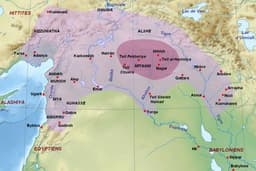
Parshatatar
Emperor · Ancient
40.4Total

Ptolemy X Alexander I
Emperor · Ancient
38.7Total
Basic Information
Born
-1480
-140
Died
-1460
-88
Era
Ancient
Ancient
Nationality
Mitanni
Ptolemaic Kingdom
Occupation
Emperor
Emperor
Civilization
Middle Eastern
Middle Eastern
Score Comparison
Military (10%)
35.0
50.0
Political (20%)
29.3
35.0
Influence (20%)
47.1
42.4
Legacy (20%)
38.3
32.5
Leadership (15%)
48.4
44.5
Strategy (15%)
38.6
30.3
TOTAL
40.4
38.7
Parshatatar — Complete Timeline
1475 BC
Continuation of Mitanni ExpansionWar◆ Major
Parshatatar continued the expansion of the Mitanni kingdom initiated by his predecessor. He led campaigns into the Khabur River region and further into Syria, securing Mitanni dominance over northern Mesopotamia.
Mitanni ExpansionKhaburSyria
Impact: regionaldestructive
1470 BC
Strengthening of the Mitanni StatePolitical Action
Parshatatar strengthened the Mitanni state by reinforcing the central administration and military. He built fortifications and organized the army, preparing for future conflicts with Egypt and the Hittites.
Mitanni StrengtheningAdministrationMilitary
Impact: nationalconstructive
1460 BC
Father of ShaushtatarPolitical Action
Parshatatar fathered Shaushtatar, who would become the greatest Mitanni king. He ensured a stable succession, passing on a strong and expanded kingdom to his son.
SuccessionShaushtatarMitanni Dynasty
Impact: national
Ptolemy X Alexander I — Complete Timeline
107 BC
Reign as King of EgyptPolitical Action◆ Major
Ptolemy X ruled Egypt after expelling his brother Ptolemy IX. His reign was marked by financial troubles and military defeats, including the loss of Cyprus to his brother.
ReignFinancial CrisisTerritorial Loss
Impact: nationaldestructive
101 BC
Murder of Cleopatra IIIPolitical Action◆ Major
Ptolemy X ordered the murder of his mother Cleopatra III to secure his sole rule. This act of matricide shocked the Ptolemaic court and led to widespread condemnation, but he remained in power.
MatricideDynastic ViolencePower Grab
Impact: nationaldestructive
88 BC
Death in Naval BattleWar◆ Major
Ptolemy X was killed in a naval battle while attempting to invade Cyprus. His death ended his reign and allowed Ptolemy IX to return to Egypt.
Naval BattleDeath in BattleCyprus
Impact: nationaltragic
This comparison has not been analyzed yet.
One-time AI generation (~1 minute). Scores and timeline are already available below.
Rankings
🥇
ParshatatarLeader
Mil: 35.0Pol: 29.3Inf: 47.1
40.4
🥈
Ptolemy X Alexander I
Mil: 50.0Pol: 35.0Inf: 42.4
38.7
+1.7 behind
How This Comparison Works
Algorithm
Each figure is scored on 6 dimensions (0—100 scale) based on structured historical data: Military (10%), Political (20%), Influence (20%), Legacy (20%), Leadership (15%), Strategy (15%). The weighted total produces the final ranking.
Data Sources
Scores are computed from structured sub-indicators in the database. Scale factors adjust for era (Ancient ×0.85, Modern ×1.0) and civilization size (Eastern ×1.05, Other ×0.80) to account for differences in population and military scale.
Maximum 3 Figures
Comparisons are limited to 2—3 figures to ensure readability and statistical meaningfulness.
Error Margins
±5 points per dimension — Sub-scores are derived from historical records with inherent uncertainty. Two figures within 5 points on a dimension should be considered roughly equivalent in that area.
Total Score Accuracy
±3 points overall — The weighted combination of 6 dimensions produces a total score with approximately ±3 points of uncertainty. Differences of less than 3 points are not statistically significant— the figures are effectively tied.
Known Limitations
- Historical records are incomplete and uneven across civilizations
- Figures from oral-tradition societies may be underrepresented
- Occupation labels can misclassify multi-role figures
- Scores measure capability and impact, not moral character
- Quantitative scoring is a comparison tool, not absolute truth
Capability Radar
Military (10%) — Battles & Warfare
Battles
20
10
Win Rate
20
5
Expansion
30
5
Political (20%) — Governance & Reform
Reform
20
5
Diplomacy
30
5
Economy
20
5
Influence (20%) — Cultural & Global Reach
Cultural
20
5
Global
20
5
Legacy (20%) — Historical Impact
Historical
20
10
Longevity
20
5
Leadership (15%) — Power & Stability
Tenure
30
15
Stability
30
5
Strategy (15%) — Tactics & Innovation
Strategy
20
10
Tactics
20
10
Reform
20
5
Similar Comparisons
Comments & Discussion
No comments yet. Be the first to share your thoughts!