Loading...
Paul Reynaud vs Yoshihide Suga
Paul Reynaud leads by 11.2 pts · 2 figures compared
…

Paul Reynaud
Politician · Modern
50.0Total
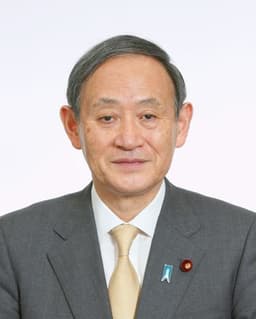
Yoshihide Suga
Politician · Modern
38.8Total
Basic Information
Born
1878
1948
Died
1966
—
Era
Modern
Modern
Nationality
France
Japan
Occupation
Politician
Politician
Civilization
Western
Eastern
Score Comparison
Military (10%)
49.1
15.2
Political (20%)
46.6
35.1
Influence (20%)
54.9
49.4
Legacy (20%)
49.2
37.5
Leadership (15%)
51.9
45.0
Strategy (15%)
43.3
35.9
TOTAL
50.0
38.8
Paul Reynaud — Complete Timeline
1940 AD
Appointment as Prime Minister during the Fall of FrancePolitical Action
Reynaud became Prime Minister of France on March 21, 1940, during the German invasion. He attempted to rally resistance, appointing Charles de Gaulle as Under-Secretary of State for War, but faced military collapse and political opposition, leading to France's armistice with Germany in June 1940.
World War IIFall of FranceGovernment
Impact: globaltragic
Proposal for Franco-British UnionPolitical Action◆ Major
As the German army advanced, Reynaud proposed a union between France and Britain to continue the war. The plan, supported by Churchill, was rejected by the French cabinet, leading to Reynaud's resignation and the formation of P
World War IIDiplomacyFranco-British Union
Impact: global
Arrest and Imprisonment by Vichy RegimePolitical Action◆ Major
After resigning, Reynaud was arrested by the Vichy regime in September 1940. He was tried and sentenced to life imprisonment in 1942, held in various prisons and later deported to Germany. He was liberated in 1945, having refused to collaborate with the Nazis.
Vichy FranceImprisonmentWorld War II
Impact: nationaltragic
1948 AD
Return to Politics and Ministerial RolesPolitical Action
After the war, Reynaud returned to politics, serving as Minister of Finance and Economic Affairs in 1948. He advocated for European integration and economic liberalization, but his influence waned as the Fourth Republic stabilized, and he retired from active politics in the 1950s.
Fourth RepublicPost-WarEconomic Policy
Impact: nationalconstructive
Yoshihide Suga — Complete Timeline
2012 AD
Appointed Chief Cabinet SecretaryPolitical Action◆ Major
Suga was appointed Chief Cabinet Secretary under Prime Minister Shinzo Abe. He served in this role from 2012 to 2020, becoming the longest-serving Chief Cabinet Secretary in Japanese history, managing daily government operations and press briefings.
JapanGovernmentAbe Administration
Impact: national
2020 AD
Elected Prime Minister of JapanPolitical Action◆ Major
Suga was elected as Prime Minister of Japan by the National Diet, succeeding Shinzo Abe who resigned due to health issues. He won the Liberal Democratic Party leadership election with overwhelming support from party factions.
JapanPrime MinisterLDP
Impact: national
2021 AD
Announced resignation as Prime MinisterPolitical Action◆ Major
Suga announced he would not seek re-election as LDP president, effectively resigning as prime minister. His decision came after declining approval ratings due to his handling of the COVID-19 pandemic and the Tokyo Olympics.
JapanResignationCOVID-19
Impact: nationaltragic
Expert Analysis
Origins
Paul Reynaud was born on October 15, 1878, in Barcelonnette, France, into a bourgeois family. He studied law at the Sorbonne and entered politics as a deputy in 1919. His early career was marked by financial expertise and a belief in fiscal conservatism. Reynaud was deeply influenced by the trauma of World War I and advocated for a strong military to counter Germany.
Yoshihide Suga was born on December 6, 1948, in Yuzawa, Akita Prefecture, Japan, to a farming family. He worked his way through college, graduating from Hosei University, and entered politics as a secretary to a Diet member. Suga's background was humble, and he rose through the ranks of the Liberal Democratic Party (LDP) as a skilled backroom operator.
Rise to Power
Reynaud became Prime Minister on March 21, 1940, at the height of the German invasion. He had previously served as Minister of Finance (1930–1932) and Minister of Justice (1938–1939). His appointment came after the failure of Édouard Daladier, and Reynaud immediately sought to energize the war effort. He appointed Charles de Gaulle as Under-Secretary of State for War, despite de Gaulle's junior rank.
Suga became Prime Minister on September 16, 2020, succeeding Shinzo Abe who resigned due to health issues. Suga had served as Chief Cabinet Secretary since 2012, the longest tenure in that role. He was seen as Abe's loyal lieutenant and had coordinated the government's response to the COVID-19 pandemic. His election was a continuation of Abe's policies.
Leadership & Governance
Reynaud's leadership was characterized by frantic efforts to rally resistance. He moved the government to Tours and then Bordeaux as the German army advanced. He proposed a Franco-British Union on June 16, 1940, to merge the two countries' governments and armies. The plan, supported by Winston Churchill, was rejected by the French cabinet, leading to Reynaud's resignation on June 16. His governance was marked by indecision and conflict with military leaders like Marshal Philippe Pétain.
Suga's governance focused on continuity with Abe's agenda, including economic growth and constitutional reform. He launched the Digital Agency and pushed for carbon neutrality by 2050. However, his handling of the pandemic was criticized for being slow and inconsistent. He prioritized holding the Tokyo Olympics in 2021 despite public opposition, which contributed to his declining approval ratings. His leadership score of 45.0 reflects his cautious, consensus-driven style.
Triumph & Tragedy
Reynaud's greatest triumph was his early recognition of the German threat and his advocacy for modernizing the French army. He supported de Gaulle's theories on armored warfare. His tragedy was that his efforts came too late; France fell in six weeks. He was arrested by the Vichy regime in September 1940 and sentenced to life imprisonment, spending years in solitary confinement. He survived the war but his political career was permanently damaged.
Suga's greatest success was his role as Chief Cabinet Secretary, where he managed daily government operations and helped Abe achieve long-term stability. As Prime Minister, his tragedy was his inability to escape Abe's shadow and his failure to connect with the public. His approval ratings dropped from over 70% to below 30% within a year. He resigned in October 2021 after only one year in office, the shortest tenure since 2001.
Character & Destiny
Reynaud was intelligent and energetic but also stubborn and aloof. His refusal to compromise with Pétain and his insistence on continuing the war from North Africa alienated many cabinet members. His character drove him to resist, but his political isolation sealed his fate. Historians note that his total score of 50.0 reflects a figure who was overwhelmed by events but made principled stands.
Suga was known as the "storage battery" for his tireless work ethic and attention to detail. He was a master of bureaucratic process but lacked charisma and a personal vision. His destiny was to be a transitional figure, stepping into a role at a difficult time and stepping down when his support collapsed. His political score of 35.1 underscores his limited independent influence.
Legacy
Reynaud is remembered as a tragic figure who fought against the tide. His proposal for Franco-British Union influenced later European integration. He returned to politics after the war, serving as Minister of Finance and Economic Affairs in 1948, and advocated for the European Coal and Steel Community. His legacy score of 49.2 reflects his symbolic role as a last champion of resistance.
Suga's legacy is limited. His main achievement was the Digital Agency, which aims to modernize Japan's bureaucracy. He also set a target for carbon neutrality. However, his brief tenure and lack of major reforms mean he is largely forgotten. His influence score of 49.4 is boosted by his long service as Chief Cabinet Secretary, but his prime ministerial legacy is weak.
Conclusion
Paul Reynaud had greater impact than Yoshihide Suga. Reynaud scored 50.0 overall compared to Suga's 38.8, a gap of 11.2 points. Reynaud's leadership during the Fall of France, while unsuccessful, shaped the course of World War II and the future of European cooperation. Suga's tenure as prime minister was a footnote in Japanese politics, marked by continuity rather than change. While both were crisis leaders, Reynaud's decisions had global consequences, while Suga's were largely domestic and temporary. Thus, Reynaud's historical significance is substantially higher.
Rankings
🥇
Paul ReynaudLeader
Mil: 49.1Pol: 46.6Inf: 54.9
50.0
🥈
Yoshihide Suga
Mil: 15.2Pol: 35.1Inf: 49.4
38.8
+11.2 behind
How This Comparison Works
Algorithm
Each figure is scored on 6 dimensions (0—100 scale) based on structured historical data: Military (10%), Political (20%), Influence (20%), Legacy (20%), Leadership (15%), Strategy (15%). The weighted total produces the final ranking.
Data Sources
Scores are computed from structured sub-indicators in the database. Scale factors adjust for era (Ancient ×0.85, Modern ×1.0) and civilization size (Eastern ×1.05, Other ×0.80) to account for differences in population and military scale.
Maximum 3 Figures
Comparisons are limited to 2—3 figures to ensure readability and statistical meaningfulness.
Error Margins
±5 points per dimension — Sub-scores are derived from historical records with inherent uncertainty. Two figures within 5 points on a dimension should be considered roughly equivalent in that area.
Total Score Accuracy
±3 points overall — The weighted combination of 6 dimensions produces a total score with approximately ±3 points of uncertainty. Differences of less than 3 points are not statistically significant— the figures are effectively tied.
Known Limitations
- Historical records are incomplete and uneven across civilizations
- Figures from oral-tradition societies may be underrepresented
- Occupation labels can misclassify multi-role figures
- Scores measure capability and impact, not moral character
- Quantitative scoring is a comparison tool, not absolute truth
Capability Radar
Military (10%) — Battles & Warfare
Battles
31
12
Win Rate
33
18
Expansion
33
19
Political (20%) — Governance & Reform
Reform
40
20
Diplomacy
45
25
Economy
30
30
Influence (20%) — Cultural & Global Reach
Cultural
20
10
Global
40
15
Legacy (20%) — Historical Impact
Historical
55
15
Longevity
30
10
Leadership (15%) — Power & Stability
Tenure
30
15
Stability
15
20
Strategy (15%) — Tactics & Innovation
Strategy
39
21
Tactics
42
25
Reform
44
31
Similar Comparisons
Comments & Discussion
No comments yet. Be the first to share your thoughts!