Loading...
Pausanias of Sparta vs Wang Jun
Wang Jun leads by 1.5 pts · 2 figures compared
…
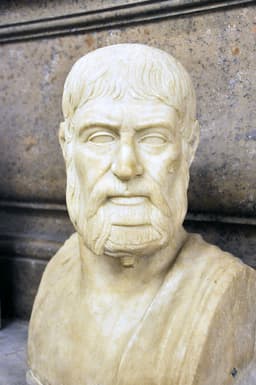
Pausanias of Sparta
General · Ancient
49.6Total

Wang Jun
General · Ancient
51.1Total
Basic Information
Born
-460
206
Died
-395
286
Era
Ancient
Ancient
Nationality
Sparta
China
Occupation
General
General
Civilization
Western
Eastern
Score Comparison
Military (10%)
67.3
77.5
Political (20%)
32.1
27.9
Influence (20%)
53.3
54.1
Legacy (20%)
48.3
47.5
Leadership (15%)
43.8
43.8
Strategy (15%)
61.3
72.0
TOTAL
49.6
51.1
Pausanias of Sparta — Complete Timeline
479 BC
Battle of PlataeaWar
Pausanias, as regent for the young king Pleistarchus, commanded the combined Greek forces against the Persian army under Mardonius. He won a decisive victory, destroying the Persian invasion force and ending the Greco-Persian Wars on the mainland.
Greco-Persian WarsBattleVictory
Impact: global
478 BC
Siege of ByzantiumWar◆ Major
Pausanias led a Greek fleet to capture Byzantium from the Persians. During the siege, his arrogant behavior and alleged negotiations with the Persian king led to accusations of medism (collaboration with Persia), causing his recall to Sparta.
Greco-Persian WarsSiegeMedism
Impact: regional
477 BC
Accusation of Medism and RecallPolitical Action◆ Major
Pausanias was recalled to Sparta and tried for medism. He was acquitted but his reputation was damaged. The allies, disgusted by his behavior, transferred leadership of the Hellenic League to Athens, leading to the formation of the Delian League.
Spartan PoliticsTrialDelian League
Impact: regionaldestructive
395 BC
Death by StarvationPolitical Action◆ Major
Pausanias was suspected of plotting with the helots and the Persians. He took refuge in the temple of Athena of the Brazen House. The ephors walled him in, and he was starved to death, just before his mother was to bring him out.
Spartan PoliticsExecutionTreason
Impact: nationaltragic
Wang Jun — Complete Timeline
280 AD
Naval conquest of Eastern WuWar◆ Major
Wang Jun commanded the Jin fleet down the Yangtze River, capturing the Eastern Wu capital at Jianye. Sun Hao surrendered, ending the Three Kingdoms period and reunifying China under the Jin dynasty.
Three KingdomsJin conquestNaval warfare
Impact: national
Expert Analysis
Origins
Pausanias was born around 510 BCE into the Agiad royal house of Sparta. As the son of King Cleombrotus and nephew of Leonidas, he was raised in the austere Spartan military system. Little is known of his early education, but he would have undergone the agoge, the brutal training regimen that shaped Spartan warriors.
Wang Jun was born in 206 CE during the late Eastern Han dynasty. He came from a family of officials in the state of Cao Wei, one of the Three Kingdoms. He entered government service through the civil examination system and held various administrative posts before turning to naval command. His early career was marked by competence but not distinction, until the Jin dynasty's unification campaign.
Rise to Power
Pausanias rose to power in 480 BCE after the death of Leonidas at Thermopylae. As regent for the infant King Pleistarchus, he assumed command of Spartan forces. His defining moment came in 479 BCE at the Battle of Plataea, where he led the largest Greek army ever assembled (about 40,000 hoplites) against the Persian invasion force. His victory ended Persian ambitions in Greece and made him the most powerful man in the Hellenic alliance.
Wang Jun rose to prominence under the Jin dynasty. In 279 CE, Emperor Wu of Jin appointed him as admiral to lead the naval invasion of Eastern Wu, the last of the Three Kingdoms. Wang Jun spent years building a massive fleet in Sichuan, constructing large warships equipped with battering rams and flame-throwing devices. His rise was steady rather than meteoric, based on administrative skill and strategic vision.
Leadership & Governance
Pausanias led by personal example on the battlefield, but his governance was arrogant and divisive. After Plataea, he offended the allies by erecting a self-glorifying inscription at Delphi. He adopted Persian customs, including luxurious dress and a bodyguard of barbarians, alienating the egalitarian Spartans. His attempt to negotiate with the Persian king Xerxes for personal power revealed a fundamental misunderstanding of Spartan politics.
Wang Jun was a methodical commander who emphasized logistics and coordination. He built a navy of over 50,000 men and hundreds of ships, advancing down the Yangtze River in 280 CE. He faced opposition from other Jin generals who wanted to share credit, but he pressed on. After receiving the surrender of Sun Hao, he showed restraint by not looting the capital, though he did confiscate Wu's treasury.
Triumph & Tragedy
Pausanias's triumph was undeniably Plataea. He scored 67.3 in military, reflecting this victory, but his political score of 32.1 shows his downfall. His tragedy was his hubris and alleged treason. Accused of medism (collaboration with Persia) and plotting with helots, he was recalled to Sparta. He sought sanctuary in the temple of Athena of the Brazen House, where the ephors walled him in, starving him to death in 470 BCE.
Wang Jun's triumph was the conquest of Eastern Wu, ending the Three Kingdoms period and unifying China under the Jin dynasty. His military score of 77.5 and strategy score of 72.0 reflect this achievement. However, his political score of 27.9 indicates his failure to navigate court intrigue. After the war, he was marginalized by rivals and died in obscurity in 286 CE, his contributions underappreciated.
Character & Destiny
Pausanias was bold and charismatic but deeply flawed by arrogance and ambition. His decision to adopt Persian ways and plot against his own state suggests a man who believed himself above the Spartan system. This character flaw directly led to his ignominious death, making him a cautionary tale about the dangers of hubris.
Wang Jun was competent and persistent, but lacked political acumen. He focused on military objectives to the exclusion of building alliances at court. His destiny was to be a tool of the Jin emperor, used for unification and then discarded. Both men were undone by their inability to navigate politics, though Pausanias's fall was more dramatic.
Legacy
Pausanias's legacy is mixed. He is remembered as the victor of Plataea, but also as a traitor. In Sparta, his name was tainted, and his achievements were downplayed. However, the battle itself secured Greek freedom and is a cornerstone of Western history. His influence score of 53.3 reflects this enduring significance.
Wang Jun's legacy is more straightforward. He is celebrated as the admiral who unified China, but his individual role is often overshadowed by the broader Jin narrative. His influence score of 54.1 is similar, but his military score of 77.5 is higher than Pausanias's 67.3. The naval tactics he employed influenced later Chinese warfare.
Conclusion
Wang Jun had the greater impact. His conquest of Eastern Wu ended centuries of division and brought stability to China, affecting millions. Pausanias's victory at Plataea was undeniably important, but his subsequent actions undermined his contribution. Wang Jun's total score of 51.1 edges out Pausanias's 49.6, reflecting his superior military and strategic achievements. While Pausanias's story is more dramatic, Wang Jun's accomplishments were more consequential for the long-term unification of China.
Rankings
🥇
Wang JunLeader
Mil: 77.5Pol: 27.9Inf: 54.1
51.1
🥈
Pausanias of Sparta
Mil: 67.3Pol: 32.1Inf: 53.3
49.6
+1.5 behind
How This Comparison Works
Algorithm
Each figure is scored on 6 dimensions (0—100 scale) based on structured historical data: Military (10%), Political (20%), Influence (20%), Legacy (20%), Leadership (15%), Strategy (15%). The weighted total produces the final ranking.
Data Sources
Scores are computed from structured sub-indicators in the database. Scale factors adjust for era (Ancient ×0.85, Modern ×1.0) and civilization size (Eastern ×1.05, Other ×0.80) to account for differences in population and military scale.
Maximum 3 Figures
Comparisons are limited to 2—3 figures to ensure readability and statistical meaningfulness.
Error Margins
±5 points per dimension — Sub-scores are derived from historical records with inherent uncertainty. Two figures within 5 points on a dimension should be considered roughly equivalent in that area.
Total Score Accuracy
±3 points overall — The weighted combination of 6 dimensions produces a total score with approximately ±3 points of uncertainty. Differences of less than 3 points are not statistically significant— the figures are effectively tied.
Known Limitations
- Historical records are incomplete and uneven across civilizations
- Figures from oral-tradition societies may be underrepresented
- Occupation labels can misclassify multi-role figures
- Scores measure capability and impact, not moral character
- Quantitative scoring is a comparison tool, not absolute truth
Capability Radar
Military (10%) — Battles & Warfare
Battles
65
75
Win Rate
70
80
Expansion
30
75
Political (20%) — Governance & Reform
Reform
15
30
Diplomacy
40
45
Economy
20
35
Influence (20%) — Cultural & Global Reach
Cultural
40
40
Global
30
35
Legacy (20%) — Historical Impact
Historical
55
55
Longevity
45
40
Leadership (15%) — Power & Stability
Tenure
55
40
Stability
25
40
Strategy (15%) — Tactics & Innovation
Strategy
80
80
Tactics
75
85
Reform
20
60
Similar Comparisons
Comments & Discussion
No comments yet. Be the first to share your thoughts!