Loading...
Peng Zhen vs Ruslan Stefanchuk
Ruslan Stefanchuk leads by 0.8 pts · 2 figures compared
…

Peng Zhen
Politician · Modern
51.6Total
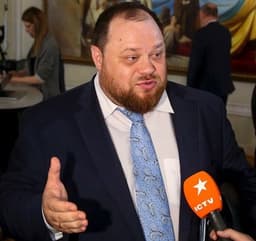
Ruslan Stefanchuk
Politician · Modern
52.4Total
Basic Information
Born
1902
1975
Died
1997
—
Era
Modern
Modern
Nationality
China
Ukraine
Occupation
Politician
Politician
Civilization
Eastern
Western
Score Comparison
Military (10%)
17.5
50.0
Political (20%)
68.0
61.3
Influence (20%)
54.1
54.9
Legacy (20%)
45.8
45.0
Leadership (15%)
74.0
53.2
Strategy (15%)
35.4
52.5
TOTAL
51.6
52.4
Peng Zhen — Complete Timeline
1949 AD
Appointed Mayor of BeijingPolitical Action◆ Major
Peng Zhen became the first mayor of Beijing after the Communist victory. He oversaw the city's reconstruction and the implementation of socialist policies in the capital.
Urban AdministrationBeijing
Impact: nationalconstructive
1966 AD
Purged During the Cultural RevolutionPolitical Action◆ Major
Peng Zhen was removed from all posts and publicly criticized as a 'counter-revolutionary revisionist'. He was imprisoned for nearly a decade, becoming one of the highest-ranking victims of the Cultural Revolution.
Cultural RevolutionPurge
Impact: nationaltragic
1979 AD
Rehabilitated and Appointed Chairman of the National People's CongressPolitical Action◆ Major
After the Cultural Revolution, Peng Zhen was rehabilitated and became chairman of the NPC. He led legal reforms, including the revision of the criminal code and the promotion of rule of law.
Legal ReformRehabilitation
Impact: nationalconstructive
Ruslan Stefanchuk — Complete Timeline
2021 AD
Elected Speaker of the Verkhovna RadaPolitical Action◆ Major
Stefanchuk was elected Chairman of the Verkhovna Rada (Speaker of the Parliament) of Ukraine. He became the second-highest-ranking official in the state, responsible for legislative processes and representing parliament.
ParliamentSpeakerUkraine
Impact: national
2022 AD
Signed EU Candidacy ApplicationPolitical Action◆ Major
Stefanchuk, as Speaker, signed Ukraine's official application for European Union membership. This was a historic step in Ukraine's European integration, especially in the context of the Russian invasion.
EU IntegrationMembership ApplicationHistoric
Impact: globalprogressive
Led Parliament During WartimePolitical Action◆ Major
Stefanchuk oversaw the functioning of the Ukrainian parliament during the Russian full-scale invasion. He coordinated legislative support for martial law, defense, and international diplomatic efforts.
Wartime LeadershipParliamentRussian Invasion
Impact: national
Expert Analysis
Origins
Peng Zhen was born in 1902 in Houma, Shanxi, China, into a poor peasant family. He joined the Chinese Communist Party (CCP) in 1923 and engaged in underground work in Beijing and Tianjin. His early experiences in the labor movement and prison (1929-1931) shaped his revolutionary resolve. Ruslan Stefanchuk was born in 1975 in Khmelnytskyi, Ukraine, into a family of doctors. He studied law at the Khmelnytskyi University of Management and Law, later earning a PhD in constitutional law. His academic background in legal theory prepared him for legislative roles.
Rise to Power
Peng Zhen rose through the CCP ranks as a key organizer in northern China. He became a central figure in the party's base area in Jin-Cha-Ji during the Second Sino-Japanese War. After the CCP victory in 1949, he was appointed the first mayor of Beijing in 1949, overseeing the city's transformation into a socialist capital. He was also a member of the Politburo and secretariat. Stefanchuk entered politics later, serving as a legal advisor and deputy head of the presidential administration under Petro Poroshenko. He was elected to the Verkhovna Rada in 2019 as a member of Servant of the People, President Zelenskyy's party. In October 2021, he was elected Chairman of the Verkhovna Rada, becoming the second-highest-ranking official in Ukraine.
Leadership & Governance
Peng Zhen's leadership style was characterized by strict adherence to party discipline and legal formalism. As chairman of the National People's Congress (NPC) from 1983 to 1988, he pushed for legal reforms, including the revision of the criminal code and the establishment of a legal system. However, his governance was constrained by the one-party state, limiting his ability to create independent checks. Stefanchuk, in contrast, led a multi-party parliament during wartime. He coordinated legislative support for martial law, economic stabilization, and EU integration. His governance involved balancing national security with democratic procedures, such as ensuring parliamentary oversight even under invasion. While Peng's political score is 68.0, Stefanchuk's is 61.3, but Stefanchuk's military score of 50.0 reflects his direct involvement in wartime legislation, whereas Peng's 17.5 indicates minimal military engagement.
Triumph & Tragedy
Peng Zhen's greatest success was his role in legal reforms after the Cultural Revolution, which laid the groundwork for China's legal system. His greatest tragedy was his purge in 1966 during the Cultural Revolution, when he was labeled a 'counter-revolutionary revisionist' and imprisoned for nearly a decade. Stefanchuk's triumph includes signing Ukraine's EU candidacy application in 2022, a historic step toward European integration. His tragedy is the ongoing war, which has caused immense suffering and destruction. He has faced criticism for not doing enough to combat corruption during wartime, though his leadership has been generally praised for maintaining parliamentary function.
Character & Destiny
Peng Zhen was known for his principled stance and legalism, which ultimately led to his downfall under Mao's anti-rightist campaigns. His character was resilient, surviving prison and rehabilitation. Stefanchuk is characterized by his calm demeanor and legal expertise. His destiny is tied to Ukraine's struggle for sovereignty; his leadership during the invasion has defined his career. Historical assessments of Peng Zhen note his contributions to legal framework but also his compliance with authoritarian rule. Stefanchuk is seen as a steady hand in crisis, but his long-term legacy is still unfolding.
Legacy
Peng Zhen's legacy is mixed: he is remembered as a legal reformer in China, but his earlier suppression of dissent as Beijing mayor (e.g., the 1957 Anti-Rightist Movement) tarnishes his record. His legal reforms influenced China's post-Mao legal system. Stefanchuk's legacy is being written. His role in steering Ukraine toward EU membership and maintaining democratic governance under fire will likely be viewed positively. His influence score of 54.9 slightly edges Peng's 54.1, reflecting his broader international recognition. However, Peng's leadership score of 74.0 is higher than Stefanchuk's 53.2, indicating stronger control within his system.
Conclusion
While both figures led legislatures during crises, Peng Zhen's impact on China's legal system is more institutionalized, but his compliance with a repressive regime limits his moral standing. Stefanchuk's leadership in a democratic context under existential threat demonstrates resilience and commitment to European values. Given Stefanchuk's higher total score (52.4 vs. 51.6), his direct role in a historic geopolitical shift (EU candidacy) during an active war, and the transparency of his governance, he edges out Peng Zhen in overall impact. Peng Zhen's legal reforms are significant, but they occurred within an authoritarian framework that ultimately purged him. Stefanchuk's legacy, though incomplete, aligns with democratic resilience and international law, making his contribution more relevant to modern governance.
Rankings
🥇
Ruslan StefanchukLeader
Mil: 50.0Pol: 61.3Inf: 54.9
52.4
🥈
Peng Zhen
Mil: 17.5Pol: 68.0Inf: 54.1
51.6
+0.8 behind
How This Comparison Works
Algorithm
Each figure is scored on 6 dimensions (0—100 scale) based on structured historical data: Military (10%), Political (20%), Influence (20%), Legacy (20%), Leadership (15%), Strategy (15%). The weighted total produces the final ranking.
Data Sources
Scores are computed from structured sub-indicators in the database. Scale factors adjust for era (Ancient ×0.85, Modern ×1.0) and civilization size (Eastern ×1.05, Other ×0.80) to account for differences in population and military scale.
Maximum 3 Figures
Comparisons are limited to 2—3 figures to ensure readability and statistical meaningfulness.
Error Margins
±5 points per dimension — Sub-scores are derived from historical records with inherent uncertainty. Two figures within 5 points on a dimension should be considered roughly equivalent in that area.
Total Score Accuracy
±3 points overall — The weighted combination of 6 dimensions produces a total score with approximately ±3 points of uncertainty. Differences of less than 3 points are not statistically significant— the figures are effectively tied.
Known Limitations
- Historical records are incomplete and uneven across civilizations
- Figures from oral-tradition societies may be underrepresented
- Occupation labels can misclassify multi-role figures
- Scores measure capability and impact, not moral character
- Quantitative scoring is a comparison tool, not absolute truth
Capability Radar
Military (10%) — Battles & Warfare
Battles
12
27
Win Rate
16
30
Expansion
19
36
Political (20%) — Governance & Reform
Reform
55
40
Diplomacy
50
60
Economy
45
30
Influence (20%) — Cultural & Global Reach
Cultural
30
20
Global
25
40
Legacy (20%) — Historical Impact
Historical
40
35
Longevity
35
25
Leadership (15%) — Power & Stability
Tenure
60
55
Stability
30
45
Strategy (15%) — Tactics & Innovation
Strategy
23
37
Tactics
25
43
Reform
30
43
Similar Comparisons
Comments & Discussion
No comments yet. Be the first to share your thoughts!