Loading...
Periyar E. V. Ramasamy vs Souphanouvong
Periyar E. V. Ramasamy leads by 12.4 pts · 2 figures compared
…

Periyar E. V. Ramasamy
Politician · Modern
66.4Total
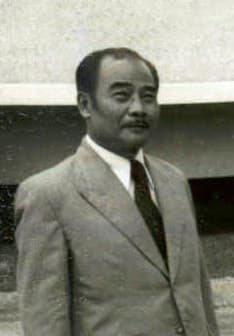
Souphanouvong
Politician · Modern
54.0Total
Basic Information
Born
1879
1909
Died
1973
1995
Era
Modern
Modern
Nationality
India
Laos
Occupation
Politician
Politician
Civilization
Indian
Eastern
Score Comparison
Military (10%)
40.9
36.6
Political (20%)
72.0
68.0
Influence (20%)
82.0
55.7
Legacy (20%)
68.0
44.2
Leadership (15%)
53.2
65.0
Strategy (15%)
60.0
54.1
TOTAL
66.4
54.0
Periyar E. V. Ramasamy — Complete Timeline
1924 AD
Vaikom Satyagraha LeadershipPolitical Action
Periyar E. V. Ramasamy led the Vaikom Satyagraha in Travancore, a non-violent protest demanding the right of lower-caste Hindus to use the road around the Vaikom temple. He was arrested twice, and the movement gained national attention.
Caste SystemSocial ReformTamil Nadu
Impact: nationalprogressive
1925 AD
Founding of Self-Respect MovementPolitical Action
Periyar founded the Self-Respect Movement in Tamil Nadu, advocating for the rationalism, atheism, and the destruction of caste hierarchy. The movement rejected Brahminical dominance and promoted Dravidian identity.
Dravidian MovementSocial ReformRationalism
Impact: regionalprogressive
1937 AD
Anti-Hindi AgitationsPolitical Action◆ Major
Periyar led protests against the introduction of Hindi as a compulsory subject in Tamil Nadu schools. The agitations forced the government to withdraw the policy, and Periyar became a symbol of Tamil linguistic pride.
LanguageTamil NaduHindi
Impact: regional
1938 AD
Justice Party LeadershipPolitical Action◆ Major
Periyar took over leadership of the Justice Party, which later evolved into the Dravidar Kazhagam. He used the party to campaign for Dravidian nationalism, anti-Hindi policies, and the abolition of caste-based discrimination.
Dravidian MovementPoliticsTamil Nadu
Impact: regionalconstructive
Souphanouvong — Complete Timeline
1950 AD
Led the Pathet LaoPolitical Action◆ Major
Souphanouvong became the leader of the Pathet Lao, the communist revolutionary movement in Laos. He organized armed resistance against the French colonial forces and later the Royal Lao Government, with support from North Vietnam and the Soviet Union.
RevolutionLaosCommunism
Impact: regional
1973 AD
Signed the Vientiane AgreementPolitical Action◆ Major
Souphanouvong signed the Vientiane Agreement, a ceasefire that ended the Laotian Civil War. The agreement established a coalition government between the Pathet Lao and the Royal Lao Government, but it ultimately paved the way for the communist takeover in 1975.
Peace AgreementLaosCivil War
Impact: national
1975 AD
Became President of LaosPolitical Action
Souphanouvong was appointed the first President of the Lao People's Democratic Republic after the communist Pathet Lao seized power. His presidency marked the end of the Laotian Civil War and the establishment of a one-party socialist state.
LeadershipLaosCommunist Revolution
Impact: national
1991 AD
Resigned as PresidentPolitical Action◆ Major
Souphanouvong resigned as President of Laos due to poor health. His resignation marked the end of his active political role, but he remained a symbolic figure in the Lao communist movement until his death in 1995.
ResignationLaosLeadership
Impact: national
Expert Analysis
Origins
Periyar E. V. Ramasamy was born on September 17, 1879, in Erode, Tamil Nadu, into a wealthy Kannada-speaking Balija Naidu family. His father, Venkatappa Nayakar, was a respected businessman. Periyar had little formal education but was deeply influenced by his father's business dealings and exposure to caste discrimination. He left school early and worked in his father's shop, later traveling to Varanasi and experiencing Brahminical dominance, which fueled his rationalist and anti-caste ideas.
Souphanouvong was born on July 13, 1909, in Luang Prabang, Laos, as the youngest son of Prince Boun Khong, the viceroy of Luang Prabang. He was educated in Hanoi and later studied civil engineering in Paris, where he was exposed to communist ideology. His royal background gave him the moniker "Red Prince." He returned to Laos in 1938 and worked as an engineer, but his political activism began after World War II.
Rise to Power
Periyar rose to prominence through the Indian National Congress, but he left after perceiving it as dominated by upper-caste Brahmins. He joined the Justice Party in 1925 and became its leader in 1938. His turning point was the Vaikom Satyagraha (1924-1925), where he led protests for the right of lower-caste Hindus to use the road around the Vaikom temple. This event established him as a Dravidian leader. In 1925, he founded the Self-Respect Movement, advocating rationalism, atheism, and the destruction of caste hierarchy. By 1944, he transformed the Justice Party into the Dravidar Kazhagam.
Souphanouvong's rise was tied to the Pathet Lao. He joined the Viet Minh in 1945 and led the Lao Issara government briefly. After its dissolution, he went into exile in Thailand and later Vietnam. In 1950, he established the Pathet Lao, a communist guerrilla movement. He fought against French colonial forces and later in the Laotian Civil War. His political skill led to the Vientiane Agreement in 1973, ending the war and establishing a coalition government. In 1975, the Pathet Lao seized power, and Souphanouvong became the first President of the Lao People's Democratic Republic.
Leadership & Governance
Periyar's leadership was charismatic and uncompromising. He focused on social reform: promoting rationalism, self-respect marriages without priests, and gender equality. He advocated for Dravidian nationalism, opposing Hindi imposition and Brahminical dominance. His governance style was through mass movements and propaganda, not formal political office. He scored 72.0 in political influence, reflecting his impact on Tamil Nadu politics, but his movement remained outside mainstream power structures.
Souphanouvong's leadership was more institutional. As president, he oversaw the transition to a communist state, nationalizing industries and collectivizing agriculture. He maintained unity among rival factions within the Pathet Lao. His score of 68.0 in political influence is slightly lower than Periyar's, but he held actual state power. However, his governance was constrained by Vietnam's influence, and Laos became a one-party state under the Lao People's Revolutionary Party.
Triumph & Tragedy
Periyar's greatest triumph was the Self-Respect Movement, which reshaped Tamil society. He successfully campaigned for the abolition of untouchability, promoted rationalism, and led the anti-Hindi agitations of 1937-1940 and 1965, forcing the Indian government to retain English and regional languages. His tragedy was the fragmentation of the Dravidian movement after his death, with splits into DMK and other parties. He also failed to achieve a separate Dravida Nadu nation.
Souphanouvong's triumph was leading the Pathet Lao to victory, ending the monarchy, and establishing the Lao PDR. He also signed the Vientiane Agreement, which temporarily brought peace. His tragedy was the erosion of his influence after the revolution; he became a figurehead as real power shifted to more hardline communists. He resigned in 1991 due to poor health, and his legacy was overshadowed by Kaysone Phomvihane.
Character & Destiny
Periyar was dogmatic, outspoken, and relentlessly critical of religion and caste. His character drove his movement but also alienated potential allies. He scored 53.2 in leadership, reflecting his divisiveness. His destiny was to remain a social reformer rather than a political ruler, but his ideas profoundly influenced Tamil identity.
Souphanouvong was pragmatic and adaptable, able to cooperate with both communists and royalists. His royal birth gave him legitimacy, but his communist alignment made him a target. He scored 65.0 in leadership, higher than Periyar, indicating his ability to command loyalty in a guerrilla movement. His destiny was to become a president but with limited power.
Legacy
Periyar's legacy is massive in Tamil Nadu. His rationalist ideas are institutionalized in the Dravidian parties that have governed the state for decades. He scored 82.0 in influence, the highest in this comparison. His movement led to increased social equality and political representation for non-Brahmins. His bronze statues and annual conferences keep his memory alive.
Souphanouvong's legacy is more mixed. He is remembered as the "Red Prince" who helped liberate Laos, but his role in establishing a repressive regime tarnishes his image. He scored 44.2 in legacy, partly due to Laos's small population and his overshadowing by others. His impact is confined to his country's political history.
Conclusion
Periyar E. V. Ramasamy had a greater impact than Souphanouvong. His total score of 66.4 vs 54.0 reflects this. Although Souphanouvong held higher office, Periyar's ideas transformed a major Indian state and influenced millions. His movement created a lasting political force that still governs Tamil Nadu. Souphanouvong's achievements were significant but more fleeting, as Laos's communist system has evolved and his personal influence waned. Periyar's rationalist and anti-caste ideology remains relevant globally, while Souphanouvong's role is largely historical. Thus, Periyar is the more consequential figure.
Rankings
🥇
Periyar E. V. RamasamyLeader
Mil: 40.9Pol: 72.0Inf: 82.0
66.4
🥈
Souphanouvong
Mil: 36.6Pol: 68.0Inf: 55.7
54.0
+12.4 behind
How This Comparison Works
Algorithm
Each figure is scored on 6 dimensions (0—100 scale) based on structured historical data: Military (10%), Political (20%), Influence (20%), Legacy (20%), Leadership (15%), Strategy (15%). The weighted total produces the final ranking.
Data Sources
Scores are computed from structured sub-indicators in the database. Scale factors adjust for era (Ancient ×0.85, Modern ×1.0) and civilization size (Eastern ×1.05, Other ×0.80) to account for differences in population and military scale.
Maximum 3 Figures
Comparisons are limited to 2—3 figures to ensure readability and statistical meaningfulness.
Error Margins
±5 points per dimension — Sub-scores are derived from historical records with inherent uncertainty. Two figures within 5 points on a dimension should be considered roughly equivalent in that area.
Total Score Accuracy
±3 points overall — The weighted combination of 6 dimensions produces a total score with approximately ±3 points of uncertainty. Differences of less than 3 points are not statistically significant— the figures are effectively tied.
Known Limitations
- Historical records are incomplete and uneven across civilizations
- Figures from oral-tradition societies may be underrepresented
- Occupation labels can misclassify multi-role figures
- Scores measure capability and impact, not moral character
- Quantitative scoring is a comparison tool, not absolute truth
Capability Radar
Military (10%) — Battles & Warfare
Battles
46
15
Win Rate
45
10
Expansion
49
10
Political (20%) — Governance & Reform
Reform
85
55
Diplomacy
70
65
Economy
30
30
Influence (20%) — Cultural & Global Reach
Cultural
75
40
Global
55
35
Legacy (20%) — Historical Impact
Historical
80
45
Longevity
70
30
Leadership (15%) — Power & Stability
Tenure
60
60
Stability
40
20
Strategy (15%) — Tactics & Innovation
Strategy
52
25
Tactics
54
20
Reform
57
10
Similar Comparisons
Comments & Discussion
No comments yet. Be the first to share your thoughts!