Loading...
This comparison has not been analyzed yet.
One-time AI generation (~1 minute). Scores and timeline are already available below.
Petar I Karadjordjevic vs Prempeh II
Petar I Karadjordjevic leads by 3.6 pts · 2 figures compared
…

Petar I Karadjordjevic
Emperor · Modern
58.8Total
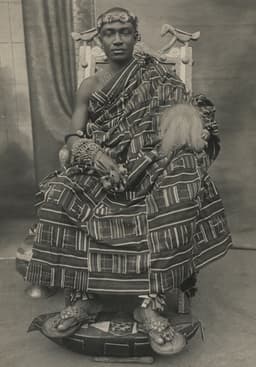
Prempeh II
Emperor · Modern
55.2Total
Basic Information
Born
1844
1892
Died
1921
1970
Era
Modern
Modern
Nationality
Serbia
Ashanti
Occupation
Emperor
Emperor
Civilization
Western
Other
Score Comparison
Military (10%)
67.5
14.9
Political (20%)
59.3
72.0
Influence (20%)
55.0
60.0
Legacy (20%)
56.0
50.0
Leadership (15%)
66.0
78.0
Strategy (15%)
55.0
36.8
TOTAL
58.8
55.2
Petar I Karadjordjevic — Complete Timeline
1903 AD
Accession to the Serbian ThronePolitical Action◆ Major
Petar I Karadjordjevic became King of Serbia following the May Coup that assassinated King Alexander Obrenovic. His accession restored the Karadjordjevic dynasty and was supported by the Serbian military and political establishment.
AccessionDynastic RestorationSerbia
Impact: nationalconstructive
1912 AD
Balkan Wars LeadershipWar◆ Major
King Petar I led Serbia during the First and Second Balkan Wars. Serbia expanded its territory significantly, gaining Kosovo, Macedonia, and parts of Albania, establishing itself as a major regional power under his leadership.
Balkan WarsTerritorial ExpansionMilitary Leadership
Impact: regionalconstructive
1914 AD
World War I LeadershipWar◆ Major
King Petar I led Serbia through World War I after the Austro-Hungarian invasion. Despite the Serbian army's retreat through Albania in 1915, he remained with his troops and later returned to lead the country as part of the victorious Allies.
World War IMilitary LeadershipSerbian Resistance
Impact: globalconstructive
1918 AD
Creation of the Kingdom of Serbs, Croats and SlovenesPolitical Action
King Petar I became the first monarch of the Kingdom of Serbs, Croats and Slovenes (later Yugoslavia) after World War I. This unification of South Slavic peoples fulfilled his vision of a larger state, though he delegated governance to his son Alexander due to ill health.
YugoslaviaUnificationState Formation
Impact: regionalconstructive
Prempeh II — Complete Timeline
1935 AD
Restoration of the Ashanti ConfederacyPolitical Action◆ Major
Prempeh II was installed as Asantehene in 1935, when the British restored the Ashanti Confederacy as a traditional state. This marked the revival of the Ashanti monarchy after decades of colonial rule.
RestorationAshanti ConfederacyMonarchy
Impact: nationalconstructive
1940 AD
Rebuilding of Ashanti institutionsReform◆ Major
Prempeh II worked to rebuild Ashanti cultural and political institutions, including the restoration of the Golden Stool's authority and the revival of traditional ceremonies. He also promoted education and economic development.
RebuildingCultural RevivalAshanti
Impact: nationalconstructive
1957 AD
Role in Ghanaian independencePolitical Action◆ Major
Prempeh II supported the independence movement of Ghana, working with Kwame Nkrumah. He ensured that the Ashanti Confederacy was integrated into the new nation while preserving its traditional authority.
IndependenceGhanaAshanti
Impact: nationalconstructive
1970 AD
Death and legacyOther◆ Major
Prempeh II died in 1970 after a long reign. He was succeeded by his nephew, Opoku Ware II. His reign was marked by the successful restoration and modernization of the Ashanti monarchy within the context of independent Ghana.
DeathLegacyAshanti
Impact: nationalconstructive
This comparison has not been analyzed yet.
One-time AI generation (~1 minute). Scores and timeline are already available below.
Rankings
🥇
Petar I KaradjordjevicLeader
Mil: 67.5Pol: 59.3Inf: 55.0
58.8
🥈
Prempeh II
Mil: 14.9Pol: 72.0Inf: 60.0
55.2
+3.6 behind
How This Comparison Works
Algorithm
Each figure is scored on 6 dimensions (0—100 scale) based on structured historical data: Military (10%), Political (20%), Influence (20%), Legacy (20%), Leadership (15%), Strategy (15%). The weighted total produces the final ranking.
Data Sources
Scores are computed from structured sub-indicators in the database. Scale factors adjust for era (Ancient ×0.85, Modern ×1.0) and civilization size (Eastern ×1.05, Other ×0.80) to account for differences in population and military scale.
Maximum 3 Figures
Comparisons are limited to 2—3 figures to ensure readability and statistical meaningfulness.
Error Margins
±5 points per dimension — Sub-scores are derived from historical records with inherent uncertainty. Two figures within 5 points on a dimension should be considered roughly equivalent in that area.
Total Score Accuracy
±3 points overall — The weighted combination of 6 dimensions produces a total score with approximately ±3 points of uncertainty. Differences of less than 3 points are not statistically significant— the figures are effectively tied.
Known Limitations
- Historical records are incomplete and uneven across civilizations
- Figures from oral-tradition societies may be underrepresented
- Occupation labels can misclassify multi-role figures
- Scores measure capability and impact, not moral character
- Quantitative scoring is a comparison tool, not absolute truth
Capability Radar
Military (10%) — Battles & Warfare
Battles
65
5
Win Rate
70
5
Expansion
55
10
Political (20%) — Governance & Reform
Reform
70
75
Diplomacy
75
70
Economy
50
65
Influence (20%) — Cultural & Global Reach
Cultural
55
60
Global
60
40
Legacy (20%) — Historical Impact
Historical
70
60
Longevity
50
55
Leadership (15%) — Power & Stability
Tenure
60
70
Stability
55
70
Strategy (15%) — Tactics & Innovation
Strategy
75
15
Tactics
60
10
Reform
80
20
Similar Comparisons
Comments & Discussion
No comments yet. Be the first to share your thoughts!