Loading...
This comparison has not been analyzed yet.
One-time AI generation (~1 minute). Scores and timeline are already available below.
Petar II Karadjordjevic vs Saito Tatsuoki
Saito Tatsuoki leads by 2.7 pts · 2 figures compared
…

Petar II Karadjordjevic
Emperor · Modern
36.5Total
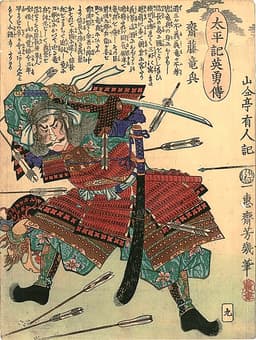
Saito Tatsuoki
Emperor · Modern
39.2Total
Basic Information
Born
1923
1548
Died
—
1573
Era
Modern
Modern
Nationality
Yugoslavia
Japan
Occupation
Emperor
Emperor
Civilization
Western
Eastern
Score Comparison
Military (10%)
10.9
43.3
Political (20%)
26.4
32.1
Influence (20%)
47.1
45.5
Legacy (20%)
35.8
34.2
Leadership (15%)
31.2
31.2
Strategy (15%)
60.0
54.3
TOTAL
36.5
39.2
Petar II Karadjordjevic — Complete Timeline
1934 AD
Accession to the Yugoslav ThronePolitical Action◆ Major
Petar II Karadjordjevic became King of Yugoslavia at age 11 after the assassination of his father, King Alexander I in Marseille. A regency council led by Prince Paul governed on his behalf due to his minority.
AccessionRegencyYugoslavia
Impact: nationaltragic
1941 AD
Invasion of Yugoslavia and ExileWar◆ Major
Nazi Germany invaded Yugoslavia in response to the coup. Petar II fled the country with his government, establishing a government-in-exile in London. He remained abroad for the duration of World War II, unable to return to his kingdom.
World War IIExileInvasion
Impact: globaltragic
Coup d'État and Assumption of PowerPolitical Action
Petar II, at age 17, participated in a military coup that overthrew the regency of Prince Paul. He assumed full royal powers and repudiated Yugoslavia's accession to the Tripartite Pact, aligning the country with the Allies against Nazi Germany.
CoupWorld War IIAllied Alignment
Impact: globalconstructive
1945 AD
Abolition of the MonarchyPolitical Action◆ Major
Following World War II, the communist-led government of Josip Broz Tito abolished the Yugoslav monarchy. Petar II was formally deposed and prevented from returning to Yugoslavia, ending the Karadjordjevic dynasty's rule.
Monarchy AbolishedCommunismYugoslavia
Impact: nationaltragic
Saito Tatsuoki — Complete Timeline
1567 AD
Loss of Mino Province to Oda NobunagaWar◆ Major
Saito Tatsuoki was defeated by Oda Nobunaga, who captured the Saito clan's castle at Inabayama and took control of Mino Province. This defeat ended the Saito clan's rule and marked the rise of Nobunaga as a major power.
DefeatOda NobunagaMino Province
Impact: nationaltragic
Battle of Inabayama CastleWar◆ Major
Oda Nobunaga's forces stormed Inabayama Castle, the Saito stronghold, after a night attack. Saito Tatsuoki fled, and the castle fell, leading to the complete collapse of Saito power in Mino.
SiegeDefeatInabayama
Impact: nationaltragic
1573 AD
Death in ExileOther
Saito Tatsuoki died in exile after losing his domain to Oda Nobunaga. His death marked the final end of the Saito clan's influence in Japanese politics.
DeathExileClan End
tragic
This comparison has not been analyzed yet.
One-time AI generation (~1 minute). Scores and timeline are already available below.
Rankings
🥇
Saito TatsuokiLeader
Mil: 43.3Pol: 32.1Inf: 45.5
39.2
🥈
Petar II Karadjordjevic
Mil: 10.9Pol: 26.4Inf: 47.1
36.5
+2.7 behind
How This Comparison Works
Algorithm
Each figure is scored on 6 dimensions (0—100 scale) based on structured historical data: Military (10%), Political (20%), Influence (20%), Legacy (20%), Leadership (15%), Strategy (15%). The weighted total produces the final ranking.
Data Sources
Scores are computed from structured sub-indicators in the database. Scale factors adjust for era (Ancient ×0.85, Modern ×1.0) and civilization size (Eastern ×1.05, Other ×0.80) to account for differences in population and military scale.
Maximum 3 Figures
Comparisons are limited to 2—3 figures to ensure readability and statistical meaningfulness.
Error Margins
±5 points per dimension — Sub-scores are derived from historical records with inherent uncertainty. Two figures within 5 points on a dimension should be considered roughly equivalent in that area.
Total Score Accuracy
±3 points overall — The weighted combination of 6 dimensions produces a total score with approximately ±3 points of uncertainty. Differences of less than 3 points are not statistically significant— the figures are effectively tied.
Known Limitations
- Historical records are incomplete and uneven across civilizations
- Figures from oral-tradition societies may be underrepresented
- Occupation labels can misclassify multi-role figures
- Scores measure capability and impact, not moral character
- Quantitative scoring is a comparison tool, not absolute truth
Capability Radar
Military (10%) — Battles & Warfare
Battles
35
5
Win Rate
40
5
Expansion
45
5
Political (20%) — Governance & Reform
Reform
5
5
Diplomacy
10
5
Economy
5
5
Influence (20%) — Cultural & Global Reach
Cultural
10
5
Global
10
5
Legacy (20%) — Historical Impact
Historical
15
10
Longevity
10
5
Leadership (15%) — Power & Stability
Tenure
10
10
Stability
5
5
Strategy (15%) — Tactics & Innovation
Strategy
42
5
Tactics
47
5
Reform
53
5
Similar Comparisons
Comments & Discussion
No comments yet. Be the first to share your thoughts!