Loading...
This comparison has not been analyzed yet.
One-time AI generation (~1 minute). Scores and timeline are already available below.
Peter O Neill vs W. T. Cosgrave
W. T. Cosgrave leads by 5.1 pts · 2 figures compared
…
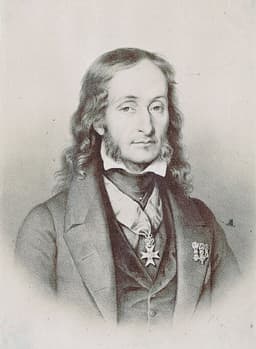
Peter O Neill
Politician · Modern
49.4Total

W. T. Cosgrave
Politician · Modern
54.5Total
Basic Information
Born
1965
1880
Died
—
1965
Era
Modern
Modern
Nationality
Papua New Guinea
Ireland
Occupation
Politician
Politician
Civilization
Other
Western
Score Comparison
Military (10%)
27.8
50.0
Political (20%)
45.0
62.7
Influence (20%)
53.3
54.1
Legacy (20%)
45.8
48.3
Leadership (15%)
72.0
68.0
Strategy (15%)
43.2
42.6
TOTAL
49.4
54.5
Peter O Neill — Complete Timeline
2012 AD
Elected Prime Minister of Papua New GuineaPolitical Action◆ Major
Peter O'Neill was elected Prime Minister by the National Parliament, succeeding Peter Paire. His election followed a period of political instability and marked the beginning of a long tenure.
ElectionLeadership
Impact: national
2013 AD
Signed the Papua New Guinea–Australia Regional Resettlement ArrangementPolitical Action◆ Major
O'Neill signed an agreement with Australia to host asylum seekers on Manus Island in exchange for aid. The arrangement was controversial and led to human rights concerns and legal challenges.
Asylum SeekersManus IslandAustralia
Impact: regionaldestructive
2019 AD
Resigned as Prime Minister amid corruption allegationsPolitical Action◆ Major
Facing a no-confidence motion and widespread protests over corruption allegations, O'Neill resigned as Prime Minister. He was succeeded by James Marape, ending his seven-year rule.
ResignationCorruptionPolitical Crisis
Impact: nationaldestructive
W. T. Cosgrave — Complete Timeline
1922 AD
Led the Irish Free State During the Civil WarWar◆ Major
Cosgrave's government faced the anti-Treaty IRA in the Irish Civil War from June 1922 to May 1923. He authorized executions of anti-Treaty prisoners, including Rory O'Connor, to suppress the rebellion. The war ended with the defeat of the anti-Treaty forces, but left deep divisions.
Irish Civil WarExecutionsIRA
Impact: nationaldestructive
Became President of the Executive Council of the Irish Free StatePolitical Action
Cosgrave became the first President of the Executive Council of the Irish Free State in December 1922, following the ratification of the Anglo-Irish Treaty. He led the pro-Treaty faction during the Irish Civil War, overseeing the establishment of the new state's institutions.
Irish Free StateAnglo-Irish TreatyCivil War
Impact: national
1925 AD
Established the Garda SíochánaReform◆ Major
Cosgrave's government established the Garda S
Police ReformGardaState Building
Impact: nationalconstructive
1932 AD
Lost Power to Fianna FáilPolitical Action◆ Major
Cosgrave's Cumann na nGaedheal party was defeated in the 1932 Irish general election by Fianna F
Election DefeatFianna FáilDemocracy
Impact: national
This comparison has not been analyzed yet.
One-time AI generation (~1 minute). Scores and timeline are already available below.
Rankings
🥇
W. T. CosgraveLeader
Mil: 50.0Pol: 62.7Inf: 54.1
54.5
🥈
Peter O Neill
Mil: 27.8Pol: 45.0Inf: 53.3
49.4
+5.1 behind
How This Comparison Works
Algorithm
Each figure is scored on 6 dimensions (0—100 scale) based on structured historical data: Military (10%), Political (20%), Influence (20%), Legacy (20%), Leadership (15%), Strategy (15%). The weighted total produces the final ranking.
Data Sources
Scores are computed from structured sub-indicators in the database. Scale factors adjust for era (Ancient ×0.85, Modern ×1.0) and civilization size (Eastern ×1.05, Other ×0.80) to account for differences in population and military scale.
Maximum 3 Figures
Comparisons are limited to 2—3 figures to ensure readability and statistical meaningfulness.
Error Margins
±5 points per dimension — Sub-scores are derived from historical records with inherent uncertainty. Two figures within 5 points on a dimension should be considered roughly equivalent in that area.
Total Score Accuracy
±3 points overall — The weighted combination of 6 dimensions produces a total score with approximately ±3 points of uncertainty. Differences of less than 3 points are not statistically significant— the figures are effectively tied.
Known Limitations
- Historical records are incomplete and uneven across civilizations
- Figures from oral-tradition societies may be underrepresented
- Occupation labels can misclassify multi-role figures
- Scores measure capability and impact, not moral character
- Quantitative scoring is a comparison tool, not absolute truth
Capability Radar
Military (10%) — Battles & Warfare
Battles
21
27
Win Rate
24
34
Expansion
26
33
Political (20%) — Governance & Reform
Reform
60
65
Diplomacy
65
55
Economy
55
50
Influence (20%) — Cultural & Global Reach
Cultural
30
30
Global
30
35
Legacy (20%) — Historical Impact
Historical
40
50
Longevity
35
40
Leadership (15%) — Power & Stability
Tenure
75
60
Stability
50
45
Strategy (15%) — Tactics & Innovation
Strategy
32
38
Tactics
34
43
Reform
34
41
Similar Comparisons
Comments & Discussion
No comments yet. Be the first to share your thoughts!