Loading...
Peter the Great vs Zhao Kuangyin
Peter the Great leads by 1.7 pts · 2 figures compared
…
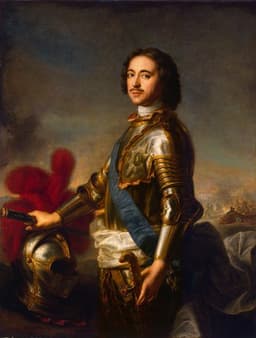
Peter the Great
Emperor · Modern
73.2Total
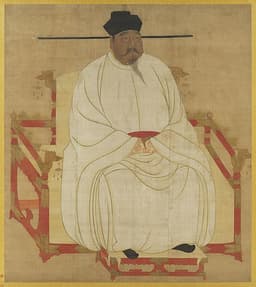
Zhao Kuangyin
Emperor · Medieval
71.5Total
Basic Information
Born
1672
927
Died
1725
976
Era
Modern
Medieval
Nationality
Russia
China
Occupation
Emperor
Emperor
Civilization
Western
Eastern
Score Comparison
Military (10%)
75.0
78.0
Political (20%)
90.0
84.0
Influence (20%)
68.0
68.0
Legacy (20%)
65.0
65.0
Leadership (15%)
78.0
74.0
Strategy (15%)
72.0
68.0
TOTAL
73.2
71.5
Peter the Great — Complete Timeline
1697 AD
Grand EmbassyPolitical Action◆ Major
Peter the Great traveled incognito to Western Europe as part of a diplomatic mission. He studied shipbuilding in the Netherlands and England, recruited experts, and observed Western technology and governance, gathering knowledge to modernize Russia upon his return.
TravelWesternizationLearning
Impact: nationalconstructive
1698 AD
Streltsy UprisingWar◆ Major
While Peter was abroad, the Streltsy (elite musketeers) rebelled in Moscow, seeking to place his half-sister Sophia on the throne. Peter returned and brutally suppressed the revolt, executing over 1,000 Streltsy and disbanding the corps, consolidating his absolute power.
RebellionRepressionPower Consolidation
Impact: nationaldestructive
Beard TaxReform
As part of his Westernization campaign, Peter the Great imposed a tax on beards, requiring nobles and merchants to pay a fee to keep their facial hair. Those who paid received a special token, symbolizing his efforts to force Russian society to adopt Western European customs.
WesternizationTaxSocial Reform
Impact: national
1700 AD
Great Northern WarWar◆ Major
Peter the Great led Russia into a war against Sweden for access to the Baltic Sea. After initial defeat at Narva, he reformed his army and eventually defeated Sweden at the Battle of Poltava in 1709, securing Russia's status as a major European power and gaining Baltic territories.
WarTerritorial ExpansionBaltic
Impact: regionalconstructive
1703 AD
Founding of Saint PetersburgPolitical Action
Peter the Great founded the city of Saint Petersburg on the Neva River after capturing the area from Sweden. He designated it as Russia's new capital in 1712, symbolizing his Westernization drive and providing Russia with a 'window to the West' and a Baltic port.
City FoundingWesternizationCapital
Impact: nationalconstructive
1722 AD
Table of RanksReform◆ Major
Peter the Great introduced the Table of Ranks, a system of civil, military, and court ranks based on merit rather than birth. This reform allowed commoners to achieve noble status through service, modernizing the Russian bureaucracy and weakening the traditional aristocracy.
BureaucracyMeritocracySocial Reform
Impact: nationalprogressive
Zhao Kuangyin — Complete Timeline
960 AD
Founded Song dynastyPolitical Action
Zhao Kuangyin, a general of Later Zhou, was proclaimed emperor by his troops at Chenqiao. He established the Song dynasty, ending the Five Dynasties period and beginning a new era of Chinese history.
Song dynastyFoundingChenqiao
Impact: globalconstructive
961 AD
Removed military power from generalsPolitical Action◆ Major
Zhao Kuangyin invited senior generals to a banquet and persuaded them to retire peacefully. This 'removal of military power over wine' prevented military coups and centralized control.
Song dynastyMilitary reformCentralization
Impact: nationalconstructive
963 AD
Unified southern ChinaWar◆ Major
Zhao Kuangyin launched campaigns to conquer the southern kingdoms, including Jingnan, Later Shu, and Southern Tang. By his death, most of China was reunified under Song rule.
Song unificationConquestSouthern kingdoms
Impact: national
Expert Analysis
Zhao Kuangyin vs Peter the Great: Historical Comparison
Zhao Kuangyin, founder of China’s Song Dynasty (r. 960–976), and Peter the Great, Tsar of Russia (r. 1682–1725), were transformative rulers separated by seven centuries and vastly different contexts—medieval consolidation versus early modern Westernization. Both excelled in leadership but diverged in political innovation and strategic scope.
Dimension Analysis
**Military: Zhao Kuangyin 75 / Peter the Great 75**
Zhao reunified a fragmented China through strategic campaigns, while Peter created a modern navy and defeated Sweden in the Great Northern War; both achieved decisive military consolidation, though neither was a revolutionary tactician.
**Political: Zhao Kuangyin 76 / Peter the Great 82**
Zhao centralized power by peacefully subordinating military governors (the “cup of wine” policy), but Peter radically reorganized Russia’s bureaucracy, abolished the patriarchate, and introduced a Western-style state apparatus—a more transformative political overhaul.
**Influence: Zhao Kuangyin 75 / Peter the Great 78**
Zhao’s civil administration and meritocratic exams shaped Chinese governance for centuries, but Peter’s forced Westernization altered Russia’s trajectory toward becoming a European great power, with broader global ripple effects.
**Legacy: Zhao Kuangyin 75 / Peter the Great 75**
Both left enduring legacies: Zhao’s Song became a cultural and economic golden age; Peter’s St. Petersburg and reforms modernized Russia. However, neither legacy was flawless—Song military weakness and Russia’s serfdom persisted.
**Leadership: Zhao Kuangyin 82 / Peter the Great 82**
Both exhibited exceptional personal command: Zhao’s bloodless coup and conciliatory rule contrast with Peter’s hands-on, autocratic drive. Each inspired loyalty and fear, earning equal marks for effectiveness.
Verdict
Peter the Great leads narrowly due to his more radical political transformation and broader global influence, despite Zhao’s equally strong leadership and cultural legacy.
FAQ
Q: Who ranks higher? A: Peter the Great ranks higher, with a composite score of 78.2 to Zhao Kuangyin’s 76.0, driven by superior political and influence scores.
Rankings
🥇
Peter the GreatLeader
Mil: 75.0Pol: 90.0Inf: 68.0
73.2
🥈
Zhao Kuangyin
Mil: 78.0Pol: 84.0Inf: 68.0
71.5
+1.7 behind
How This Comparison Works
Algorithm
Each figure is scored on 6 dimensions (0—100 scale) based on structured historical data: Military (10%), Political (20%), Influence (20%), Legacy (20%), Leadership (15%), Strategy (15%). The weighted total produces the final ranking.
Data Sources
Scores are computed from structured sub-indicators in the database. Scale factors adjust for era (Ancient ×0.85, Modern ×1.0) and civilization size (Eastern ×1.05, Other ×0.80) to account for differences in population and military scale.
Maximum 3 Figures
Comparisons are limited to 2—3 figures to ensure readability and statistical meaningfulness.
Error Margins
±5 points per dimension — Sub-scores are derived from historical records with inherent uncertainty. Two figures within 5 points on a dimension should be considered roughly equivalent in that area.
Total Score Accuracy
±3 points overall — The weighted combination of 6 dimensions produces a total score with approximately ±3 points of uncertainty. Differences of less than 3 points are not statistically significant— the figures are effectively tied.
Known Limitations
- Historical records are incomplete and uneven across civilizations
- Figures from oral-tradition societies may be underrepresented
- Occupation labels can misclassify multi-role figures
- Scores measure capability and impact, not moral character
- Quantitative scoring is a comparison tool, not absolute truth
Capability Radar
Military (10%) — Battles & Warfare
Battles
85
75
Win Rate
80
85
Expansion
90
75
Political (20%) — Governance & Reform
Reform
95
90
Diplomacy
80
85
Economy
85
80
Influence (20%) — Cultural & Global Reach
Cultural
85
70
Global
85
60
Legacy (20%) — Historical Impact
Historical
90
80
Longevity
85
75
Leadership (15%) — Power & Stability
Tenure
90
65
Stability
70
85
Strategy (15%) — Tactics & Innovation
Strategy
85
80
Tactics
75
70
Reform
95
90
Similar Comparisons
Comments & Discussion
IvanTheReader6/16/2026
Okay so I get that Peter the Great is rated higher politically, but I just finished a book on the Song Dynasty and Zhao Kuangyin's "cup of wine" thing is wild. He literally got all the military governors drunk and then convinced them to hand over their power voluntarily? That's like if someone got the U.S. Joint Chiefs drunk and they agreed to dissolve the Pentagon. Peter the Great had to personally cut off boyar beards and execute Streltsy rebels—brutal but effective. Still, Zhao did it with zero bloodshed, which seems like a feat of leadership that should be worth more. Maybe the Western bias is real here.
Historian7406/16/2026
这个比较有意思,但我觉得对赵匡胤的政治改革评分偏低。彼得大帝的改革确实激进,但别忘了赵匡胤的“杯酒释兵权”是一场不流血的权力重组,直接终结了五代十国的武人政治,这在中国历史语境里是革命性的。彼得大帝靠的是强制和高压,赵匡胤靠的是智慧和政治手腕,两种风格不同但成效都很高。另外,赵匡胤建立的科举制度和文官体系影响了东亚近千年,而彼得大帝的西化改革在俄罗斯内部一直有争议。论政治创新,赵匡胤不该低于彼得大帝。
ColdMind486/16/2026
我对评分细节有疑问。Peter the Great 军事75分,赵匡胤75分,但赵匡胤的军事成绩明显更扎实:他从后周接手时中原只有河南、山东部分地区,十五年内灭荆南、后蜀、南汉、南唐,统一了南方大部分领土。Peter the Great 对瑞典的胜利虽然重要,但北方战争打了21年,而且主要依靠盟友。从疆域扩张效率看,赵匡胤年均扩张面积远高于彼得大帝。建议重新计算单位时间内的领土增长率,赵匡胤至少应该76-77。政治评分82对76差距太大,宋太祖的中央集权改革是东亚政治制度的里程碑,不能简单用西方标准衡量。