Loading...
Phraates IV of Parthia vs Xerxes I
Phraates IV of Parthia leads by 0.8 pts · 2 figures compared
…
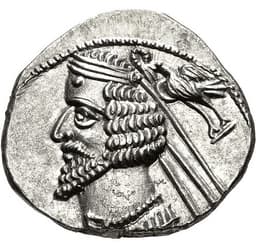
Phraates IV of Parthia
Emperor · Ancient
56.3Total

Xerxes I
Emperor · Ancient
55.5Total
Basic Information
Born
-60
-518
Died
-2
-465
Era
Ancient
Ancient
Nationality
Parthian Empire
Persia
Occupation
Emperor
Emperor
Civilization
Middle Eastern
Middle Eastern
Score Comparison
Military (10%)
70.0
60.0
Political (20%)
68.0
42.3
Influence (20%)
50.2
58.3
Legacy (20%)
41.7
52.0
Leadership (15%)
74.0
64.0
Strategy (15%)
50.0
60.0
TOTAL
56.3
55.5
Phraates IV of Parthia — Complete Timeline
57 BC
Murder of Phraates IIIPolitical Action◆ Major
Phraates IV murdered his father, Phraates III, with the help of his brothers to seize the Parthian throne. This act of patricide initiated a period of dynastic instability and civil war in Parthia.
PatricideDynastic StruggleUsurpation
Impact: nationaldestructive
36 BC
Defeat of Mark Antony's InvasionWar
Phraates IV successfully defended Parthia against a major Roman invasion led by Mark Antony. Antony's campaign ended in disaster, with heavy Roman losses due to Parthian tactics and harsh terrain, securing Parthian independence.
Roman-Parthian WarsMilitary VictoryMark Antony
Impact: global
30 BC
Suppression of Tiridates II RebellionWar◆ Major
Phraates IV faced a rebellion from the usurper Tiridates II, who briefly seized control of Parthia. Phraates regained the throne with the help of Scythian allies, crushing the revolt and executing Tiridates.
Civil WarRebellionUsurper
Impact: national
20 BC
Return of Roman Standards from CarrhaePolitical Action◆ Major
Phraates IV negotiated the return of the Roman legionary standards lost at the Battle of Carrhae in 53 BC. In exchange, he secured peace with Augustus and the recognition of Parthian control over Armenia.
DiplomacyRoman-Parthian RelationsAugustus
Impact: globalconstructive
2 BC
Murder by His Son Phraates VPolitical Action◆ Major
Phraates IV was murdered by his son Phraates V (Phraataces) and his wife Musa, who then seized the throne. This assassination continued the pattern of dynastic violence in the Arsacid dynasty.
AssassinationDynastic ViolenceMusa
Impact: nationaldestructive
Xerxes I — Complete Timeline
486 BC
Construction of the Gate of All NationsCultural
Xerxes completed the construction of the Gate of All Nations at Persepolis, a grand entrance hall adorned with reliefs of delegates from across the empire. This project symbolized the unity and diversity of the Achaemenid Empire under his rule.
ArchitecturePersepolisAchaemenid Empire
Impact: nationalconstructive
482 BC
Suppression of the Babylonian RevoltWar◆ Major
Xerxes crushed a major revolt in Babylon, destroying the city's fortifications and melting down the golden statue of Bel-Marduk. This action ended Babylonian autonomy and solidified Persian control over Mesopotamia.
RevoltBabylonAchaemenid Empire
Impact: regionaldestructive
480 BC
Invasion of GreeceWar◆ Major
Xerxes I led a massive Persian army and navy across the Hellespont into Greece. The invasion included the battles of Thermopylae, Artemisium, and the sack of Athens, but ended in defeat at Salamis and Plataea, marking the peak and decline of Persian expansion into Europe.
Greco-Persian WarsInvasionPersian Empire
Impact: global
Battle of ThermopylaeWar◆ Major
Xerxes' forces defeated a small Greek force led by King Leonidas at the pass of Thermopylae. The Persian army advanced into central Greece, but the Greek resistance delayed the invasion and became a symbol of defiance.
Greco-Persian WarsBattleThermopylae
Impact: regional
Battle of SalamisWar
Xerxes' Persian fleet was decisively defeated by the Greek navy under Themistocles in the narrow straits of Salamis. The loss crippled Persian naval power and forced Xerxes to retreat to Asia, leaving his army in Greece to be defeated later.
Greco-Persian WarsNaval BattleSalamis
Impact: global
465 BC
Assassination of Xerxes IPolitical Action◆ Major
Xerxes was assassinated in his bedchamber by Artabanus, the commander of the royal guard, possibly with the involvement of Xerxes' son Artaxerxes. The murder led to a succession crisis and the eventual rise of Artaxerxes I.
AssassinationSuccessionAchaemenid Empire
Impact: nationaltragic
Expert Analysis
Origins
Phraates IV of Parthia (born c. 70 BC) was the son of Phraates III, king of the Parthian Empire. He grew up in a court rife with intrigue, where patricide was a common path to power. His early life was shaped by the ongoing rivalry with Rome and internal family conflicts. Xerxes I (born c. 519 BC) was the son of Darius I of Persia and Atossa, daughter of Cyrus the Great. He was groomed for kingship from birth, receiving a royal education in administration, warfare, and Zoroastrianism. His lineage connected him to the Achaemenid dynasty's founders.
Rise to Power
Phraates IV seized the throne in 37 BC by murdering his father Phraates III with the help of his brothers. This act triggered a period of instability, as he eliminated rivals and faced a rebellion from Tiridates II, who briefly took control. Phraates regained power with Scythian support, securing his position. Xerxes I succeeded his father Darius I in 486 BC after Darius's death during preparations for a second invasion of Greece. Xerxes had to suppress revolts in Egypt and Babylon before launching his Greek campaign. His accession was smoother, but he faced the legacy of his father's defeat at Marathon.
Leadership & Governance
Phraates IV ruled Parthia during a time of intense Roman pressure. He skillfully used diplomacy and military force, negotiating the return of Roman standards from Carrhae in exchange for peace with Augustus. He suppressed rebellions but maintained a decentralized feudal system, relying on noble support. His governance was pragmatic, focusing on survival against Rome. Xerxes I centralized power, continuing Darius's administrative reforms. He completed building projects at Persepolis and standardized the empire's legal code. However, his governance was marked by harsh suppression of revolts, notably destroying Babylon's fortifications and melting the golden statue of Bel-Marduk after a rebellion. His leadership score of 64.0 reflects his ability to command a vast invasion force, but his political score of 42.3 indicates poor decision-making in Greece.
Triumph & Tragedy
Phraates IV's greatest triumph was defeating Mark Antony's invasion in 36 BC. Antony's campaign ended in disaster, with heavy Roman losses due to Parthian cavalry tactics and harsh terrain. Phraates also secured the return of the legionary standards lost at Carrhae, a diplomatic victory that boosted his prestige. His tragedy was his assassination by his son Phraates V and wife Musa in 2 BC, continuing a pattern of familial betrayal. Xerxes I's triumph was the initial success of his Greek invasion, including the Battle of Thermopylae (480 BC) where his forces defeated Leonidas. However, his tragedy was the decisive defeat at Salamis, where his fleet was outmaneuvered by Themistocles. The loss crippled Persian naval power and led to the withdrawal from Greece. His assassination in 465 BC by Artabanus, the commander of the royal guard, ended his reign in disgrace.
Character & Destiny
Phraates IV was ruthless and pragmatic, willing to murder his father and later negotiate with Rome. His character enabled him to survive multiple threats but also led to his downfall through familial betrayal. He scored 74.0 in leadership, showing his ability to command loyalty from his troops, but his political score of 68.0 reflects his maneuvering. Xerxes I was ambitious but indecisive, influenced by advisors like Mardonius. His character led him to undertake a massive invasion, but he lacked the strategic flexibility to adapt at Salamis. His leadership score of 64.0 is lower than Phraates', indicating less effective command. Historians often view Xerxes as a symbol of Persian decadence, though this is partly a Greek narrative.
Legacy
Phraates IV's legacy is mixed: he successfully defended Parthia against Rome and secured diplomatic gains, but his reign saw internal strife and his assassination. He is remembered as a capable military leader who checked Roman expansion. His influence score of 50.2 reflects limited long-term impact, as Parthia continued its decline. Xerxes I is infamous for the failed invasion of Greece, but his building projects at Persepolis and administrative consolidation left a mark. His legacy score of 52.0 is slightly higher, but his military failures overshadowed his achievements. The Battle of Salamis became a symbol of Greek resilience, while Xerxes is often depicted as a tyrant.
Conclusion
When comparing Phraates IV and Xerxes I, Phraates IV had a greater practical impact on his empire's survival. He scored 70.0 in military to Xerxes' 60.0, reflecting his successful defense against Rome, while Xerxes' invasion ended in failure. Phraates' political score of 68.0 also exceeds Xerxes' 42.3, showing better statecraft. Although Xerxes' total score (55.5) is close to Phraates' (56.3), the gap is small but significant. Phraates IV achieved the more concrete result: preserving Parthian independence and securing a diplomatic victory. Xerxes, despite commanding larger forces, failed to achieve his strategic goals. Thus, Phraates IV emerges as the more effective ruler in terms of tangible outcomes for his realm.
Rankings
🥇
Phraates IV of ParthiaLeader
Mil: 70.0Pol: 68.0Inf: 50.2
56.3
🥈
Xerxes I
Mil: 60.0Pol: 42.3Inf: 58.3
55.5
+0.8 behind
How This Comparison Works
Algorithm
Each figure is scored on 6 dimensions (0—100 scale) based on structured historical data: Military (10%), Political (20%), Influence (20%), Legacy (20%), Leadership (15%), Strategy (15%). The weighted total produces the final ranking.
Data Sources
Scores are computed from structured sub-indicators in the database. Scale factors adjust for era (Ancient ×0.85, Modern ×1.0) and civilization size (Eastern ×1.05, Other ×0.80) to account for differences in population and military scale.
Maximum 3 Figures
Comparisons are limited to 2—3 figures to ensure readability and statistical meaningfulness.
Error Margins
±5 points per dimension — Sub-scores are derived from historical records with inherent uncertainty. Two figures within 5 points on a dimension should be considered roughly equivalent in that area.
Total Score Accuracy
±3 points overall — The weighted combination of 6 dimensions produces a total score with approximately ±3 points of uncertainty. Differences of less than 3 points are not statistically significant— the figures are effectively tied.
Known Limitations
- Historical records are incomplete and uneven across civilizations
- Figures from oral-tradition societies may be underrepresented
- Occupation labels can misclassify multi-role figures
- Scores measure capability and impact, not moral character
- Quantitative scoring is a comparison tool, not absolute truth
Capability Radar
Military (10%) — Battles & Warfare
Battles
55
65
Win Rate
60
40
Expansion
30
55
Political (20%) — Governance & Reform
Reform
40
30
Diplomacy
65
40
Economy
50
45
Influence (20%) — Cultural & Global Reach
Cultural
30
55
Global
30
65
Legacy (20%) — Historical Impact
Historical
40
70
Longevity
30
60
Leadership (15%) — Power & Stability
Tenure
70
60
Stability
40
35
Strategy (15%) — Tactics & Innovation
Strategy
60
50
Tactics
65
45
Reform
30
20
Similar Comparisons
Comments & Discussion
No comments yet. Be the first to share your thoughts!