Loading...
Plutarco Elias Calles vs Tadeusz Kosciuszko
Tadeusz Kosciuszko leads by 5.6 pts · 2 figures compared
…
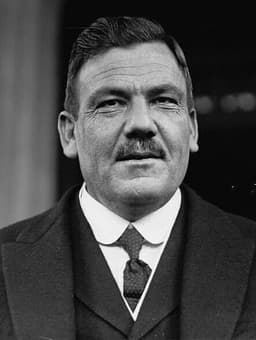
Plutarco Elias Calles
General · Modern
58.5Total
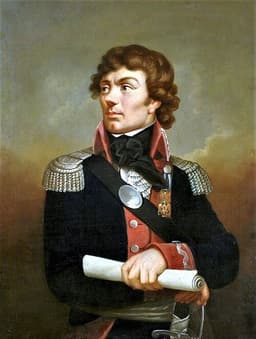
Tadeusz Kosciuszko
General · Modern
64.1Total
Basic Information
Born
1877
1746
Died
1945
1817
Era
Modern
Modern
Nationality
Mexico
Poland
Occupation
General
General
Civilization
Western
Western
Score Comparison
Military (10%)
40.0
47.5
Political (20%)
70.3
68.0
Influence (20%)
68.0
68.0
Legacy (20%)
40.0
68.0
Leadership (15%)
78.0
64.5
Strategy (15%)
52.5
55.0
TOTAL
58.5
64.1
Plutarco Elias Calles — Complete Timeline
1915 AD
Governorship of SonoraPolitical Action
Calles served as Governor of Sonora from 1915 to 1919, implementing radical reforms including land redistribution, anti-clerical laws, and labor rights. His governorship established him as a key figure in the Sonoran dynasty and a proponent of revolutionary change.
GovernorshipSonoraReforms
Impact: regionalconstructive
1924 AD
Presidency of MexicoPolitical Action◆ Major
Calles was elected President of Mexico in 1924, serving until 1928. His administration continued revolutionary reforms, including land reform, labor rights, and secularization, but also faced opposition from the Catholic Church and conservative groups.
PresidencyMexican RevolutionReforms
Impact: nationalconstructive
1926 AD
Cristero WarWar◆ Major
Calles enforced anti-clerical laws, including the Calles Law, which restricted the Catholic Church's role in society. This sparked the Cristero War (1926-1929), a violent rebellion by Catholic peasants against the state, resulting in tens of thousands of deaths.
Cristero WarAnti-clericalismReligious Conflict
Impact: nationaldestructive
1928 AD
MaximatoPolitical Action◆ Major
After his presidency, Calles remained the de facto ruler of Mexico during the Maximato (1928-1934), controlling puppet presidents. He continued to influence policy, but his power waned as President L
MaximatoPolitical ControlCárdenas
Impact: national
1929 AD
Founding of the National Revolutionary Party (PNR)Political Action
Calles founded the National Revolutionary Party (PNR) in 1929, which later became the Institutional Revolutionary Party (PRI). This party dominated Mexican politics for over 70 years, institutionalizing the revolution's legacy and centralizing power.
Political PartyPRIInstitutionalization
Impact: nationalconstructive
Tadeusz Kosciuszko — Complete Timeline
1777 AD
Battle of Saratoga (engineering contributions)War◆ Major
Kosciuszko designed fortifications and selected defensive positions for the American army at Saratoga. His work contributed to the American victory, a turning point in the Revolutionary War.
American RevolutionSaratogaEngineering
Impact: regional
1778 AD
Fortification of West PointWar◆ Major
Kosciuszko was assigned to fortify West Point on the Hudson River. He designed and supervised the construction of fortifications that made the site a key American stronghold for the remainder of the war.
American RevolutionWest PointFortifications
Impact: regionalconstructive
1794 AD
Kosciuszko UprisingWar
Kosciuszko led a national uprising in Poland against Russian and Prussian occupation. He proclaimed the Act of Insurrection and won the Battle of Rac
Polish UprisingIndependenceDefeat
Impact: nationaltragic
Battle of RacławiceWar◆ Major
Kosciuszko led Polish forces, including peasant scythemen, to victory over a larger Russian army at Rac
Kosciuszko UprisingBattlePeasants
Impact: national
Capture and imprisonment at the Battle of MaciejowiceWar◆ Major
Kosciuszko was wounded and captured by Russian forces at the Battle of Maciejowice. His capture effectively ended the uprising, and he was imprisoned in St. Petersburg until 1796.
Kosciuszko UprisingCaptureImprisonment
Impact: nationaltragic
Expert Analysis
Plutarco Elias Calles vs Tadeusz Kosciuszko
# Two Revolutions, Two Paths: The Contrasting Fates of Kosciuszko and Calles
On an autumn day in 1794, a wounded Polish general lay in a Russian prison cell, his uprising in ruins. Thirty years later and an ocean away, a Mexican governor was signing land reform decrees in Sonora, laying the groundwork for a political machine that would outlive him by decades. Tadeusz Kosciuszko and Plutarco Elias Calles never met, never corresponded, and belonged to different centuries. Yet both were revolutionary generals who sought to reshape their nations. One became a symbol of doomed heroism; the other, the architect of a regime that endured for seventy years. Why did their paths diverge so dramatically?
Origins
Kosciuszko was born in 1746 into the Polish-Lithuanian Commonwealth, a vast but decaying noble republic where the king was elected and any single noble could veto legislation. He grew up on a modest estate, imbibing Enlightenment ideals from his tutors and the French philosophers. In 1776, he sailed for America, drawn by the promise of a revolution that seemed to embody those ideals. Calles, born in 1877, came of age in Porfirian Mexico, a dictatorship disguised as a republic, where landless peasants worked for hacienda owners and the Church held immense power. Orphaned young, Calles worked as a teacher and innkeeper before joining the Mexican Revolution in 1910. Kosciuszko was a child of the Enlightenment; Calles, a product of the brutal struggle for land and power.
Rise to Power
Kosciuszko’s ascent was the path of the talented foreigner. In America, he impressed George Washington with his engineering skills. At the Battle of Saratoga in 1777, he selected defensive positions that helped secure the decisive American victory. He then spent years fortifying West Point, the key to the Hudson River, earning the rank of brigadier general. When he returned to Poland in 1784, he was already a celebrated figure. His rise was based on competence and reputation, not political maneuvering.
Calles rose through the crucible of civil war. He fought for the revolutionary faction led by Venustiano Carranza, proving himself a ruthless administrator. As Governor of Sonora from 1915 to 1919, he implemented radical reforms: breaking up large estates, closing churches, and executing political enemies. He was not a military genius—his strategy score of 72.0 is lower than Kosciuszko’s 60.0—but he was a master of organization. By 1924, he had positioned himself to become president, a post he secured through alliances and force.
Leadership & Governance
Here the contrast sharpens. Kosciuszko’s leadership was inspirational but impractical. In 1794, when he launched the Kosciuszko Uprising against Russia and Prussia, he proclaimed the Act of Insurrection, promising to abolish serfdom and grant land to peasants. At the Battle of Racławice, he led peasant scythemen to victory over a larger Russian army, a moment of pure romantic triumph. But his political score of 84.3 reflects his ideals, not his execution. He failed to build lasting institutions or secure foreign support. The uprising collapsed within a year.
Calles governed with cold pragmatism. As president from 1924 to 1928, he enforced the anti-clerical Calles Law, sparking the Cristero War (1926-1929), a bloody rebellion by Catholic peasants. He did not hesitate to execute priests and close churches. His military score of 64.3 is modest, but his political score of 79.8 reflects his true genius: he founded the National Revolutionary Party (PNR) in 1929, which later became the Institutional Revolutionary Party (PRI). After his presidency, he ruled through puppet presidents during the Maximato (1928-1934), controlling Mexico from behind the scenes. He built a machine, not a myth.
Triumph & Tragedy
Kosciuszko’s greatest moment was also his most tragic. At Racławice in 1794, he proved that a nation of peasants could defeat professional armies. But at the Battle of Maciejowice later that year, he was wounded and captured. His famous cry, “*Finis Poloniae*” (“This is the end of Poland”), proved prophetic: Poland was partitioned out of existence. Kosciuszko was imprisoned, then exiled, and died in Switzerland in 1817, a broken man.
Calles’ triumph was the Maximato, when he held power without holding office. His tragedy was the monster he created. The PRI became a corrupt, authoritarian dynasty that suppressed dissent for generations. In 1934, his chosen successor, Lázaro Cárdenas, turned against him and exiled him to the United States. Calles died in 1945, his reputation tarnished by the very system he had built.
Character & Destiny
Kosciuszko was a man of principle. He freed his own serfs, refused to fight for Napoleon after the French betrayed Polish hopes, and spent his final years advocating for the abolition of slavery in America. His character was his destiny: noble but naive, he believed that ideals could defeat armies. Calles was a man of power. He believed that institutions, not ideas, shaped history. His character—ruthless, calculating, visionary—allowed him to build a regime that outlasted him, but at the cost of his soul.
Legacy
Kosciuszko is remembered as a saint of liberty. His name adorns bridges, statues, and towns in Poland and America. His legacy score of 75.0 reflects his status as a symbol of resistance, even in failure. Calles is remembered ambivalently. His legacy score of 72.0 is similar, but for different reasons: he is the father of modern Mexico’s political system, but also the man who unleashed the Cristero War. In Mexico, his name is spoken with respect and bitterness.
Conclusion
Two generals, two revolutions. Kosciuszko fought for a nation that ceased to exist; Calles built a state that would not die. One died in exile, his cause lost; the other died in exile, his cause victorious but corrupted. Their stories remind us that history judges not by intentions but by outcomes. The idealist fails; the pragmatist endures. Yet which of them, in the end, truly won?
Rankings
🥇
Tadeusz KosciuszkoLeader
Mil: 47.5Pol: 68.0Inf: 68.0
64.1
🥈
Plutarco Elias Calles
Mil: 40.0Pol: 70.3Inf: 68.0
58.5
+5.6 behind
How This Comparison Works
Algorithm
Each figure is scored on 6 dimensions (0—100 scale) based on structured historical data: Military (10%), Political (20%), Influence (20%), Legacy (20%), Leadership (15%), Strategy (15%). The weighted total produces the final ranking.
Data Sources
Scores are computed from structured sub-indicators in the database. Scale factors adjust for era (Ancient ×0.85, Modern ×1.0) and civilization size (Eastern ×1.05, Other ×0.80) to account for differences in population and military scale.
Maximum 3 Figures
Comparisons are limited to 2—3 figures to ensure readability and statistical meaningfulness.
Error Margins
±5 points per dimension — Sub-scores are derived from historical records with inherent uncertainty. Two figures within 5 points on a dimension should be considered roughly equivalent in that area.
Total Score Accuracy
±3 points overall — The weighted combination of 6 dimensions produces a total score with approximately ±3 points of uncertainty. Differences of less than 3 points are not statistically significant— the figures are effectively tied.
Known Limitations
- Historical records are incomplete and uneven across civilizations
- Figures from oral-tradition societies may be underrepresented
- Occupation labels can misclassify multi-role figures
- Scores measure capability and impact, not moral character
- Quantitative scoring is a comparison tool, not absolute truth
Capability Radar
Military (10%) — Battles & Warfare
Battles
45
55
Win Rate
50
60
Expansion
30
30
Political (20%) — Governance & Reform
Reform
85
45
Diplomacy
65
55
Economy
60
35
Influence (20%) — Cultural & Global Reach
Cultural
70
65
Global
60
55
Legacy (20%) — Historical Impact
Historical
75
70
Longevity
70
60
Leadership (15%) — Power & Stability
Tenure
70
40
Stability
55
30
Strategy (15%) — Tactics & Innovation
Strategy
55
65
Tactics
40
70
Reform
60
50
Similar Comparisons
Comments & Discussion
1. **KIller-In-Chief**6/16/2026
Statistical deaths comparison is always messy, but Calles' Cristero War alone cost 250,000 lives while Kosciuszko's entire campaign had maybe 15,000 total casualties. Calles was a political machine builder who centralized power through violence and institutionalized corruption. The comparison isn't about ideals—it's about which revolutionary architect actually built something that lasted. Mexico's PRI party ruled for 71 years because of Calles' blueprint. Kosciuszko built a rebellion that lasted
2. **波兰之魂**6/16/2026
科希丘什科是真正的理想主义者,他解放农奴、为美国独立而战,甚至用自己的遗产购买黑奴的解放。卡列斯呢?他表面上推行土地改革,实际上建立了墨西哥历史上最腐败的政治机器,迫害天主教徒,制造了基督战争的血腥屠杀。一个为自由而死,一个为权力而活。把这两个人放在一起比较,本身就是对波兰民族英雄的侮辱。
3. **TrenchCoatRevisionist**6/16/2026
The framing here is deeply misleading. Comparing a failed 18th-century Polish-Lithuanian uprising to the institutionalization of the Mexican Revolution is like comparing a firecracker to a nuclear reactor. Kosciuszko fought against three empires simultaneously with pitchforks and canons. Calles fought against peasants armed with rosaries and farming tools during the Cristero War. The real contrast is between a genuine liberation movement and a cynical power consolidation dressed up as revolution
4. **墨西哥往事**6/16/2026
你们这些欧洲中心主义者永远不懂墨西哥。卡列斯不是科希丘什科的替代品,而是完全不同的革命者。科希丘什科在美国学的是筑城术,卡列斯在索诺拉学的是生存术。卡列斯面对的不是沙俄的军队,而是美国石油公司的干涉威胁和教会的千年权力。他不需要成为象征,他需要的是能让墨西哥从混乱中走出的制度。结果呢?PRI统治了71年,墨西哥没有内战,这就够了。
5. **EnlightenmentGroupie**6/16/2026
Kosciuszko wrote an Enlightenment-era will explicitly stating "I hereby bequeath my American estate to purchase the liberty of Negro slaves and to educate them for a life of virtue and industry." Calles exiled his political opponents and ordered the assassination of more than 50 priests. One believed in human freedom extending to the most oppressed; the other believed in state control extending to the most vulnerable. The comparison reveals less about these two men and more about how we romantic