Loading...
Pol Pot vs Sviatlana Tsikhanouskaya
Pol Pot leads by 0.0 pts · 2 figures compared
…

Pol Pot
Politician · Modern
46.3Total
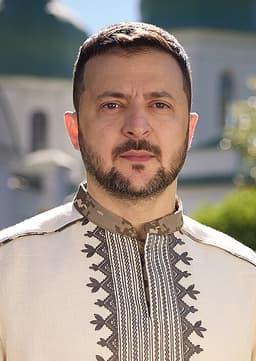
Sviatlana Tsikhanouskaya
Politician · Modern
46.3Total
Basic Information
Born
1925
1982
Died
—
—
Era
Modern
Modern
Nationality
Cambodia
Belarus
Occupation
Politician
Politician
Civilization
Eastern
Western
Score Comparison
Military (10%)
50.0
46.8
Political (20%)
27.9
43.7
Influence (20%)
54.1
59.0
Legacy (20%)
45.0
45.0
Leadership (15%)
62.2
31.2
Strategy (15%)
30.3
43.4
TOTAL
46.3
46.3
Pol Pot — Complete Timeline
1963 AD
Became Leader of the Khmer RougePolitical Action◆ Major
Pol Pot became the leader of the Communist Party of Kampuchea (Khmer Rouge). He began building a secretive organization dedicated to establishing a radical agrarian communist state in Cambodia.
Khmer RougeCommunist PartyLeadership
Impact: nationaldestructive
1975 AD
Capture of Phnom PenhWar
Khmer Rouge forces captured Phnom Penh, ending the Cambodian Civil War. Pol Pot's regime immediately began evacuating the city, forcing millions into rural labor camps. This marked the start of the Cambodian genocide.
Civil WarCaptureGenocide
Impact: nationaldestructive
Year Zero and Forced CollectivizationReform
Pol Pot declared 'Year Zero,' abolishing money, markets, and schools. The regime forced the entire population into agricultural communes, abolished religion, and executed intellectuals. This led to mass starvation and death.
Year ZeroCollectivizationStarvation
Impact: nationaldestructive
Cambodian GenocidePolitical Action
Under Pol Pot's leadership, the Khmer Rouge regime systematically killed an estimated 1.5 to 2 million Cambodians through execution, forced labor, and starvation. The regime targeted intellectuals, ethnic minorities, and political opponents.
GenocideMass KillingHuman Rights
Impact: globaldestructive
1979 AD
Ousted by Vietnamese InvasionWar◆ Major
Vietnamese forces invaded Cambodia and captured Phnom Penh, overthrowing the Khmer Rouge regime. Pol Pot fled to the Thai border, where he continued to lead a guerrilla insurgency for years.
InvasionVietnamGuerrilla War
Impact: regional
Sviatlana Tsikhanouskaya — Complete Timeline
2020 AD
Tsikhanouskaya's 2020 presidential campaignPolitical Action
Tsikhanouskaya registered as a candidate for the Belarusian presidential election after her husband Sergei was jailed. She ran against Alexander Lukashenko, drawing large crowds at rallies. The election was widely condemned as fraudulent.
ElectionBelarusOpposition
Impact: national
Tsikhanouskaya's exile to LithuaniaPolitical Action◆ Major
After the disputed election, Tsikhanouskaya fled to Lithuania under pressure from Belarusian authorities. She continued to lead the opposition from exile, coordinating protests and international pressure against Lukashenko's government.
ExileOppositionBelarus
Impact: nationaltragic
Tsikhanouskaya's meeting with Western leadersPolitical Action◆ Major
Tsikhanouskaya met with U.S. Secretary of State Mike Pompeo and other Western leaders, seeking support for democratic transition in Belarus. She was recognized by many Western governments as the legitimate winner of the 2020 election.
DiplomacyInternational supportBelarus
Impact: globalconstructive
Expert Analysis
Origins
Pol Pot, born Saloth Sar in 1925 in Prek Sbauv, Cambodia, grew up in a relatively prosperous peasant family. He attended a Buddhist monastery school and later studied in Paris, where he joined the French Communist Party. His exposure to radical leftist ideology and resentment of French colonialism shaped his worldview. Returning to Cambodia in 1953, he joined the anti-colonial resistance and eventually became a leading figure in the Khmer Rouge.
Sviatlana Tsikhanouskaya, born in 1982 in Mikashevichy, Belarus, studied international relations but worked as a translator and interpreter. She was not politically active until her husband, Sergei Tsikhanousky, a popular blogger and opposition figure, was jailed in 2020. She stepped into the political arena reluctantly, registering for the presidential election to replace him. Her background was that of an ordinary citizen, not a seasoned politician.
Rise to Power
Pol Pot's rise began within the clandestine Communist Party of Kampuchea. By 1963, he became party secretary. During the Cambodian Civil War (1967-1975), the Khmer Rouge gained territory, culminating in the capture of Phnom Penh on April 17, 1975. Pol Pot then declared 'Year Zero' and established Democratic Kampuchea, with himself as prime minister.
Tsikhanouskaya's rise was meteoric. In May 2020, she registered as a candidate after her husband's imprisonment. She quickly attracted massive support, drawing crowds of thousands to her rallies. The August 9, 2020 election was widely denounced as rigged in favor of Alexander Lukashenko. Tsikhanouskaya claimed victory and led peaceful protests until forced into exile in Lithuania on August 11, 2020. From there, she continued to coordinate opposition activities.
Leadership & Governance
Pol Pot's leadership was totalitarian and paranoid. He implemented radical agrarian communism, abolishing currency, education, and private property. The regime forced mass evacuations, executed intellectuals, and established brutal labor camps. His governance score of 62.2 reflects his control, but his political score of 27.9 indicates his failure to build sustainable institutions.
Tsikhanouskaya's leadership is democratic and decentralized. She leads a coordination council of opposition figures, advocating for non-violent resistance and international pressure. Her political score of 43.7 shows her ability to mobilize, but her leadership score of 31.2 indicates limited executive experience. She scores 59.0 in influence, higher than Pol Pot's 54.1, due to her global advocacy.
Triumph & Tragedy
Pol Pot's greatest 'triumph' was seizing power and implementing his utopian vision. However, the result was the Cambodian genocide, with an estimated 1.5-2 million deaths (21% of the population). His regime collapsed in 1979 after Vietnamese invasion. He lived in exile until his death in 1998, never facing trial.
Tsikhanouskaya's triumph was mobilizing millions against Lukashenko, earning recognition as Belarus's rightful leader by many Western nations. Her tragedy is her continued exile, with Lukashenko still in power. She has not achieved regime change, but she has kept the opposition alive.
Character & Destiny
Pol Pot was secretive, ruthless, and ideologically rigid. He believed in violent class struggle and sacrificed millions for his vision. His destiny was to be one of history's most vilified figures, his name synonymous with genocide.
Tsikhanouskaya is relatable, courageous, and determined. She transformed from a housewife into a symbol of resistance. Her fate is uncertain, but she has chosen exile rather than compromise, embodying moral clarity.
Legacy
Pol Pot's legacy is catastrophic: the destruction of Cambodian society, the killing fields, and the term 'autogenocide.' His influence on extremist movements is minimal; he scored 45.0 in legacy. In contrast, Tsikhanouskaya's legacy is nascent but positive: she has inspired democratic movements in authoritarian states. Her legacy score is also 45.0, but for different reasons.
Conclusion
While both scored 46.3 overall, their impacts are incomparable. Pol Pot's negative influence was massive, causing millions of deaths. Tsikhanouskaya's positive influence is still potential. In terms of historical impact, Pol Pot's actions reshaped Cambodia and killed millions, giving him a greater imprint. However, in terms of moral leadership and future potential, Tsikhanouskaya's score of 59.0 in influence surpasses Pol Pot's 54.1. Ultimately, Pol Pot's impact is larger in scale, but Tsikhanouskaya's impact is more hopeful. The victor in this comparison depends on the metric: for sheer historical change, Pol Pot; for democratic values, Tsikhanouskaya.
Rankings
🥇
Pol PotLeader
Mil: 50.0Pol: 27.9Inf: 54.1
46.3
🥈
Sviatlana Tsikhanouskaya
Mil: 46.8Pol: 43.7Inf: 59.0
46.3
How This Comparison Works
Algorithm
Each figure is scored on 6 dimensions (0—100 scale) based on structured historical data: Military (10%), Political (20%), Influence (20%), Legacy (20%), Leadership (15%), Strategy (15%). The weighted total produces the final ranking.
Data Sources
Scores are computed from structured sub-indicators in the database. Scale factors adjust for era (Ancient ×0.85, Modern ×1.0) and civilization size (Eastern ×1.05, Other ×0.80) to account for differences in population and military scale.
Maximum 3 Figures
Comparisons are limited to 2—3 figures to ensure readability and statistical meaningfulness.
Error Margins
±5 points per dimension — Sub-scores are derived from historical records with inherent uncertainty. Two figures within 5 points on a dimension should be considered roughly equivalent in that area.
Total Score Accuracy
±3 points overall — The weighted combination of 6 dimensions produces a total score with approximately ±3 points of uncertainty. Differences of less than 3 points are not statistically significant— the figures are effectively tied.
Known Limitations
- Historical records are incomplete and uneven across civilizations
- Figures from oral-tradition societies may be underrepresented
- Occupation labels can misclassify multi-role figures
- Scores measure capability and impact, not moral character
- Quantitative scoring is a comparison tool, not absolute truth
Capability Radar
Military (10%) — Battles & Warfare
Battles
30
31
Win Rate
40
34
Expansion
25
37
Political (20%) — Governance & Reform
Reform
10
40
Diplomacy
15
55
Economy
5
10
Influence (20%) — Cultural & Global Reach
Cultural
10
45
Global
55
50
Legacy (20%) — Historical Impact
Historical
60
40
Longevity
20
30
Leadership (15%) — Power & Stability
Tenure
55
5
Stability
5
10
Strategy (15%) — Tactics & Innovation
Strategy
30
39
Tactics
35
41
Reform
20
45
Similar Comparisons
Comments & Discussion
No comments yet. Be the first to share your thoughts!