Loading...
This comparison has not been analyzed yet.
One-time AI generation (~1 minute). Scores and timeline are already available below.
Ptolemy IV Philopator vs Seth-Peribsen
Ptolemy IV Philopator leads by 0.5 pts · 2 figures compared
…
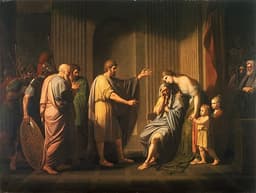
Ptolemy IV Philopator
Emperor · Ancient
39.2Total

Seth-Peribsen
Emperor · Ancient
38.7Total
Basic Information
Born
-244
-2750
Died
-204
-2730
Era
Ancient
Ancient
Nationality
Ptolemaic Kingdom
Early Egypt
Occupation
Emperor
Emperor
Civilization
Middle Eastern
Middle Eastern
Score Comparison
Military (10%)
30.0
25.9
Political (20%)
27.9
29.3
Influence (20%)
48.6
47.1
Legacy (20%)
38.3
40.0
Leadership (15%)
45.0
41.5
Strategy (15%)
35.0
36.8
TOTAL
39.2
38.7
Ptolemy IV Philopator — Complete Timeline
217 BC
Battle of RaphiaWar
Ptolemy IV led a Ptolemaic army that included 20,000 native Egyptian soldiers to defeat the Seleucid king Antiochus III at Raphia. This victory secured Ptolemaic control over Coele-Syria and temporarily halted Seleucid expansion, but the use of Egyptian troops later fueled native revolts.
Seleucid WarBattleEgyptian Army
Impact: regional
207 BC
Revolt of the Egyptian PriestsWar◆ Major
Following the Battle of Raphia, native Egyptian priests led a rebellion against Ptolemaic rule, exploiting the military training given to Egyptians. The revolt established an independent Egyptian kingdom in Upper Egypt that lasted until 186 BC, weakening Ptolemaic control.
Native RevoltCivil WarEgyptian Kingdom
Impact: nationaldestructive
204 BC
Assassination of Sosibius and AgathoclesPolitical Action◆ Major
Ptolemy IV's chief ministers Sosibius and Agathocles were killed by a mob in Alexandria after his death. Their corrupt rule and the king's neglect of state affairs had caused widespread discontent, leading to a power vacuum and the accession of the child king Ptolemy V.
Court IntrigueRegicidePower Vacuum
Impact: nationaldestructive
Seth-Peribsen — Complete Timeline
2740 BC
Adoption of Seth animal as royal symbolCultural◆ Major
Seth-Peribsen replaced the traditional Horus falcon with the Seth animal above his serekh, the royal emblem. This departure from the Horus name used by all previous pharaohs indicates a religious or political shift during the Second Dynasty, possibly reflecting a division in the kingdom or a theological change.
Religious ChangeRoyal SymbolismSecond Dynasty
Impact: national
2730 BC
Burial at AbydosOther
Seth-Peribsen was buried in a tomb at Abydos (tomb P). The tomb contained seal impressions with the Seth name and a unique funerary stela. The burial site and artifacts provide evidence of his reign and the religious context of the period.
BurialAbydosArchaeology
This comparison has not been analyzed yet.
One-time AI generation (~1 minute). Scores and timeline are already available below.
Rankings
🥇
Ptolemy IV PhilopatorLeader
Mil: 30.0Pol: 27.9Inf: 48.6
39.2
🥈
Seth-Peribsen
Mil: 25.9Pol: 29.3Inf: 47.1
38.7
+0.5 behind
How This Comparison Works
Algorithm
Each figure is scored on 6 dimensions (0—100 scale) based on structured historical data: Military (10%), Political (20%), Influence (20%), Legacy (20%), Leadership (15%), Strategy (15%). The weighted total produces the final ranking.
Data Sources
Scores are computed from structured sub-indicators in the database. Scale factors adjust for era (Ancient ×0.85, Modern ×1.0) and civilization size (Eastern ×1.05, Other ×0.80) to account for differences in population and military scale.
Maximum 3 Figures
Comparisons are limited to 2—3 figures to ensure readability and statistical meaningfulness.
Error Margins
±5 points per dimension — Sub-scores are derived from historical records with inherent uncertainty. Two figures within 5 points on a dimension should be considered roughly equivalent in that area.
Total Score Accuracy
±3 points overall — The weighted combination of 6 dimensions produces a total score with approximately ±3 points of uncertainty. Differences of less than 3 points are not statistically significant— the figures are effectively tied.
Known Limitations
- Historical records are incomplete and uneven across civilizations
- Figures from oral-tradition societies may be underrepresented
- Occupation labels can misclassify multi-role figures
- Scores measure capability and impact, not moral character
- Quantitative scoring is a comparison tool, not absolute truth
Capability Radar
Military (10%) — Battles & Warfare
Battles
40
10
Win Rate
50
10
Expansion
10
10
Political (20%) — Governance & Reform
Reform
10
30
Diplomacy
20
20
Economy
15
20
Influence (20%) — Cultural & Global Reach
Cultural
20
30
Global
10
10
Legacy (20%) — Historical Impact
Historical
25
30
Longevity
15
20
Leadership (15%) — Power & Stability
Tenure
40
30
Stability
15
20
Strategy (15%) — Tactics & Innovation
Strategy
30
10
Tactics
45
10
Reform
10
10
Similar Comparisons
Comments & Discussion
No comments yet. Be the first to share your thoughts!