Loading...
Rajiv Gandhi vs Vicente Fox
Vicente Fox leads by 3.3 pts · 2 figures compared
…
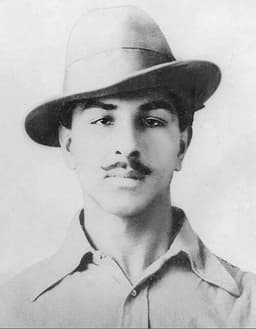
Rajiv Gandhi
Politician · Modern
47.1Total

Vicente Fox
Politician · Modern
50.4Total
Basic Information
Born
1944
1942
Died
—
—
Era
Modern
Modern
Nationality
India
Mexico
Occupation
Politician
Politician
Civilization
Indian
Western
Score Comparison
Military (10%)
38.3
50.0
Political (20%)
45.0
68.0
Influence (20%)
60.0
54.9
Legacy (20%)
46.7
45.0
Leadership (15%)
40.0
40.0
Strategy (15%)
38.3
42.4
TOTAL
47.1
50.4
Rajiv Gandhi — Complete Timeline
1984 AD
Became Prime Minister of IndiaPolitical Action◆ Major
After the assassination of his mother, Prime Minister Indira Gandhi, Rajiv Gandhi was appointed Prime Minister. He was the youngest person to hold the office, at age 40.
Prime MinisterSuccessionIndia
Impact: national
Bhopal Gas Tragedy ResponsePolitical Action◆ Major
Rajiv Gandhi's government faced the aftermath of the Bhopal gas leak, the world's worst industrial disaster. The government's response, including compensation and legal action against Union Carbide, was criticized as inadequate.
DisasterIndustrial AccidentCriticism
Impact: nationaltragic
1985 AD
Shah Bano Case ControversyPolitical Action◆ Major
Rajiv Gandhi's government overturned a Supreme Court ruling granting alimony to a divorced Muslim woman, passing the Muslim Women (Protection of Rights on Divorce) Act. This was seen as pandering to conservative Muslim leaders and sparked debate on secularism.
Muslim LawSecularismWomen's Rights
Impact: national
1991 AD
Assassinated by LTTEPolitical Action
Rajiv Gandhi was assassinated by a suicide bomber of the Liberation Tigers of Tamil Eelam (LTTE) during an election rally in Sriperumbudur, Tamil Nadu. His death was a major blow to Indian politics.
AssassinationLTTETamil Nadu
Impact: nationaltragic
Vicente Fox — Complete Timeline
2000 AD
Election as first opposition president in 71 yearsPolitical Action
Vicente Fox of the National Action Party (PAN) won the presidential election, defeating the long-ruling PRI. This marked Mexico's first peaceful transfer of power to an opposition party since 1929, ending one-party rule.
DemocratizationElectionPolitical Change
Impact: nationalconstructive
2001 AD
Creation of the Federal Police forceReform◆ Major
Fox created the Federal Police (Polic
Police ReformSecurityDrug War
Impact: national
Failed attempt to pass indigenous rights legislationPolitical Action◆ Major
Fox sent a constitutional reform on indigenous rights to Congress, but the final version was watered down. The Zapatistas rejected it, and the initiative failed to address key demands for autonomy, leading to continued conflict in Chiapas.
Indigenous RightsLegislationFailure
Impact: national
Expert Analysis
Origins
Rajiv Gandhi was born on August 20, 1944, in Mumbai, into the Nehru-Gandhi political dynasty. His mother was Prime Minister Indira Gandhi, and his grandfather was Jawaharlal Nehru. He studied at the Doon School and later at Cambridge University, but did not complete his degree. He worked as a pilot for Indian Airlines before entering politics. In contrast, Vicente Fox was born on July 2, 1942, in Mexico City, to a family of ranchers and small business owners. He studied business administration at the Ibero-American University and earned a diploma in senior management from Harvard Business School. He worked for Coca-Cola, rising to become head of operations in Mexico and Latin America before entering politics.
Rise to Power
Rajiv Gandhi's rise was sudden and tragic. After his younger brother Sanjay died in 1980, Rajiv was coaxed by his mother into politics. He won a parliamentary seat in 1981. When Indira Gandhi was assassinated on October 31, 1984, Rajiv became Prime Minister within hours, at age 40, the youngest in Indian history. He led the Congress party to a landslide victory in the 1984 elections, winning 414 of 542 seats. Vicente Fox's rise was gradual and strategic. He joined the National Action Party (PAN) in 1987 and was elected to the federal Chamber of Deputies in 1988. He became Governor of Guanajuato in 1995. In 2000, he ran for president as the PAN candidate, defeating the long-ruling Institutional Revolutionary Party (PRI) after 71 years. His victory marked Mexico's first peaceful transfer of power to an opposition party.
Leadership & Governance
Rajiv Gandhi focused on modernizing India's economy and technology. He reduced import tariffs, promoted computerization, and expanded telecommunications. He also introduced the Anti-Defection Law to curb political defections. However, his government's response to the Bhopal gas tragedy (1984) was criticized for being slow and inadequate. He also faced the Shah Bano case, where his government overturned a Supreme Court ruling on alimony for a divorced Muslim woman, passing a law that many saw as pandering to conservative Muslim leaders. Vicente Fox pursued economic liberalization and sought to strengthen democratic institutions. He created the Federal Police (Policía Federal) to combat organized crime, but his administration struggled with corruption and drug violence. He failed to pass comprehensive indigenous rights legislation after the Zapatista uprising. His political score of 68.0 reflects his ability to win power but limited legislative success.
Triumph & Tragedy
Rajiv Gandhi's greatest success was his push for modernization and his role in the 1985 Assam Accord, which ended a violent separatist movement. He also sent Indian peacekeeping forces to Sri Lanka in 1987 to mediate the civil war. However, this intervention backfired, leading to conflict with the Liberation Tigers of Tamil Eelam (LTTE). His greatest tragedy was his assassination by an LTTE suicide bomber on May 21, 1991, during an election rally. His legacy score of 46.7 reflects both his reforms and his failures in handling ethnic conflicts. Vicente Fox's triumph was ending the PRI's 71-year hold on the presidency, a milestone for Mexican democracy. He also signed the U.S.-Mexico Partnership for Prosperity. However, his inability to pass major reforms, including indigenous rights and energy liberalization, limited his achievements. His leadership score of 40.0 indicates moderate effectiveness.
Character & Destiny
Rajiv Gandhi was known as a reluctant politician, often seen as aloof and technocratic. He trusted his advisors, some of whom were later implicated in corruption scandals like the Bofors arms deal. His character—idealistic but inexperienced—shaped his destiny. He sought to modernize India but was overwhelmed by the complexities of ethnic and religious politics. His assassination cut short his potential. Vicente Fox was charismatic and a skilled campaigner, but his governance was hampered by a lack of legislative experience. He often clashed with Congress and failed to build coalitions. His character—optimistic and business-oriented—led him to focus on economic reforms but neglect political consensus. His total score of 50.4 reflects a balanced but unexceptional tenure.
Legacy
Rajiv Gandhi's legacy is mixed. He is credited with laying the groundwork for India's IT revolution and economic liberalization, but his handling of the Shah Bano case and the Sri Lankan intervention is criticized. His assassination made him a martyr in some circles. Vicente Fox's legacy is that of a democratizer. He proved that peaceful political transitions were possible in Mexico, but his presidency did not deliver the transformative changes many expected. His Federal Police force remains but has been criticized for human rights abuses. Both leaders scored low in military (38.3 and 50.0) as they were not military figures.
Conclusion
While Rajiv Gandhi scored 47.1 and Vicente Fox scored 50.4, a difference of 3.3 points, the question of greater impact depends on context. Rajiv Gandhi's modernization efforts had a more far-reaching effect on India's economic trajectory, even if his political decisions were flawed. Fox's democratic achievement was significant but his policy impact was limited. Considering the scale of India's challenges and the long-term influence of his technology policies, Rajiv Gandhi had a greater impact on history. His total score is lower due to his failures, but the transformative potential he unleashed outweighs Fox's higher but less consequential scores.
Rankings
🥇
Vicente FoxLeader
Mil: 50.0Pol: 68.0Inf: 54.9
50.4
🥈
Rajiv Gandhi
Mil: 38.3Pol: 45.0Inf: 60.0
47.1
+3.3 behind
How This Comparison Works
Algorithm
Each figure is scored on 6 dimensions (0—100 scale) based on structured historical data: Military (10%), Political (20%), Influence (20%), Legacy (20%), Leadership (15%), Strategy (15%). The weighted total produces the final ranking.
Data Sources
Scores are computed from structured sub-indicators in the database. Scale factors adjust for era (Ancient ×0.85, Modern ×1.0) and civilization size (Eastern ×1.05, Other ×0.80) to account for differences in population and military scale.
Maximum 3 Figures
Comparisons are limited to 2—3 figures to ensure readability and statistical meaningfulness.
Error Margins
±5 points per dimension — Sub-scores are derived from historical records with inherent uncertainty. Two figures within 5 points on a dimension should be considered roughly equivalent in that area.
Total Score Accuracy
±3 points overall — The weighted combination of 6 dimensions produces a total score with approximately ±3 points of uncertainty. Differences of less than 3 points are not statistically significant— the figures are effectively tied.
Known Limitations
- Historical records are incomplete and uneven across civilizations
- Figures from oral-tradition societies may be underrepresented
- Occupation labels can misclassify multi-role figures
- Scores measure capability and impact, not moral character
- Quantitative scoring is a comparison tool, not absolute truth
Capability Radar
Military (10%) — Battles & Warfare
Battles
0
27
Win Rate
0
31
Expansion
0
34
Political (20%) — Governance & Reform
Reform
60
45
Diplomacy
65
55
Economy
55
40
Influence (20%) — Cultural & Global Reach
Cultural
45
30
Global
45
40
Legacy (20%) — Historical Impact
Historical
50
50
Longevity
30
20
Leadership (15%) — Power & Stability
Tenure
55
60
Stability
40
35
Strategy (15%) — Tactics & Innovation
Strategy
0
38
Tactics
0
39
Reform
10
46
Similar Comparisons
Comments & Discussion
No comments yet. Be the first to share your thoughts!