Loading...
Ramon Castilla vs Samori Toure
Samori Toure leads by 10.8 pts · 2 figures compared
…
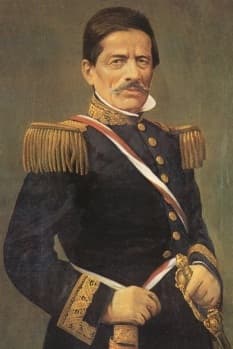
Ramon Castilla
General · Modern
59.7Total
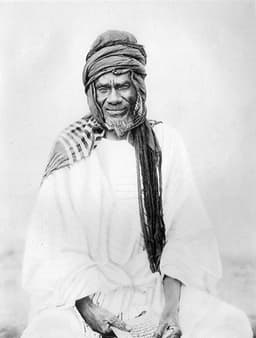
Samori Toure
General · Modern
70.5Total
Basic Information
Born
1797
1830
Died
1867
1900
Era
Modern
Modern
Nationality
Peru
Wassoulou Empire
Occupation
General
General
Civilization
Western
Other
Score Comparison
Military (10%)
40.0
60.0
Political (20%)
72.0
78.0
Influence (20%)
56.7
68.0
Legacy (20%)
52.0
72.0
Leadership (15%)
78.0
72.0
Strategy (15%)
60.0
70.0
TOTAL
59.7
70.5
Ramon Castilla — Complete Timeline
1824 AD
Battle of AyacuchoWar
Castilla fought as a junior officer in the decisive Battle of Ayacucho, which ended Spanish rule in Peru. This victory secured Peruvian independence and marked the end of the Spanish Empire in South America, shaping Castilla's nationalist views.
Peruvian War of IndependenceBattleLiberation
Impact: regional
1845 AD
First Presidency of PeruPolitical Action◆ Major
Castilla was elected President of Peru in 1845, serving until 1851. His first term focused on economic development, including the guano boom, and infrastructure projects such as railroads and ports, modernizing the Peruvian state.
PresidencyEconomic DevelopmentGuano
Impact: nationalconstructive
1854 AD
Abolition of Slavery in PeruReform◆ Major
During his second presidency, Castilla issued a decree abolishing slavery in Peru on December 3, 1854. This reform freed approximately 25,000 slaves and was part of a broader liberal agenda, though it faced opposition from slave-owning elites.
AbolitionSlaveryHuman Rights
Impact: nationalprogressive
Abolition of Indigenous TributeReform◆ Major
Castilla also abolished the indigenous tribute tax in 1854, which had been a burden on native communities since colonial times. This measure aimed to integrate indigenous peoples into the Peruvian state as equal citizens, though its implementation was uneven.
Indigenous RightsTax ReformCitizenship
Impact: nationalprogressive
1855 AD
Second Presidency and Guano BoomPolitical Action◆ Major
Castilla served a second term from 1855 to 1862, during the peak of the guano export boom. He used guano revenues to fund public works, pay off foreign debt, and modernize the military, but also faced criticism for corruption and over-reliance on a single resource.
PresidencyGuanoModernization
Impact: nationalconstructive
1860 AD
Constitutional Reform of 1860Reform◆ Major
Castilla oversaw the adoption of a new constitution in 1860, which established a centralized republic with a strong executive. The constitution remained in effect until 1920 and shaped Peru's political structure, though it limited regional autonomy.
ConstitutionPolitical ReformCentralization
Impact: nationalconstructive
Samori Toure — Complete Timeline
1878 AD
Establishment of the Wassoulou EmpirePolitical Action
Samori Toure founded the Wassoulou Empire in West Africa, uniting various Mandinka states under his rule. He established a centralized administration and a professional army, creating a powerful state that resisted French expansion.
EmpireWassoulouUnification
Impact: regionalconstructive
1880 AD
Military Reforms and ModernizationReform◆ Major
Samori Toure modernized his army by importing firearms from European traders and establishing a standing army of up to 35,000 men. He organized his forces into regular units and introduced new tactics, making them effective against French troops.
Military ReformFirearmsArmy
Impact: regionalconstructive
1882 AD
First Franco-Wassoulou WarWar◆ Major
Samori Toure's forces fought the French army in the first major conflict between the Wassoulou Empire and France. The war ended with a treaty in 1886, recognizing Samori's control over the Niger River region.
WarFranceTreaty
Impact: regional
1891 AD
Second Franco-Wassoulou WarWar◆ Major
The French resumed hostilities, forcing Samori to retreat eastward. He employed a scorched-earth strategy, destroying villages and crops to deny resources to the French, prolonging the conflict for years.
WarScorched EarthRetreat
Impact: regionaltragic
1898 AD
Capture and ExileWar
Samori Toure was captured by French forces after a long campaign. He was exiled to Gabon, where he died in 1900. His capture ended the Wassoulou Empire and marked the completion of French conquest in West Africa.
CaptureExileEnd of Empire
Impact: regionaltragic
Expert Analysis
Ramon Castilla vs Samori Toure
### The Lion and the Liberator: Why Two Generals Forged Such Different Fates
In the sweltering heat of West Africa, a man who had once sold slaves to Europeans now led a disciplined army against the same colonizers, burning his own capital to deny them its riches. Half a world away, in the misty Andes of Peru, another soldier, who had fought to break the chains of Spanish rule, signed a decree that shattered the chains of slavery itself. Samori Toure and Ramon Castilla—two men born generations apart, yet both generals, both reformers, both architects of nations. One ended his life in exile, a prisoner of the French; the other died a revered statesman in his homeland. What drove these two fates to diverge so dramatically? The answer lies not in their courage or ambition, but in the eras they inhabited and the choices those eras demanded.
### Origins
Samori Toure entered the world in 1830 in what is now Guinea, a region fractured by the decline of old empires and the rising tide of European encroachment. He was a trader and a soldier of fortune, a man who learned war in the crucible of small-scale conflicts between Mandinka chieftains. His Africa was one of opportunity and peril—a place where a clever leader could carve out a kingdom, but only if he could outpace the French juggernaut that was already probing inland. Ramon Castilla, born in 1797, came of age in a different world. He was a creole aristocrat from Peru, a colony that had known three centuries of Spanish rule. His youth was spent in the shadow of the Napoleonic Wars, which had thrown the Spanish monarchy into chaos and ignited independence movements across Latin America. Where Samori faced an empire expanding outward, Castilla faced one collapsing inward.
### Rise to Power
Samori’s path to power was forged in warfare. By 1878, he had united various Mandinka states into the Wassoulou Empire, a feat of political and military organization. He did not inherit a throne; he built one from the ground up, using a mix of diplomacy, marriage alliances, and brute force. His turning point came in 1882, when he fought the French in the First Franco-Wassoulou War. Though he held them at bay, he understood that the old ways of war would not suffice. Castilla’s rise was more conventional but no less dramatic. He fought as a junior officer at the Battle of Ayacucho in 1824, the decisive victory that ended Spanish rule in Peru. That single battle made him a hero, but it also placed him in a nation that was now free yet desperately poor, fractured by caudillos and regional rivalries. He did not seize power; he was elected president in 1845, a rare moment of stability in a volatile republic.
### Leadership & Governance
Here the two men diverge most sharply. Samori was a military genius of a particular kind. In 1880, he undertook sweeping reforms: he imported firearms from European traders, established a standing army of up to 30,000 men, and introduced a rigid system of command that mirrored the French themselves. He was a modernizer in a pre-modern context, a man who could read the tides of history and knew that to resist the Europeans, he must become like them. Yet his empire was a war machine first and a state second. He governed through conquest and loyalty, not institutions. His greatest innovation was his scorched-earth strategy during the Second Franco-Wassoulou War, beginning in 1891, when he destroyed villages and crops to starve the advancing French. It was brilliant—and tragic. It bought him years, but it also devastated the land he sought to protect.
Castilla, by contrast, governed in an age of peace and prosperity. His Peru was riding the guano boom, a windfall of fertilizer exports that filled the national treasury. He used that wealth with remarkable foresight. In 1854, he abolished slavery, freeing thousands of African-descended Peruvians, and simultaneously ended the indigenous tribute tax, which had burdened native communities since colonial times. These were not just moral acts; they were political masterstrokes that won him the loyalty of both groups. In 1860, he oversaw a new constitution that centralized the republic and strengthened the executive—a framework that would endure for decades. Where Samori ruled through the sword, Castilla ruled through law and revenue.
### Triumph & Tragedy
Samori’s greatest triumph was his longevity. For nearly two decades, he defied the French, who had conquered far larger empires with ease. His capture in 1898 was not a failure of strategy but of scale—he was fighting a global power with local resources. He was exiled to Gabon, where he died in 1900, a lion caged. His tragedy was that his resistance, however heroic, could not alter the course of history. Castilla’s triumph was more concrete. He left Peru a modern state: slavery abolished, indigenous peoples freed from tribute, a constitution in place, and a treasury enriched by guano. Yet his tragedy was that the guano boom would not last. After his death in 1867, Peru would sink into debt, war, and chaos. His reforms, while noble, could not insulate his nation from the volatility of a single-resource economy.
### Character & Destiny
Samori was a pragmatist turned visionary. He began as a trader in human lives, yet ended as a symbol of African resistance. His personality was forged in the crucible of impossible odds—he knew he would likely lose, but he fought anyway. That stubbornness was both his strength and his doom. Castilla was a different breed: a statesman who understood that power comes not from battles but from institutions. He had the good fortune to lead during a golden age, and he used it to build, not just to fight. Their characters reflected their times: Samori, the desperate defender of a world being erased; Castilla, the confident builder of a world being born.
### Legacy
Today, Samori Toure is remembered as a father of African resistance, a figure who inspired later independence movements. His scores on influence and legacy—75.8 and 73.9—reflect a man whose story outlived his empire. In West Africa, his name is spoken with reverence, a reminder that even in defeat, there can be dignity. Castilla’s scores tell a similar story—75.0 legacy, 84.0 leadership—but his memory is more contested. In Peru, he is honored as a liberator, but also criticized for centralizing power and tying the nation’s fate to guano. Both men left behind something fragile: Samori, a memory of resistance; Castilla, a structure of governance.
### Conclusion
Standing at the end of their lives, Samori in a Gabonese forest and Castilla in a Lima palace, both men might have asked the same question: Did I do enough? The answer depends on what we measure. Samori could not stop the French, but he proved that the colonized were not passive victims. Castilla could not make Peru immune to its own follies, but he gave it laws and freedoms that outlasted him. Their stories remind us that history judges not by victory alone, but by the courage to act within the narrow corridors of one’s time. One man fought against the current; the other rode it. Both changed the world they knew.
Rankings
🥇
Samori ToureLeader
Mil: 60.0Pol: 78.0Inf: 68.0
70.5
🥈
Ramon Castilla
Mil: 40.0Pol: 72.0Inf: 56.7
59.7
+10.8 behind
How This Comparison Works
Algorithm
Each figure is scored on 6 dimensions (0—100 scale) based on structured historical data: Military (10%), Political (20%), Influence (20%), Legacy (20%), Leadership (15%), Strategy (15%). The weighted total produces the final ranking.
Data Sources
Scores are computed from structured sub-indicators in the database. Scale factors adjust for era (Ancient ×0.85, Modern ×1.0) and civilization size (Eastern ×1.05, Other ×0.80) to account for differences in population and military scale.
Maximum 3 Figures
Comparisons are limited to 2—3 figures to ensure readability and statistical meaningfulness.
Error Margins
±5 points per dimension — Sub-scores are derived from historical records with inherent uncertainty. Two figures within 5 points on a dimension should be considered roughly equivalent in that area.
Total Score Accuracy
±3 points overall — The weighted combination of 6 dimensions produces a total score with approximately ±3 points of uncertainty. Differences of less than 3 points are not statistically significant— the figures are effectively tied.
Known Limitations
- Historical records are incomplete and uneven across civilizations
- Figures from oral-tradition societies may be underrepresented
- Occupation labels can misclassify multi-role figures
- Scores measure capability and impact, not moral character
- Quantitative scoring is a comparison tool, not absolute truth
Capability Radar
Military (10%) — Battles & Warfare
Battles
45
75
Win Rate
50
65
Expansion
30
60
Political (20%) — Governance & Reform
Reform
85
75
Diplomacy
70
80
Economy
75
60
Influence (20%) — Cultural & Global Reach
Cultural
55
65
Global
50
55
Legacy (20%) — Historical Impact
Historical
65
70
Longevity
60
60
Leadership (15%) — Power & Stability
Tenure
65
70
Stability
60
55
Strategy (15%) — Tactics & Innovation
Strategy
45
85
Tactics
40
80
Reform
55
70
Similar Comparisons
Comments & Discussion
No comments yet. Be the first to share your thoughts!