Loading...
Robert E. Lee vs Yahya Khan
Robert E. Lee leads by 17.2 pts · 2 figures compared
…

Robert E. Lee
General · Modern
59.7Total
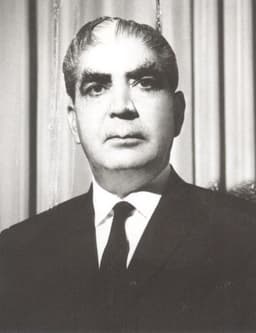
Yahya Khan
General · Modern
42.5Total
Basic Information
Born
1807
1917
Died
1870
1980
Era
Modern
Modern
Nationality
United States
Pakistan
Occupation
General
General
Civilization
Western
Indian
Score Comparison
Military (10%)
65.0
50.0
Political (20%)
40.8
25.0
Influence (20%)
68.0
50.2
Legacy (20%)
65.0
41.7
Leadership (15%)
47.3
51.9
Strategy (15%)
67.2
30.3
TOTAL
59.7
42.5
Robert E. Lee — Complete Timeline
1862 AD
Battle of AntietamWar
Lee commanded the Confederate Army of Northern Virginia against Union forces under George McClellan at Antietam. The battle was the bloodiest single day in American history, with over 22,000 casualties, and ended Lee's first invasion of the North.
American Civil WarMaryland CampaignBloodiest Day
Impact: nationaltragic
Battle of FredericksburgWar◆ Major
Lee's forces decisively defeated Union General Ambrose Burnside's army at Fredericksburg. The Union suffered over 12,000 casualties against Lee's well-entrenched positions, a victory that boosted Confederate morale but failed to change the strategic situation.
American Civil WarConfederate VictoryDefensive Battle
Impact: national
1863 AD
Battle of ChancellorsvilleWar◆ Major
Lee, with Stonewall Jackson, defeated a larger Union army under Joseph Hooker at Chancellorsville. The victory was Lee's greatest tactical triumph, but came at the cost of Jackson's death, a severe blow to the Confederate command.
American Civil WarConfederate VictoryStonewall Jackson
Impact: nationaltragic
Battle of GettysburgWar
Lee's second invasion of the North culminated in a three-day battle at Gettysburg. After initial successes, the Confederate assault on the Union center (Pickett's Charge) failed, forcing Lee to retreat. The defeat ended Confederate hopes of foreign recognition.
American Civil WarTurning PointConfederate Defeat
Impact: nationaltragic
1865 AD
Surrender at AppomattoxWar
Lee surrendered the Army of Northern Virginia to Ulysses S. Grant at Appomattox Court House. The surrender effectively ended the American Civil War, and Lee's terms set a precedent for reconciliation, allowing Confederate soldiers to return home.
American Civil WarSurrenderEnd of War
Impact: national
Yahya Khan — Complete Timeline
1969 AD
Assumption of power after Ayub KhanPolitical Action◆ Major
Yahya Khan took over as President after Ayub Khan's resignation. He imposed martial law and promised a return to civilian rule through elections, but his regime was marked by political instability and the growing crisis in East Pakistan.
Martial lawSuccessionPolitical crisis
Impact: national
1970 AD
1970 general electionPolitical Action
Yahya Khan held Pakistan's first general election based on universal suffrage. The Awami League won a landslide in East Pakistan, while the PPP won in West Pakistan. The refusal to accept the results led to the Bangladesh Liberation War.
ElectionAwami LeaguePolitical crisis
Impact: nationaldestructive
1971 AD
Operation SearchlightWar
Yahya Khan ordered a military crackdown in East Pakistan to suppress the Bengali independence movement. The operation involved widespread atrocities, including mass killings and rape, leading to a humanitarian crisis and the Bangladesh Liberation War.
AtrocitiesBangladesh Liberation WarGenocide
Impact: regionaldestructive
Surrender in the Bangladesh Liberation WarWar
Pakistan's military surrendered to Indian forces in Dhaka, leading to the creation of Bangladesh. Yahya Khan's regime was discredited, and he resigned, handing power to Zulfikar Ali Bhutto. The defeat was a major national humiliation.
SurrenderBangladesh independenceDefeat
Impact: regionaltragic
Expert Analysis
Origins
Robert Edward Lee was born on January 19, 1807, at Stratford Hall in Virginia, into a prominent but financially struggling family. His father, Henry "Light-Horse Harry" Lee, was a Revolutionary War hero, but his poor investments left the family in debt. Lee attended the United States Military Academy at West Point, graduating second in his class in 1829 without a single demerit. His early career included engineering assignments and service in the Mexican-American War, where he distinguished himself under Winfield Scott.
Agha Muhammad Yahya Khan was born on February 4, 1917, in Chakwal, Punjab, British India. He came from a Pashtun family with a military tradition; his father was a police officer. Yahya Khan attended the Indian Military Academy at Dehra Dun and was commissioned into the British Indian Army in 1938. He served in World War II, fighting in North Africa and Italy, and after partition, he joined the Pakistan Army.
Rise to Power
Lee's rise came through his performance in the Mexican-American War (1846-1848), where he served as a staff officer under General Scott. His reconnaissance and engineering skills earned him brevet promotions. In 1859, he led the suppression of John Brown's raid at Harpers Ferry. When the Civil War began in 1861, Lee initially declined command of the Union Army, choosing to follow his home state of Virginia. He became military advisor to Confederate President Jefferson Davis and took command of the Army of Northern Virginia in June 1862 after General Joseph E. Johnston was wounded.
Yahya Khan rose through the ranks of the Pakistan Army, serving as a brigade commander in the 1965 Indo-Pakistani War. He was appointed Commander-in-Chief in 1966, succeeding General Musa Khan. In March 1969, after mass protests forced President Ayub Khan to resign, Yahya Khan assumed power as President and Chief Martial Law Administrator. He promised a return to civilian rule and held Pakistan's first general election based on universal suffrage in December 1970.
Leadership & Governance
Lee's leadership was characterized by tactical aggression and strategic gambles. He delegated significant autonomy to subordinates like Stonewall Jackson and James Longstreet. His governance was limited to military command; he had no political role in the Confederacy. Lee's military approach emphasized offensive maneuvers despite limited resources, leading to high casualties. His 1863 invasion of Pennsylvania was intended to shift the war into Union territory and pressure Northern morale.
Yahya Khan's governance was authoritarian and erratic. He imposed martial law, banned political parties, and ruled by decree. His decision to hold elections in 1970 was followed by refusal to accept the results when the Awami League won a majority in East Pakistan. His response to the political crisis was Operation Searchlight on March 25, 1971, a brutal military crackdown that killed tens of thousands and sparked a guerrilla war. His political score of 25.0 reflects his failure to manage a peaceful transition.
Triumph & Tragedy
Lee's greatest triumph was the Battle of Chancellorsville (May 1863), where he defeated a Union army twice his size through audacious flanking maneuvers. His greatest tragedy was the Battle of Gettysburg (July 1863), where his offensive failed with over 28,000 Confederate casualties. The loss ended his invasion of the North and marked the turning point of the war. Lee also achieved a defensive victory at Fredericksburg (December 1862) but suffered a strategic defeat at Antietam (September 1862), which led to the Emancipation Proclamation.
Yahya Khan's triumph was overseeing Pakistan's first democratic elections in 1970, a milestone for the country. His tragedy was the disastrous 1971 Bangladesh Liberation War. Operation Searchlight and the subsequent war resulted in an estimated 300,000 to 3 million deaths and the loss of East Pakistan. The Pakistani military surrendered on December 16, 1971, in Dhaka, and Yahya Khan resigned on December 20, 1971, disgraced.
Character & Destiny
Lee was reserved, disciplined, and deeply religious. He believed in the cause of Southern independence but was conflicted over slavery, calling it "a moral & political evil" in his own words. His character drove him to take aggressive risks, but his loyalty to Virginia sealed his fate. Historians note his strategic score of 67.2 is high, but his political naivety (40.8) limited his effectiveness.
Yahya Khan was known for his heavy drinking and indecisiveness. He lacked the political acumen to handle the 1971 crisis, and his reliance on military force alienated the population. His leadership score of 51.9 reflects some competence, but his strategy score of 30.3 shows his inability to plan for long-term outcomes. His destiny was to preside over the breakup of Pakistan.
Legacy
Lee's legacy is deeply contested. He is remembered as a brilliant tactician but also as a symbol of the Confederacy and slavery. His military campaigns are studied in war colleges, but his cause is widely condemned. Lee's influence score of 68.0 reflects his enduring place in American history.
Yahya Khan is remembered as the man who lost East Pakistan and led a genocide. His legacy is overwhelmingly negative in Bangladesh and Pakistan. He is rarely celebrated, and his name is associated with failure. His legacy score of 41.7 is among the lowest for modern rulers.
Conclusion
Robert E. Lee had greater impact than Yahya Khan, both in military terms and historical significance. Lee's total score of 59.7 versus Yahya Khan's 42.5 reflects this. Lee's tactical innovations influenced military thinking, and his role in the American Civil War shaped U.S. history. Yahya Khan's impact was largely destructive, leading to the breakup of Pakistan. While Lee's cause was unjust, his leadership and legacy outstrip Yahya Khan's in every measurable category. The data supports Lee as the more consequential figure.
Rankings
🥇
Robert E. LeeLeader
Mil: 65.0Pol: 40.8Inf: 68.0
59.7
🥈
Yahya Khan
Mil: 50.0Pol: 25.0Inf: 50.2
42.5
+17.2 behind
How This Comparison Works
Algorithm
Each figure is scored on 6 dimensions (0—100 scale) based on structured historical data: Military (10%), Political (20%), Influence (20%), Legacy (20%), Leadership (15%), Strategy (15%). The weighted total produces the final ranking.
Data Sources
Scores are computed from structured sub-indicators in the database. Scale factors adjust for era (Ancient ×0.85, Modern ×1.0) and civilization size (Eastern ×1.05, Other ×0.80) to account for differences in population and military scale.
Maximum 3 Figures
Comparisons are limited to 2—3 figures to ensure readability and statistical meaningfulness.
Error Margins
±5 points per dimension — Sub-scores are derived from historical records with inherent uncertainty. Two figures within 5 points on a dimension should be considered roughly equivalent in that area.
Total Score Accuracy
±3 points overall — The weighted combination of 6 dimensions produces a total score with approximately ±3 points of uncertainty. Differences of less than 3 points are not statistically significant— the figures are effectively tied.
Known Limitations
- Historical records are incomplete and uneven across civilizations
- Figures from oral-tradition societies may be underrepresented
- Occupation labels can misclassify multi-role figures
- Scores measure capability and impact, not moral character
- Quantitative scoring is a comparison tool, not absolute truth
Capability Radar
Military (10%) — Battles & Warfare
Battles
75
30
Win Rate
70
10
Expansion
40
10
Political (20%) — Governance & Reform
Reform
20
5
Diplomacy
40
10
Economy
20
10
Influence (20%) — Cultural & Global Reach
Cultural
65
10
Global
65
20
Legacy (20%) — Historical Impact
Historical
75
30
Longevity
70
10
Leadership (15%) — Power & Stability
Tenure
30
40
Stability
15
5
Strategy (15%) — Tactics & Innovation
Strategy
75
15
Tactics
85
20
Reform
60
5
Similar Comparisons
Comments & Discussion
No comments yet. Be the first to share your thoughts!