Loading...
This comparison has not been analyzed yet.
One-time AI generation (~1 minute). Scores and timeline are already available below.
Saif bin Sultan vs Tukoji Rao Holkar II
Saif bin Sultan leads by 12.4 pts · 2 figures compared
…

Saif bin Sultan
Emperor · Modern
57.8Total
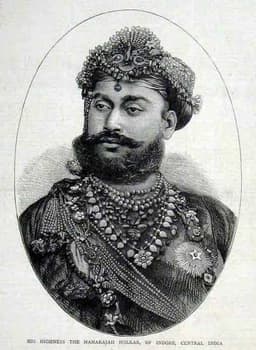
Tukoji Rao Holkar II
Emperor · Modern
45.4Total
Basic Information
Born
1692
1835
Died
1718
1886
Era
Modern
Modern
Nationality
Oman
India
Occupation
Emperor
Emperor
Civilization
Middle Eastern
Indian
Score Comparison
Military (10%)
67.5
20.0
Political (20%)
68.0
43.7
Influence (20%)
59.0
48.6
Legacy (20%)
48.3
37.5
Leadership (15%)
53.2
74.0
Strategy (15%)
60.0
42.3
TOTAL
57.8
45.4
Saif bin Sultan — Complete Timeline
1698 AD
Expulsion of the Portuguese from East AfricaWar◆ Major
Saif bin Sultan led Omani forces in a campaign that captured Fort Jesus in Mombasa from the Portuguese. This victory ended over a century of Portuguese control along the Swahili coast and established Omani dominance in East Africa.
Omani-Portuguese WarEast AfricaFort Jesus
Impact: regional
Capture of ZanzibarWar◆ Major
Omani forces under Saif bin Sultan seized the island of Zanzibar from Portuguese control. This acquisition became a key base for Omani commercial and political influence in the Indian Ocean trade network.
Omani ExpansionZanzibarIndian Ocean Trade
Impact: regional
1700 AD
Consolidation of Omani Control over the Swahili CoastPolitical Action◆ Major
Following the expulsion of the Portuguese, Saif bin Sultan established Omani administrative control over key coastal cities including Kilwa, Pemba, and Mombasa. This created a unified Omani maritime empire stretching from the Persian Gulf to Mozambique.
Omani EmpireSwahili CoastAdministration
Impact: regional
Tukoji Rao Holkar II — Complete Timeline
1835 AD
Accession to Indore ThronePolitical Action
Tukoji Rao Holkar II became Maharaja of Indore at age 0 after the death of his father, Malhar Rao Holkar III. His reign was initially under a regency, and he later assumed full powers, ruling until his death in 1886.
IndoreSuccession
1857 AD
Support for British During Indian Rebellion of 1857War◆ Major
Tukoji Rao Holkar II provided military support to the British East India Company during the Indian Rebellion of 1857. He sent troops to assist in suppressing the uprising in Central India, maintaining Indore's loyalty to the British.
Indian Rebellion of 1857British Raj
Impact: regional
1886 AD
Construction of Lal Bagh PalaceCultural
Tukoji Rao Holkar II began the construction of the Lal Bagh Palace in Indore, a grand neoclassical residence. The palace was completed after his death and became a symbol of Holkar wealth and architectural patronage.
IndoreArchitecture
constructive
This comparison has not been analyzed yet.
One-time AI generation (~1 minute). Scores and timeline are already available below.
Rankings
🥇
Saif bin SultanLeader
Mil: 67.5Pol: 68.0Inf: 59.0
57.8
🥈
Tukoji Rao Holkar II
Mil: 20.0Pol: 43.7Inf: 48.6
45.4
+12.4 behind
How This Comparison Works
Algorithm
Each figure is scored on 6 dimensions (0—100 scale) based on structured historical data: Military (10%), Political (20%), Influence (20%), Legacy (20%), Leadership (15%), Strategy (15%). The weighted total produces the final ranking.
Data Sources
Scores are computed from structured sub-indicators in the database. Scale factors adjust for era (Ancient ×0.85, Modern ×1.0) and civilization size (Eastern ×1.05, Other ×0.80) to account for differences in population and military scale.
Maximum 3 Figures
Comparisons are limited to 2—3 figures to ensure readability and statistical meaningfulness.
Error Margins
±5 points per dimension — Sub-scores are derived from historical records with inherent uncertainty. Two figures within 5 points on a dimension should be considered roughly equivalent in that area.
Total Score Accuracy
±3 points overall — The weighted combination of 6 dimensions produces a total score with approximately ±3 points of uncertainty. Differences of less than 3 points are not statistically significant— the figures are effectively tied.
Known Limitations
- Historical records are incomplete and uneven across civilizations
- Figures from oral-tradition societies may be underrepresented
- Occupation labels can misclassify multi-role figures
- Scores measure capability and impact, not moral character
- Quantitative scoring is a comparison tool, not absolute truth
Capability Radar
Military (10%) — Battles & Warfare
Battles
60
10
Win Rate
65
10
Expansion
65
5
Political (20%) — Governance & Reform
Reform
45
30
Diplomacy
50
40
Economy
40
35
Influence (20%) — Cultural & Global Reach
Cultural
40
20
Global
45
10
Legacy (20%) — Historical Impact
Historical
50
20
Longevity
40
15
Leadership (15%) — Power & Stability
Tenure
55
60
Stability
45
25
Strategy (15%) — Tactics & Innovation
Strategy
60
10
Tactics
55
10
Reform
40
15
Similar Comparisons
Comments & Discussion
No comments yet. Be the first to share your thoughts!