Loading...
Sanna Marin vs Yuan Shikai
Yuan Shikai leads by 9.4 pts · 2 figures compared
…
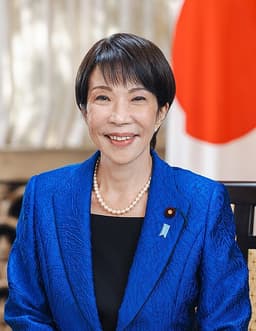
Sanna Marin
Politician · Modern
50.6Total
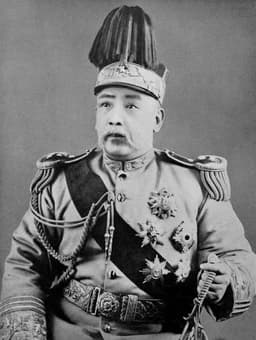
Yuan Shikai
Politician · Modern
60.0Total
Basic Information
Born
1985
1859
Died
—
1916
Era
Modern
Modern
Nationality
Finland
China
Occupation
Politician
Politician
Civilization
Western
Eastern
Score Comparison
Military (10%)
49.7
45.0
Political (20%)
68.0
72.0
Influence (20%)
51.8
57.2
Legacy (20%)
37.5
54.0
Leadership (15%)
58.8
72.0
Strategy (15%)
42.7
61.2
TOTAL
50.6
60.0
Sanna Marin — Complete Timeline
2019 AD
Appointed Prime Minister of FinlandPolitical Action◆ Major
Marin became Prime Minister of Finland at age 34, leading a five-party coalition government. She was the world's youngest serving prime minister at the time, heading Finland's Social Democratic Party.
Prime MinisterYouthCoalition
Impact: nationalconstructive
2020 AD
COVID-19 Pandemic ResponsePolitical Action◆ Major
Marin's government implemented lockdowns, travel restrictions, and economic support measures during the COVID-19 pandemic. Finland maintained relatively low infection rates compared to many European countries.
PandemicPublic HealthEconomic Policy
Impact: nationalconstructive
2022 AD
NATO Membership ApplicationPolitical Action
Following Russia's invasion of Ukraine, Marin's government led Finland's application to join NATO, ending decades of military non-alignment. Finland became a NATO member in 2023.
NATOSecurityForeign Policy
Impact: globalconstructive
2023 AD
Lost 2023 Parliamentary ElectionPolitical Action◆ Major
Marin's Social Democratic Party finished third in the 2023 Finnish parliamentary election, losing to the National Coalition Party and the Finns Party. She resigned as party leader following the defeat.
ElectionDefeatResignation
Impact: national
Yuan Shikai — Complete Timeline
1901 AD
Command of the Beiyang ArmyReform◆ Major
Yuan Shikai took command of the Beiyang Army, the most modern military force in late Qing China. He expanded and trained the army, which became the basis for his political power and later dominated Chinese politics.
Military reformBeiyang Army
Impact: national
1912 AD
Appointed First President of the Republic of ChinaPolitical Action
Yuan Shikai became the first president of the Republic of China after negotiating the abdication of the Qing emperor. He used his control of the Beiyang Army to pressure the revolutionary government into accepting his leadership.
PresidencyRepublic of China
Impact: national
1915 AD
Declaration of the Empire of ChinaPolitical Action◆ Major
Yuan Shikai declared himself emperor of the Empire of China, attempting to restore the monarchy. This move sparked widespread opposition from provincial leaders and foreign powers, leading to the collapse of his regime.
Monarchy restorationPolitical crisis
Impact: nationaldestructive
Signing of the Twenty-One DemandsPolitical Action◆ Major
Yuan Shikai accepted most of Japan's Twenty-One Demands, which expanded Japanese influence in China. The agreement granted Japan economic rights in Manchuria and Shandong, and was seen as a national humiliation.
DiplomacyJapanese imperialism
Impact: globaltragic
1916 AD
Death and Collapse of the Beiyang GovernmentPolitical Action◆ Major
Yuan Shikai died of uremia, leaving no clear successor. His death led to the fragmentation of the Beiyang Army into warlord factions, plunging China into a period of civil war and political instability.
Warlord eraPolitical fragmentation
Impact: nationaltragic
Expert Analysis
Origins
Sanna Marin was born on November 16, 1985, in Helsinki, Finland, raised by a single mother in a rented apartment. She was the first in her family to attend university, studying administrative sciences at the University of Tampere. Her background in social democracy shaped her political views.
Yuan Shikai was born on September 16, 1859, in Xiangcheng, Henan, China, into a wealthy landowning family. He failed the imperial civil service exams twice, then joined the military, serving in Korea and later commanding the Beiyang Army. His early career was marked by loyalty to the Qing dynasty.
Rise to Power
Marin entered politics through the Social Democratic Youth, becoming a city councilor in Tampere at 27. She was elected to the Finnish Parliament in 2015 and served as Minister of Transport and Communications from 2019. In December 2019, at age 34, she became Prime Minister after the resignation of Antti Rinne, leading a five-party coalition.
Yuan Shikai rose through military ranks, modernizing the Beiyang Army during the late Qing. After the 1911 Wuchang Uprising, he negotiated the abdication of the Qing emperor in 1912, becoming the first president of the Republic of China. His control of the Beiyang Army gave him leverage over both the imperial court and revolutionaries.
Leadership & Governance
Marin's leadership style was pragmatic and inclusive, focusing on coalition management. She led Finland through the COVID-19 pandemic with lockdowns and economic support, maintaining relatively low infection rates. She also pushed for NATO membership in response to Russia's invasion of Ukraine, a historic shift from Finland's neutrality. Her political score of 68.0 reflects her effectiveness in navigating crises.
Yuan Shikai governed with authoritarian tendencies, centralizing power and suppressing opposition. He accepted Japan's Twenty-One Demands in 1915, expanding Japanese influence in China. His leadership score of 72.0 indicates strong control, but his strategic score of 61.2 reflects miscalculations. He attempted to restore the monarchy by declaring himself emperor in 1915, sparking the National Protection War.
Triumph & Tragedy
Marin's triumph includes leading Finland into NATO, securing its defense against Russian aggression. Her response to COVID-19 was generally effective, with Finland avoiding severe outbreaks. However, her government's spending led to a loss in the 2023 election, with her party finishing third. Her legacy score of 37.5 suggests limited long-term impact.
Yuan Shikai's triumph was the peaceful transition from empire to republic, avoiding civil war in 1912. He modernized the Beiyang Army, which became a dominant force. His tragedy was the failed monarchy attempt, which united opposition and ended his career. His acceptance of the Twenty-One Demands damaged China's sovereignty. His legacy score of 54.0 reflects mixed perceptions.
Character & Destiny
Marin was seen as calm and decisive, but criticized for inexperience. Her youth and gender were both assets and targets. She remained principled on NATO and social issues, but her coalition's infighting hindered reforms. Her destiny was shaped by external events—the pandemic and war—which she handled competently but which ultimately led to electoral defeat.
Yuan Shikai was ambitious and cunning, skilled at manipulation. He prioritized personal power over democratic ideals, leading to his downfall. His character—autocratic and secretive—alienated allies. His death in 1916 from uremia left a power vacuum, plunging China into warlordism.
Legacy
Marin's legacy is tied to Finland's NATO membership, a lasting shift in European security. She inspired young leaders globally. However, her domestic policies had limited lasting impact. Yuan Shikai's legacy is more profound: he laid the foundation for modern Chinese military and the early republic, but his authoritarianism and the warlord era that followed tarnish his reputation. His influence score of 57.2 reflects his role in shaping China's 20th-century trajectory.
Conclusion
Yuan Shikai had greater overall impact, scoring 60.0 total vs. Marin's 50.6. His actions directly shaped China's transition from empire to republic and the subsequent warlord period, affecting millions. Marin's impact, while significant in NATO expansion, is more limited in scope and duration. Yuan Shikai's political and leadership scores (72.0 and 72.0) outpace Marin's (68.0 and 58.8), reflecting his longer-lasting influence despite his failures.
Rankings
🥇
Yuan ShikaiLeader
Mil: 45.0Pol: 72.0Inf: 57.2
60.0
🥈
Sanna Marin
Mil: 49.7Pol: 68.0Inf: 51.8
50.6
+9.4 behind
How This Comparison Works
Algorithm
Each figure is scored on 6 dimensions (0—100 scale) based on structured historical data: Military (10%), Political (20%), Influence (20%), Legacy (20%), Leadership (15%), Strategy (15%). The weighted total produces the final ranking.
Data Sources
Scores are computed from structured sub-indicators in the database. Scale factors adjust for era (Ancient ×0.85, Modern ×1.0) and civilization size (Eastern ×1.05, Other ×0.80) to account for differences in population and military scale.
Maximum 3 Figures
Comparisons are limited to 2—3 figures to ensure readability and statistical meaningfulness.
Error Margins
±5 points per dimension — Sub-scores are derived from historical records with inherent uncertainty. Two figures within 5 points on a dimension should be considered roughly equivalent in that area.
Total Score Accuracy
±3 points overall — The weighted combination of 6 dimensions produces a total score with approximately ±3 points of uncertainty. Differences of less than 3 points are not statistically significant— the figures are effectively tied.
Known Limitations
- Historical records are incomplete and uneven across civilizations
- Figures from oral-tradition societies may be underrepresented
- Occupation labels can misclassify multi-role figures
- Scores measure capability and impact, not moral character
- Quantitative scoring is a comparison tool, not absolute truth
Capability Radar
Military (10%) — Battles & Warfare
Battles
27
45
Win Rate
32
55
Expansion
37
50
Political (20%) — Governance & Reform
Reform
40
55
Diplomacy
45
70
Economy
35
50
Influence (20%) — Cultural & Global Reach
Cultural
20
40
Global
30
35
Legacy (20%) — Historical Impact
Historical
15
65
Longevity
10
40
Leadership (15%) — Power & Stability
Tenure
25
60
Stability
30
30
Strategy (15%) — Tactics & Innovation
Strategy
39
65
Tactics
43
60
Reform
41
80
Similar Comparisons
Comments & Discussion
No comments yet. Be the first to share your thoughts!