Loading...
This comparison has not been analyzed yet.
One-time AI generation (~1 minute). Scores and timeline are already available below.
Sekgoma II vs Sultan Jahan Begum
Sultan Jahan Begum leads by 15.2 pts · 2 figures compared
…
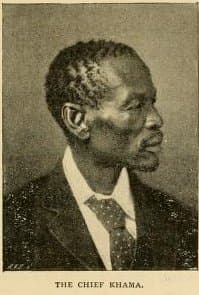
Sekgoma II
Emperor · Modern
38.8Total

Sultan Jahan Begum
Emperor · Modern
54.0Total
Basic Information
Born
1869
1858
Died
1925
1930
Era
Modern
Modern
Nationality
Botswana
India
Occupation
Emperor
Emperor
Civilization
Other
Indian
Score Comparison
Military (10%)
17.3
49.2
Political (20%)
30.8
55.0
Influence (20%)
49.4
57.2
Legacy (20%)
40.8
45.8
Leadership (15%)
48.4
68.0
Strategy (15%)
25.9
49.2
TOTAL
38.8
54.0
Sekgoma II — Complete Timeline
1910 AD
Accession as Kgosi of the BangwatoOther◆ Major
Sekgoma II became kgosi (paramount chief) of the Bangwato people in the Bechuanaland Protectorate. His accession continued the hereditary line of the Bangwato royal family, placing him as the traditional leader responsible for governance, land allocation, and relations with British colonial authorities.
SuccessionBangwatoTraditional Leadership
Impact: regional
1921 AD
Fathering of Seretse KhamaOther◆ Major
Sekgoma II fathered Seretse Khama, who would later become the first President of Botswana. This birth ensured the continuation of the Bangwato royal lineage and produced a leader who would play a pivotal role in Botswana's independence and post-colonial development.
Royal LineageBotswanaLegacy
Impact: nationalconstructive
1925 AD
Death and Succession CrisisOther◆ Major
Sekgoma II died, leaving his young son Seretse Khama as heir. This triggered a succession dispute as regents vied for power, with Tshekedi Khama eventually assuming the regency. The crisis shaped Bangwato politics and influenced Seretse Khama's later exile and return.
Succession CrisisBangwatoRegency
Impact: regionaldestructive
Sultan Jahan Begum — Complete Timeline
1901 AD
Became Nawab Begum of BhopalPolitical Action◆ Major
Sultan Jahan Begum succeeded her mother Shah Jahan Begum as the ruling Begum of Bhopal. She governed the state for 25 years, implementing progressive reforms in education and women's rights.
BhopalFemale RulerSuccession
Impact: regional
1905 AD
Promoted Women's Education in BhopalReform◆ Major
Sultan Jahan Begum opened several schools for girls in Bhopal, including the Sultan Jahan Girls School. She also established a women's hospital and advocated for female literacy, challenging conservative norms.
Women's EducationBhopalReform
Impact: regionalprogressive
1910 AD
Implemented Legal Reforms for WomenReform◆ Major
Sultan Jahan Begum introduced laws in Bhopal to protect women's property rights and restrict child marriage. These reforms were progressive for the time, though they faced resistance from conservative factions.
Women's RightsLegal ReformBhopal
progressive
1912 AD
Authored 'The Story of a Pilgrimage'Cultural
Sultan Jahan Begum wrote 'The Story of a Pilgrimage', an account of her Hajj journey to Mecca. The book provided insights into Islamic practices and the experiences of a female ruler, gaining international readership.
LiteratureHajjAutobiography
Impact: regionalconstructive
1920 AD
Established the Aligarh Muslim UniversityReform
Sultan Jahan Begum contributed significantly to the founding of Aligarh Muslim University, serving as its first chancellor. She donated funds and advocated for the institution, which became a major center for Muslim education in India.
EducationAligarh Muslim UniversityMuslim Reform
Impact: nationalconstructive
This comparison has not been analyzed yet.
One-time AI generation (~1 minute). Scores and timeline are already available below.
Rankings
🥇
Sultan Jahan BegumLeader
Mil: 49.2Pol: 55.0Inf: 57.2
54.0
🥈
Sekgoma II
Mil: 17.3Pol: 30.8Inf: 49.4
38.8
+15.2 behind
How This Comparison Works
Algorithm
Each figure is scored on 6 dimensions (0—100 scale) based on structured historical data: Military (10%), Political (20%), Influence (20%), Legacy (20%), Leadership (15%), Strategy (15%). The weighted total produces the final ranking.
Data Sources
Scores are computed from structured sub-indicators in the database. Scale factors adjust for era (Ancient ×0.85, Modern ×1.0) and civilization size (Eastern ×1.05, Other ×0.80) to account for differences in population and military scale.
Maximum 3 Figures
Comparisons are limited to 2—3 figures to ensure readability and statistical meaningfulness.
Error Margins
±5 points per dimension — Sub-scores are derived from historical records with inherent uncertainty. Two figures within 5 points on a dimension should be considered roughly equivalent in that area.
Total Score Accuracy
±3 points overall — The weighted combination of 6 dimensions produces a total score with approximately ±3 points of uncertainty. Differences of less than 3 points are not statistically significant— the figures are effectively tied.
Known Limitations
- Historical records are incomplete and uneven across civilizations
- Figures from oral-tradition societies may be underrepresented
- Occupation labels can misclassify multi-role figures
- Scores measure capability and impact, not moral character
- Quantitative scoring is a comparison tool, not absolute truth
Capability Radar
Military (10%) — Battles & Warfare
Battles
8
27
Win Rate
11
30
Expansion
10
36
Political (20%) — Governance & Reform
Reform
20
70
Diplomacy
25
60
Economy
15
55
Influence (20%) — Cultural & Global Reach
Cultural
15
50
Global
10
35
Legacy (20%) — Historical Impact
Historical
25
45
Longevity
20
40
Leadership (15%) — Power & Stability
Tenure
30
40
Stability
10
65
Strategy (15%) — Tactics & Innovation
Strategy
13
38
Tactics
19
42
Reform
19
43
Similar Comparisons
Comments & Discussion
No comments yet. Be the first to share your thoughts!