Loading...
This comparison has not been analyzed yet.
One-time AI generation (~1 minute). Scores and timeline are already available below.
Sengge Rinchen vs Sirajuddin Haqqani
Sengge Rinchen leads by 4.2 pts · 2 figures compared
…
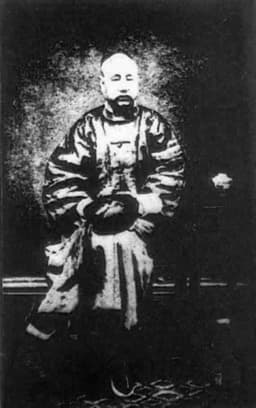
Sengge Rinchen
General · Modern
56.9Total

Sirajuddin Haqqani
General · Modern
52.7Total
Basic Information
Born
1811
1973
Died
1865
—
Era
Modern
Modern
Nationality
China
Afghanistan
Occupation
General
General
Civilization
Eastern
Middle Eastern
Score Comparison
Military (10%)
70.0
45.0
Political (20%)
43.7
46.6
Influence (20%)
55.0
57.2
Legacy (20%)
54.0
47.5
Leadership (15%)
67.0
62.2
Strategy (15%)
60.7
57.5
TOTAL
56.9
52.7
Sengge Rinchen — Complete Timeline
1859 AD
Battle of Dagu FortsWar◆ Major
Sengge Rinchen commanded Qing forces defending the Dagu Forts against a British and French naval attack. His forces repelled the assault, sinking several enemy ships and inflicting heavy casualties, a rare Qing victory in the Second Opium War.
Second Opium WarBattleVictory
Impact: regional
1860 AD
Battle of PalikaoWar◆ Major
Sengge Rinchen commanded Qing cavalry at the Battle of Palikao against Anglo-French forces. His forces were decisively defeated by superior firepower, leading to the fall of Beijing and the burning of the Old Summer Palace.
Second Opium WarBattleDefeat
Impact: regionaltragic
1863 AD
Suppression of the Nian RebellionWar◆ Major
Sengge Rinchen led Qing forces against the Nian rebels in northern China. He achieved several victories but was ultimately killed in battle against the Nian in 1865, marking a turning point in the rebellion.
Nian RebellionCampaignDeath
Impact: regionaltragic
Sirajuddin Haqqani — Complete Timeline
2008 AD
Led Haqqani Network Attacks on US ForcesWar◆ Major
Sirajuddin Haqqani led the Haqqani network in numerous attacks against US and coalition forces in Afghanistan, including the 2008 attack on the Serena Hotel in Kabul and the 2011 assault on the US Embassy. These attacks made the network a primary target.
AfghanistanWarHaqqani Network
Impact: regional
Designated as a Global Terrorist by the USPolitical Action◆ Major
Sirajuddin Haqqani was designated as a Specially Designated Global Terrorist by the US Department of State in 2008. This designation imposed sanctions and targeted his network's financial and operational capabilities.
AfghanistanTerrorismSanctions
Impact: global
2010 AD
Assumed Leadership of the Haqqani NetworkPolitical Action◆ Major
Sirajuddin Haqqani assumed leadership of the Haqqani network after the death of his father, Jalaluddin Haqqani. He expanded the network's operations, making it one of the most effective insurgent groups in Afghanistan.
AfghanistanHaqqani NetworkLeadership
Impact: regional
2021 AD
Appointed Interior Minister of AfghanistanPolitical Action◆ Major
Sirajuddin Haqqani was appointed Interior Minister of the Taliban-led government in Afghanistan in September 2021. He assumed control of internal security and law enforcement, leveraging his leadership of the Haqqani network.
AfghanistanTalibanGovernment
Impact: national
This comparison has not been analyzed yet.
One-time AI generation (~1 minute). Scores and timeline are already available below.
Rankings
🥇
Sengge RinchenLeader
Mil: 70.0Pol: 43.7Inf: 55.0
56.9
🥈
Sirajuddin Haqqani
Mil: 45.0Pol: 46.6Inf: 57.2
52.7
+4.2 behind
How This Comparison Works
Algorithm
Each figure is scored on 6 dimensions (0—100 scale) based on structured historical data: Military (10%), Political (20%), Influence (20%), Legacy (20%), Leadership (15%), Strategy (15%). The weighted total produces the final ranking.
Data Sources
Scores are computed from structured sub-indicators in the database. Scale factors adjust for era (Ancient ×0.85, Modern ×1.0) and civilization size (Eastern ×1.05, Other ×0.80) to account for differences in population and military scale.
Maximum 3 Figures
Comparisons are limited to 2—3 figures to ensure readability and statistical meaningfulness.
Error Margins
±5 points per dimension — Sub-scores are derived from historical records with inherent uncertainty. Two figures within 5 points on a dimension should be considered roughly equivalent in that area.
Total Score Accuracy
±3 points overall — The weighted combination of 6 dimensions produces a total score with approximately ±3 points of uncertainty. Differences of less than 3 points are not statistically significant— the figures are effectively tied.
Known Limitations
- Historical records are incomplete and uneven across civilizations
- Figures from oral-tradition societies may be underrepresented
- Occupation labels can misclassify multi-role figures
- Scores measure capability and impact, not moral character
- Quantitative scoring is a comparison tool, not absolute truth
Capability Radar
Military (10%) — Battles & Warfare
Battles
75
45
Win Rate
60
50
Expansion
20
45
Political (20%) — Governance & Reform
Reform
20
30
Diplomacy
50
45
Economy
20
25
Influence (20%) — Cultural & Global Reach
Cultural
40
35
Global
35
40
Legacy (20%) — Historical Impact
Historical
55
40
Longevity
30
35
Leadership (15%) — Power & Stability
Tenure
40
40
Stability
30
20
Strategy (15%) — Tactics & Innovation
Strategy
70
50
Tactics
80
55
Reform
30
40
Similar Comparisons
Comments & Discussion
No comments yet. Be the first to share your thoughts!