Loading...
This comparison has not been analyzed yet.
One-time AI generation (~1 minute). Scores and timeline are already available below.
Setnakhte vs Tantamani
Setnakhte leads by 4.3 pts · 2 figures compared
…

Setnakhte
Emperor · Ancient
46.8Total
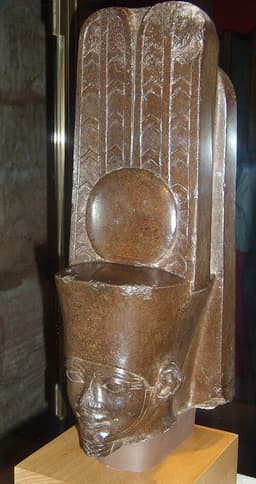
Tantamani
Emperor · Ancient
42.5Total
Basic Information
Born
-1189
-664
Died
-1186
-656
Era
Ancient
Ancient
Nationality
New Kingdom Egypt
Third Intermediate Egypt
Occupation
Emperor
Emperor
Civilization
Middle Eastern
Other
Score Comparison
Military (10%)
38.3
50.0
Political (20%)
42.3
33.6
Influence (20%)
46.3
48.6
Legacy (20%)
40.8
38.3
Leadership (15%)
58.8
44.5
Strategy (15%)
60.0
41.0
TOTAL
46.8
42.5
Setnakhte — Complete Timeline
1189 BC
Foundation of Dynasty XXPolitical Action◆ Major
Setnakhte seized power after the chaotic end of Dynasty XIX, likely through military force. He established himself as the first pharaoh of the 20th Dynasty. His reign brought stability after the civil wars and usurpations that had plagued Egypt under Twosret and Siptah.
Dynasty FoundationRestorationOrder
Impact: nationalconstructive
1188 BC
Restoration of Order and MonumentsPolitical Action
Setnakhte undertook efforts to restore central authority and repair damage from the preceding period. He ordered the restoration of temples and the reassertion of royal control over the priesthood. His reign was short but provided a foundation for his son Ramesses III.
RestorationAdministrationTemples
Impact: nationalconstructive
Usurpation of Twosret's TombCultural
Setnakhte appropriated the tomb of Twosret (KV14) in the Valley of the Kings for his own burial. He enlarged and redecorated it, erasing her name and replacing it with his own. This act symbolized the rejection of the previous dynasty and the consolidation of his rule.
Tomb UsurpationValley of the KingsSymbolism
destructive
Tantamani — Complete Timeline
664 BC
Accession to the thronePolitical Action◆ Major
Tantamani became pharaoh of the 25th Dynasty, succeeding his uncle Taharqa. He inherited a kingdom reduced to Nubia after the Assyrian conquest of Egypt, but he aimed to reconquer the Nile Valley.
Accession25th DynastyKushite
Impact: national
663 BC
Reconquest of EgyptWar◆ Major
Tantamani led a military campaign north from Nubia, recapturing Thebes and Memphis from the Assyrian vassals. He briefly restored Kushite control over Upper and Lower Egypt, executing the Assyrian-appointed rulers.
ReconquestThebesMemphis
Impact: regional
Sack of Thebes by AshurbanipalWar
In response to Tantamani's reconquest, the Assyrian king Ashurbanipal invaded Egypt, defeated Tantamani's forces, and sacked Thebes, looting its temples and treasures. This event marked the end of Kushite rule in Egypt.
Sack of ThebesAshurbanipalKushite Defeat
Impact: regionaltragic
Retreat to NubiaPolitical Action◆ Major
After the sack of Thebes, Tantamani retreated to Nubia, where he continued to rule as king of Kush until his death. He never again attempted to reconquer Egypt, and the 25th Dynasty ended with him.
RetreatNubia25th Dynasty End
Impact: regionaltragic
This comparison has not been analyzed yet.
One-time AI generation (~1 minute). Scores and timeline are already available below.
Rankings
🥇
SetnakhteLeader
Mil: 38.3Pol: 42.3Inf: 46.3
46.8
🥈
Tantamani
Mil: 50.0Pol: 33.6Inf: 48.6
42.5
+4.3 behind
How This Comparison Works
Algorithm
Each figure is scored on 6 dimensions (0—100 scale) based on structured historical data: Military (10%), Political (20%), Influence (20%), Legacy (20%), Leadership (15%), Strategy (15%). The weighted total produces the final ranking.
Data Sources
Scores are computed from structured sub-indicators in the database. Scale factors adjust for era (Ancient ×0.85, Modern ×1.0) and civilization size (Eastern ×1.05, Other ×0.80) to account for differences in population and military scale.
Maximum 3 Figures
Comparisons are limited to 2—3 figures to ensure readability and statistical meaningfulness.
Error Margins
±5 points per dimension — Sub-scores are derived from historical records with inherent uncertainty. Two figures within 5 points on a dimension should be considered roughly equivalent in that area.
Total Score Accuracy
±3 points overall — The weighted combination of 6 dimensions produces a total score with approximately ±3 points of uncertainty. Differences of less than 3 points are not statistically significant— the figures are effectively tied.
Known Limitations
- Historical records are incomplete and uneven across civilizations
- Figures from oral-tradition societies may be underrepresented
- Occupation labels can misclassify multi-role figures
- Scores measure capability and impact, not moral character
- Quantitative scoring is a comparison tool, not absolute truth
Capability Radar
Military (10%) — Battles & Warfare
Battles
30
20
Win Rate
40
15
Expansion
20
10
Political (20%) — Governance & Reform
Reform
50
5
Diplomacy
30
10
Economy
35
10
Influence (20%) — Cultural & Global Reach
Cultural
20
20
Global
15
10
Legacy (20%) — Historical Impact
Historical
30
25
Longevity
25
15
Leadership (15%) — Power & Stability
Tenure
20
15
Stability
55
5
Strategy (15%) — Tactics & Innovation
Strategy
40
20
Tactics
35
25
Reform
45
5
Similar Comparisons
Comments & Discussion
No comments yet. Be the first to share your thoughts!