Loading...
Shaka Zulu vs Suharto
Shaka Zulu leads by 13.0 pts · 2 figures compared
…
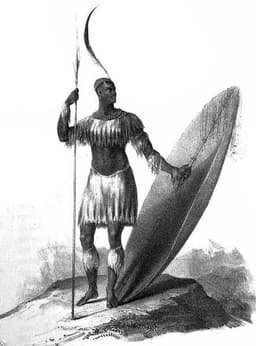
Shaka Zulu
General · Modern
70.2Total
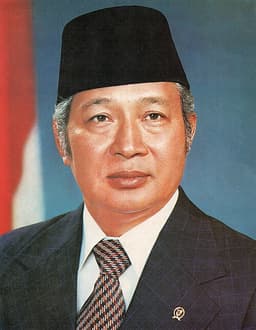
Suharto
General · Modern
57.2Total
Basic Information
Born
1787
1921
Died
1828
—
Era
Modern
Modern
Nationality
Zulu Kingdom
Indonesia
Occupation
General
General
Civilization
Other
Eastern
Score Comparison
Military (10%)
80.0
20.0
Political (20%)
72.0
59.3
Influence (20%)
68.0
60.0
Legacy (20%)
68.0
52.0
Leadership (15%)
62.0
82.0
Strategy (15%)
80.8
60.0
TOTAL
70.2
57.2
Shaka Zulu — Complete Timeline
1816 AD
Introduction of the iklwa and horns of the buffalo formationReform
Shaka introduced the iklwa, a short stabbing spear, and the 'horns of the buffalo' tactical formation to the Zulu army. These innovations replaced the traditional throwing assegai and allowed for close-quarters combat, significantly increasing the Zulu's military effectiveness and enabling rapid conquest.
Military InnovationTacticsZulu Warfare
Impact: regional
1819 AD
Conquest of the Ndwandwe KingdomWar◆ Major
Shaka's Zulu army defeated the Ndwandwe kingdom at the Battle of Gqokli Hill, a decisive victory that eliminated a major rival. This conquest allowed Shaka to consolidate control over a large territory in present-day KwaZulu-Natal, marking the rise of the Zulu as a dominant regional power.
ConquestZulu ExpansionNdwandwe
Impact: regional
1828 AD
Assassination of ShakaPolitical Action◆ Major
Shaka was assassinated by his half-brothers Dingane and Mhlangana, with the support of his aunt Mkabayi. The coup ended his reign of terror and expansionist wars, leading to a period of instability and the eventual rise of Dingane as king.
AssassinationSuccession CrisisZulu Kingdom
Impact: regionaltragic
Suharto — Complete Timeline
1966 AD
Supersemar and Transfer of PowerPolitical Action
President Sukarno signed the Supersemar order, delegating authority to General Suharto to restore order after the 30 September Movement. Suharto used this to ban the Communist Party, purge leftists, and gradually assume executive power, effectively beginning his New Order regime.
SupersemarNew OrderIndonesia
Impact: nationaldestructive
1967 AD
New Order Economic DevelopmentReform◆ Major
Suharto implemented the New Order's economic policies, focusing on foreign investment, agricultural self-sufficiency, and industrialization. The government achieved high growth rates, reduced poverty, and stabilized the economy, but also fostered crony capitalism and corruption.
Economic GrowthDevelopmentIndonesia
Impact: nationalconstructive
1975 AD
Invasion of East TimorWar◆ Major
Suharto ordered the invasion of East Timor after Portugal withdrew. Indonesian forces occupied the territory, leading to a 24-year occupation marked by widespread human rights abuses, including massacres and forced displacement, resulting in an estimated 100,000-200,000 deaths.
East TimorOccupationHuman Rights
Impact: regionaldestructive
1998 AD
Asian Financial Crisis and Fall from PowerPolitical Action
The Asian Financial Crisis devastated Indonesia's economy, leading to massive unemployment and food shortages. Widespread protests and riots forced Suharto to resign in May 1998 after 31 years in power, ending his authoritarian rule and ushering in the Reformasi era.
Financial CrisisResignationReformasi
Impact: nationaltragic
Expert Analysis
Shaka Zulu vs Suharto
### The Spear and the Briefcase
In the summer of 1828, a king lay bleeding on the ground, stabbed by his own half-brothers. In the spring of 1998, a president watched from a palace window as students set fire to the city he had built. One died in a moment of raw, tribal violence; the other lived to see his legacy crumble in slow motion. Shaka Zulu and Suharto both rose from obscurity to forge nations, yet their paths diverged as sharply as the weapons they wielded—the one a short stabbing spear, the other a briefcase full of World Bank loans. Why did the warrior-king build an empire in a decade, only to die by the blade he perfected, while the general-president ruled for three decades, only to be swept away by a financial storm? The answer lies not in their power, but in the different worlds they commanded.
### Origins
Shaka Zulu was born an outcast. His father, Senzangakhona, was a minor Zulu chief who refused to acknowledge his son, forcing Shaka and his mother Nandi to wander among hostile clans. The boy learned early that mercy was weakness. By the time he reached his teens, the Mfecane—a catastrophic period of warfare and displacement—was already tearing southern Africa apart. Shaka’s world was one of constant violence, where a clan could vanish overnight, and the only currency was blood.
Suharto, by contrast, grew up in the soft light of Dutch colonial Java. Born in 1921 to a poor Javanese family, he was raised by relatives and spent his early years in the shadow of traditional village life. The Dutch East Indies were orderly, bureaucratic, and stifling. Suharto learned to navigate hierarchies, not battlefields. His great skill was patience—a quality Shaka would have scorned. Where Shaka’s childhood forged a blade, Suharto’s forged a ledger.
### Rise to Power
Shaka’s ascent was a whirlwind. In 1816, after years as a warrior in the Mthethwa army, he returned to the Zulu clan and seized control. Within months, he had replaced the long throwing spear with the *iklwa*—a short, broad-bladed stabbing spear that forced his soldiers to fight hand-to-hand. He drilled his regiments until they could march fifty miles in a day, then introduced the “horns of the buffalo” formation: a center of veterans to pin the enemy, and two flanking horns to encircle and annihilate. At the Battle of Gqokli Hill in 1819, his army of 4,000 defeated the Ndwandwe force of 12,000, a victory that erased a rival kingdom and made Shaka the undisputed master of the region. He did not climb to power; he exploded into it.
Suharto’s rise was the opposite—a slow, careful creep. During Indonesia’s war of independence against the Dutch (1945–1949), he was a competent but unremarkable officer. His moment came in 1965, when a failed coup attempt by communist sympathizers threw the nation into chaos. Suharto, then a general, did not seize power directly. He waited. He let President Sukarno flounder, then accepted the Supersemar order in March 1966—a document that transferred executive authority to him. It was a legal coup, executed with the quiet precision of a bank transfer. Shaka took power with a spear; Suharto took it with a signature.
### Leadership & Governance
Shaka ruled through terror and transformation. He created a centralized state where none existed, breaking clan loyalties and merging conquered peoples into the Zulu nation. His army was a state within a state—every able-bodied man served in age-based regiments (*amabutho*), and celibacy was enforced until the king permitted marriage. He built military towns, controlled trade, and executed dissenters without hesitation. His reforms were genius, but they were also fragile: the entire system depended on his personal will. When he became paranoid after his mother’s death in 1827, ordering mass executions and forbidding crops to be planted, the kingdom began to rot from within.
Suharto governed through bureaucracy and bribery. His “New Order” regime, launched in 1967, was a partnership between the military, foreign capital, and a network of cronies. He invited multinational corporations to exploit Indonesia’s oil, timber, and minerals. He achieved agricultural self-sufficiency in rice by the 1980s—a genuine triumph—and built roads, schools, and factories. But the price was corruption on a staggering scale. Suharto’s family controlled entire industries, and dissent was crushed by the military. While Shaka demanded loyalty, Suharto demanded compliance. Both were dictators, but Shaka’s tyranny was personal and visceral; Suharto’s was systemic and silent.
### Triumph & Tragedy
Shaka’s greatest moment was the conquest of the Ndwandwe in 1819, a victory that transformed the Zulu from a footnote into an empire. His tragedy was his isolation. By 1828, he had killed or alienated everyone who mattered: his mother’s death drove him to madness, and his half-brothers, fearing for their lives, stabbed him to death in his own kraal. The man who conquered a nation died without a single ally.
Suharto’s triumph was economic growth—Indonesia’s GDP rose from $6 billion in 1967 to $220 billion in 1996. His tragedy was the Asian Financial Crisis of 1997–1998. When the rupiah collapsed and food prices soared, the students took to the streets. Suharto, now 76, tried to cling to power, but his generals abandoned him. In May 1998, he resigned, ending 31 years of rule. He died in 2008, a wealthy old man, but his name became synonymous with kleptocracy.
### Character & Destiny
Shaka was a creature of pure will. He believed that reality could be bent by force, and for a time, he was right. But his inability to delegate, to trust, or to compromise meant that his empire was a single point of failure. When he broke, everything broke.
Suharto was a creature of pure calculation. He understood that power was not about glory but about control—of money, of institutions, of information. He built a machine that could run without him, and it did, for decades. But machines have no loyalty. When the crisis came, the machine discarded him.
### Legacy
Shaka’s legacy is mythic. He is remembered as the African Napoleon, the warrior who forged a nation. His military innovations influenced later Zulu leaders, and his name still resonates across southern Africa. Yet the Zulu kingdom he built collapsed into civil war within a decade of his death.
Suharto’s legacy is material. He left behind a nation of 200 million people, a functioning bureaucracy, and a deeply entrenched culture of corruption. Indonesia’s democracy today is a reaction against his rule, but the roads and schools he built remain. He is remembered not as a hero or a villain, but as a question: was the price of development worth it?
### Conclusion
Shaka and Suharto faced the same fundamental challenge: how to impose order on chaos. One chose the spear, the other the briefcase. One built an empire in a decade and died by the blade; the other built a state in three decades and died in bed. The difference is not in their ambition, but in their world. Shaka lived in an age of iron, where power was measured in blood and territory. Suharto lived in an age of paper, where power was measured in dollars and degrees. Both achieved greatness; both left wounds. In the end, perhaps the only lesson is that no system—whether forged by a warrior or a general—can survive the man who built it.
Rankings
🥇
Shaka ZuluLeader
Mil: 80.0Pol: 72.0Inf: 68.0
70.2
🥈
Suharto
Mil: 20.0Pol: 59.3Inf: 60.0
57.2
+13.0 behind
How This Comparison Works
Algorithm
Each figure is scored on 6 dimensions (0—100 scale) based on structured historical data: Military (10%), Political (20%), Influence (20%), Legacy (20%), Leadership (15%), Strategy (15%). The weighted total produces the final ranking.
Data Sources
Scores are computed from structured sub-indicators in the database. Scale factors adjust for era (Ancient ×0.85, Modern ×1.0) and civilization size (Eastern ×1.05, Other ×0.80) to account for differences in population and military scale.
Maximum 3 Figures
Comparisons are limited to 2—3 figures to ensure readability and statistical meaningfulness.
Error Margins
±5 points per dimension — Sub-scores are derived from historical records with inherent uncertainty. Two figures within 5 points on a dimension should be considered roughly equivalent in that area.
Total Score Accuracy
±3 points overall — The weighted combination of 6 dimensions produces a total score with approximately ±3 points of uncertainty. Differences of less than 3 points are not statistically significant— the figures are effectively tied.
Known Limitations
- Historical records are incomplete and uneven across civilizations
- Figures from oral-tradition societies may be underrepresented
- Occupation labels can misclassify multi-role figures
- Scores measure capability and impact, not moral character
- Quantitative scoring is a comparison tool, not absolute truth
Capability Radar
Military (10%) — Battles & Warfare
Battles
85
40
Win Rate
90
45
Expansion
88
30
Political (20%) — Governance & Reform
Reform
85
55
Diplomacy
60
60
Economy
65
65
Influence (20%) — Cultural & Global Reach
Cultural
80
40
Global
70
50
Legacy (20%) — Historical Impact
Historical
85
55
Longevity
75
45
Leadership (15%) — Power & Stability
Tenure
70
85
Stability
55
50
Strategy (15%) — Tactics & Innovation
Strategy
90
40
Tactics
95
35
Reform
98
50
Similar Comparisons
Comments & Discussion
ShakaSpear6/16/2026
Shaka didn't just conquer tribes—he weaponized proximity. The iklwa stabbing spear shortened the killing distance, forcing his warriors to stare into the whites of their enemies' eyes. That psychological edge, not raw numbers, won him the Zulu Empire in a decade. Suharto’s briefcase? That held IMF checks, not moral courage. Which leader birthed a nation with blood? Shaka. Which one held a gun to his own people? Suharto. The spear wins—always.
战争诗人6/16/2026
拿沙卡和苏哈托比?一个是锻造民族的铁匠,一个是劫掠国库的会计。沙卡在十年内用短矛和纪律统一了散落的部落,连欧洲传教士都记录了他军队的精准突击。苏哈托呢?靠荷兰殖民底子和美军培训上台,三十年间让印尼外债从2亿美元膨胀到600亿。一个在战场倒下成神,一个在病床腐烂成笑话。战士的遗产是土地,政客的遗物是烂账。
DataSkepticDan6/16/2026
Let’s be real—Shaka’s “empire” was pre-industrial, scraping maybe 250,000 subjects, with zero GDP metrics and no census. Suharto ruled 200 million, averaged 7% GDP growth for 30 years, and lifted millions out of poverty per World Bank data. You want a body count? Sure, Shaka’s Mfecane killed up to 2 million; Suharto’s 1965–66 purge maybe 500,000. But Suharto’s numbers are stone-cold documented, not oral tradition. Raw charisma vs. cold cash? Shaka’s romance, Suharto’s reality.
历史考据党6/16/2026
史学界总爱给沙卡贴“恐怖天才”标签,可事实是,他的军制革新远不如后世神话。英国军官Fynn记载了沙卡的军队用牛粪阵编队,低效得可笑。苏哈托才是真系统操作大师:他让陆军搞双重职能,用石油美元收买精英,连世界银行都夸他“技术官僚典范”。沙卡死时,他统一的部落立马散架;苏哈托倒台,印尼军队体系纹丝不动。戏剧性?苏哈托的遗产更冷血、更持久。
RevisionistRage6/16/2026
Shaka Zulu gets romanticized as some tragic hero, but he was a tyrant who depopulated 2 million square kilometers through genocide masquerading as state-building. Suharto was a textbook Third World strongman who used CIA backing and oil to lock in 31 years of theft—sure, he was corrupt, but his New Order didn't end in fratricidal stabbing. Shaka’s death was