Loading...
This comparison has not been analyzed yet.
One-time AI generation (~1 minute). Scores and timeline are already available below.
Sharif Sheikh Ahmed vs Yoshiro Mori
Sharif Sheikh Ahmed leads by 12.9 pts · 2 figures compared
…

Sharif Sheikh Ahmed
Politician · Modern
48.1Total
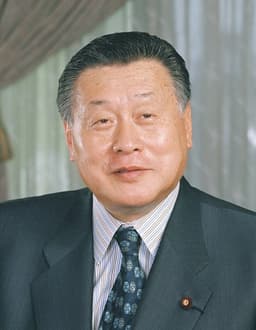
Yoshiro Mori
Politician · Modern
35.2Total
Basic Information
Born
1964
1937
Died
—
—
Era
Modern
Modern
Nationality
Somalia
Japan
Occupation
Politician
Politician
Civilization
Other
Eastern
Score Comparison
Military (10%)
36.6
15.8
Political (20%)
40.8
27.9
Influence (20%)
51.0
48.6
Legacy (20%)
41.7
37.5
Leadership (15%)
65.7
34.6
Strategy (15%)
52.8
26.8
TOTAL
48.1
35.2
Sharif Sheikh Ahmed — Complete Timeline
2006 AD
Led Islamic Courts UnionPolitical Action◆ Major
Sharif Sheikh Ahmed served as chairman of the Islamic Courts Union (ICU) which took control of Mogadishu and much of southern Somalia in 2006. The ICU brought temporary stability but was overthrown by Ethiopian forces later that year.
Islamic Courts UnionSomaliaConflict
Impact: regional
2009 AD
Elected President of SomaliaPolitical Action◆ Major
Sharif Sheikh Ahmed was elected president of the Transitional Federal Government (TFG) of Somalia in January 2009. He led the government during a period of intense fighting with Al-Shabaab insurgents.
Transitional GovernmentSomaliaAl-Shabaab
Impact: nationalconstructive
2011 AD
Signed Kampala AccordPolitical Action◆ Major
Sharif Sheikh Ahmed signed the Kampala Accord in June 2011, extending his term as president by one year. The agreement was controversial and led to political instability within the TFG.
Political AgreementSomaliaTransition
Impact: national
Yoshiro Mori — Complete Timeline
2000 AD
Gaffe-Prone Public StatementsCultural
Mori made a series of controversial public statements, including calling Japan a 'divine nation centered on the emperor' and referring to the U.S. as a 'country of black people.' These gaffes damaged his approval ratings and drew international criticism.
GaffesPublic RelationsControversy
Impact: national
2001 AD
Resignation as Prime MinisterPolitical Action◆ Major
Mori resigned as Prime Minister in April 2001 after his approval ratings fell below 10%. His resignation was prompted by a no-confidence motion and internal LDP pressure, paving the way for Junichiro Koizumi's premiership.
ResignationLow ApprovalLDP Politics
Impact: national
2014 AD
Tokyo 2020 Olympics Organizing Committee PresidentPolitical Action◆ Major
Mori was appointed president of the Tokyo 2020 Olympic and Paralympic Games Organizing Committee. He oversaw early preparations but resigned in 2021 after making sexist remarks about women on committees, sparking global backlash.
OlympicsOrganizing CommitteeResignation
Impact: global
2021 AD
Sexist Remarks ResignationCultural◆ Major
Mori resigned as Tokyo 2020 Olympics chief after stating that meetings with women 'take too long' because they talk too much. The remarks caused international outrage, damaged Japan's image, and forced his resignation weeks before the Games.
SexismOlympicsResignation
Impact: globaldestructive
This comparison has not been analyzed yet.
One-time AI generation (~1 minute). Scores and timeline are already available below.
Rankings
🥇
Sharif Sheikh AhmedLeader
Mil: 36.6Pol: 40.8Inf: 51.0
48.1
🥈
Yoshiro Mori
Mil: 15.8Pol: 27.9Inf: 48.6
35.2
+12.9 behind
How This Comparison Works
Algorithm
Each figure is scored on 6 dimensions (0—100 scale) based on structured historical data: Military (10%), Political (20%), Influence (20%), Legacy (20%), Leadership (15%), Strategy (15%). The weighted total produces the final ranking.
Data Sources
Scores are computed from structured sub-indicators in the database. Scale factors adjust for era (Ancient ×0.85, Modern ×1.0) and civilization size (Eastern ×1.05, Other ×0.80) to account for differences in population and military scale.
Maximum 3 Figures
Comparisons are limited to 2—3 figures to ensure readability and statistical meaningfulness.
Error Margins
±5 points per dimension — Sub-scores are derived from historical records with inherent uncertainty. Two figures within 5 points on a dimension should be considered roughly equivalent in that area.
Total Score Accuracy
±3 points overall — The weighted combination of 6 dimensions produces a total score with approximately ±3 points of uncertainty. Differences of less than 3 points are not statistically significant— the figures are effectively tied.
Known Limitations
- Historical records are incomplete and uneven across civilizations
- Figures from oral-tradition societies may be underrepresented
- Occupation labels can misclassify multi-role figures
- Scores measure capability and impact, not moral character
- Quantitative scoring is a comparison tool, not absolute truth
Capability Radar
Military (10%) — Battles & Warfare
Battles
5
12
Win Rate
5
17
Expansion
5
20
Political (20%) — Governance & Reform
Reform
30
5
Diplomacy
40
10
Economy
25
15
Influence (20%) — Cultural & Global Reach
Cultural
25
5
Global
20
15
Legacy (20%) — Historical Impact
Historical
30
10
Longevity
20
5
Leadership (15%) — Power & Stability
Tenure
45
12
Stability
20
8
Strategy (15%) — Tactics & Innovation
Strategy
5
26
Tactics
5
25
Reform
5
31
Similar Comparisons
Comments & Discussion
No comments yet. Be the first to share your thoughts!