Loading...
Sitiveni Rabuka vs Zhao Kuangyin
Zhao Kuangyin leads by 19.8 pts · 2 figures compared
…
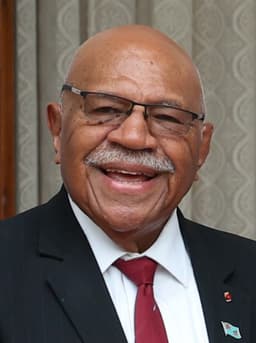
Sitiveni Rabuka
General · Modern
51.7Total
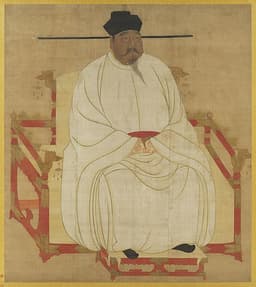
Zhao Kuangyin
Emperor · Medieval
71.5Total
Basic Information
Born
1948
927
Died
—
976
Era
Modern
Medieval
Nationality
Fiji
China
Occupation
General
Emperor
Civilization
Other
Eastern
Score Comparison
Military (10%)
10.2
78.0
Political (20%)
60.0
84.0
Influence (20%)
53.3
68.0
Legacy (20%)
46.7
65.0
Leadership (15%)
85.0
74.0
Strategy (15%)
39.6
68.0
TOTAL
51.7
71.5
Sitiveni Rabuka — Complete Timeline
1987 AD
1987 Fijian Coup d'étatPolitical Action
Rabuka, as a colonel in the Fijian military, led a coup overthrowing the elected government of Timoci Bavadra. The coup was motivated by ethnic Fijian opposition to Indo-Fijian political influence. Rabuka declared Fiji a republic.
CoupMilitary InterventionEthnic Tension
Impact: nationaldestructive
1992 AD
1992 Election as Prime MinisterPolitical Action◆ Major
Rabuka transitioned from military leader to civilian politician, winning the 1992 general election as leader of the Fijian Political Party. He became Prime Minister, serving until 1999.
ElectionCivilian GovernmentPolitical Transition
Impact: national
1997 AD
1997 Constitution ReformReform◆ Major
Rabuka's government oversaw the adoption of a new constitution that removed ethnic-based voting and provided for a multi-ethnic government. The constitution aimed to reduce ethnic tensions and promote national unity.
ConstitutionReformEthnic Reconciliation
Impact: nationalconstructive
1999 AD
1999 General Election DefeatPolitical Action◆ Major
Rabuka's government was defeated in the general election by the Labour Party led by Mahendra Chaudhry. Rabuka stepped down as Prime Minister, marking the end of his first period in power.
Election DefeatGovernment ChangeChaudhry
Impact: national
2022 AD
2022 Return as Prime MinisterPolitical Action◆ Major
Rabuka led the People's Alliance to victory in the 2022 general election, forming a coalition government. He became Prime Minister again, 23 years after his previous tenure, promising democratic reforms.
ElectionReturn to PowerCoalition Government
Impact: national
Zhao Kuangyin — Complete Timeline
960 AD
Founded Song dynastyPolitical Action
Zhao Kuangyin, a general of Later Zhou, was proclaimed emperor by his troops at Chenqiao. He established the Song dynasty, ending the Five Dynasties period and beginning a new era of Chinese history.
Song dynastyFoundingChenqiao
Impact: globalconstructive
961 AD
Removed military power from generalsPolitical Action◆ Major
Zhao Kuangyin invited senior generals to a banquet and persuaded them to retire peacefully. This 'removal of military power over wine' prevented military coups and centralized control.
Song dynastyMilitary reformCentralization
Impact: nationalconstructive
963 AD
Unified southern ChinaWar◆ Major
Zhao Kuangyin launched campaigns to conquer the southern kingdoms, including Jingnan, Later Shu, and Southern Tang. By his death, most of China was reunified under Song rule.
Song unificationConquestSouthern kingdoms
Impact: national
Expert Analysis
Zhao Kuangyin vs Sitiveni Rabuka
# The Emperor and the Coup Maker
On a spring evening in 961, Zhao Kuangyin, the founder of China’s Song dynasty, invited his most powerful generals to a banquet. As wine flowed and laughter echoed through the palace halls, he turned to them with a weary sigh. “I lie awake at night, afraid that one day your own troops might proclaim you emperor, just as mine did me.” By morning, those generals had surrendered their commands, accepting wealth and leisure in exchange for power. More than a thousand years later, on a humid May morning in 1987, a Fijian colonel named Sitiveni Rabuka stormed the parliament building in Suva, seized the prime minister at gunpoint, and declared himself the nation’s new master. Two men, two worlds, one eternal question: how does a soldier become a ruler, and what happens when he does?
Origins
Zhao Kuangyin was born in 927, in the twilight of China’s Tang dynasty, when the empire had fractured into a chaos of warring kingdoms known as the Five Dynasties and Ten Kingdoms. He grew up in a military family in what is now Hebei province, learning the sword and the saddle as naturally as other boys learned their letters. His world was one of constant warfare, shifting alliances, and the brutal logic that might makes right. By his twenties, he had become a trusted general in the Later Zhou dynasty, known for his personal courage and his ability to inspire loyalty in his men.
Sitiveni Rabuka, born in 1948, came from a very different world. Fiji was then a British colony, a Pacific paradise of sugar cane and coral reefs, where ethnic Fijians and Indo-Fijians lived in uneasy proximity. Rabuka grew up in a Methodist village, the son of a catechist, and learned early the values of duty, hierarchy, and communal obligation. He joined the British colonial army, served with UN peacekeepers in Lebanon, and rose through the ranks of Fiji’s own military. Where Zhao had been forged in the fires of civil war, Rabuka was shaped by the quiet tensions of a multi-ethnic society on the cusp of independence.
Rise to Power
Zhao’s rise was a classic story of opportunity seized. In 960, while leading his army north to defend the border, his troops stopped at Chenqiao, a small town near Kaifeng. There, in the dead of night, his officers burst into his tent, draped a yellow imperial robe over his shoulders, and proclaimed him emperor. The traditional account claims Zhao protested, but the reality is murkier. What is certain is that he marched back to the capital, overthrew the child emperor of Later Zhou, and established the Song dynasty with himself as Taizu, the “Grand Progenitor.”
Rabuka’s path was more deliberate, more ideological. By 1987, Fiji had been independent for seventeen years, but ethnic tensions were boiling over. The newly elected government of Timoci Bavadra was dominated by Indo-Fijians, descendants of indentured laborers brought by the British, who now held political power despite being a minority. To many ethnic Fijians, this was an existential threat to their land rights and traditions. Rabuka, then a colonel, saw himself not as a power-seeker but as a protector. On May 14, 1987, he led ten masked soldiers into parliament, arrested Bavadra, and announced on radio that he had taken control. “I have done this to save my country,” he said—words that would haunt him for decades.
Leadership & Governance
Zhao Kuangyin’s genius lay in his restraint. Having won power through a coup, he understood that the same sword that raised him could cut him down. His famous “removal of military power at a banquet” in 961 was a masterpiece of political theater: he did not execute his rivals but pensioned them off with honor, replacing them with civilian officials. He then turned to reunifying China, launching campaigns in 963 that conquered the southern kingdoms of Jingnan, Later Shu, and Southern Tang. By his death in 976, he had reunited most of China proper—not through overwhelming force but through a combination of military pressure, diplomacy, and strategic marriages.
Rabuka’s governance was a long, painful arc from soldier to statesman. After the 1987 coup, he handed power to a civilian government that favored ethnic Fijians, but the damage was done: Fiji was expelled from the Commonwealth, its economy faltered, and its reputation as a peaceful Pacific nation was shattered. In 1992, Rabuka surprised everyone by winning the prime ministership through elections, transforming himself from coup leader to democratic politician. His greatest achievement came in 1997, when he oversaw a new constitution that removed ethnic-based voting and created a multiracial parliament. It was a remarkable act of atonement—a man who had divided his country trying to unite it.
Triumph & Tragedy
Zhao’s triumph was the Song dynasty itself, which would become one of China’s most prosperous and cultured eras. But his tragedy was hidden in plain sight: by emasculating the military, he created a state that could not defend itself. Within a century, the Song would lose northern China to the Jurchens, and eventually fall to the Mongols. Zhao’s peaceful solution had planted the seeds of his dynasty’s destruction.
Rabuka’s triumph was his 1997 constitution, a document that promised equality and democracy. But his tragedy came in 1999, when he was soundly defeated in elections by the very Indo-Fijian party he had overthrown twelve years earlier. For two decades, he retreated from politics, a man out of time. Then, in 2022, at the age of 74, he returned to lead a coalition government, becoming prime minister again—this time as a democrat, not a dictator.
Character & Destiny
Zhao Kuangyin was a pragmatist who believed in order above all. His decisions were calculated, his emotions hidden. He once said, “The empire is vast, and the people are many. One must have a plan.” Rabuka was more volatile, a man of faith and impulse. He admitted later that he had not fully thought through the consequences of his coup. “I was young and foolish,” he told an interviewer. “I thought I could fix everything with one bold stroke.”
Legacy
Zhao Kuangyin is remembered as one of China’s great unifiers, a wise founder who chose peace over bloodshed. His statue stands in Kaifeng, and his dynasty is studied as a golden age of Chinese civilization. But historians also note the price of his caution: a military so weak that it could not defend the realm.
Sitiveni Rabuka’s legacy is more contested. To some, he is a patriot who saved indigenous Fijian culture. To others, he is a traitor to democracy who set a precedent for military intervention. Yet his later years suggest a man who learned from his mistakes—a rare thing in politics.
Conclusion
Zhao Kuangyin and Sitiveni Rabuka were both soldiers who became rulers, but their stories are mirrors held at different angles. Zhao’s China was ancient, hierarchical, and exhausted by war; he chose consolidation over conquest. Rabuka’s Fiji was young, fragile, and divided; he chose disruption, then spent decades trying to repair what he had broken. Both men show us that the path from military power to political leadership is never straight, and that the greatest battles are not fought on battlefields but in the human heart. One built a dynasty; the other built a constitution. Which legacy lasts longer? That is a question only history—and the reader—can answer.
Rankings
🥇
Zhao KuangyinLeader
Mil: 78.0Pol: 84.0Inf: 68.0
71.5
🥈
Sitiveni Rabuka
Mil: 10.2Pol: 60.0Inf: 53.3
51.7
+19.8 behind
How This Comparison Works
Algorithm
Each figure is scored on 6 dimensions (0—100 scale) based on structured historical data: Military (10%), Political (20%), Influence (20%), Legacy (20%), Leadership (15%), Strategy (15%). The weighted total produces the final ranking.
Data Sources
Scores are computed from structured sub-indicators in the database. Scale factors adjust for era (Ancient ×0.85, Modern ×1.0) and civilization size (Eastern ×1.05, Other ×0.80) to account for differences in population and military scale.
Maximum 3 Figures
Comparisons are limited to 2—3 figures to ensure readability and statistical meaningfulness.
Error Margins
±5 points per dimension — Sub-scores are derived from historical records with inherent uncertainty. Two figures within 5 points on a dimension should be considered roughly equivalent in that area.
Total Score Accuracy
±3 points overall — The weighted combination of 6 dimensions produces a total score with approximately ±3 points of uncertainty. Differences of less than 3 points are not statistically significant— the figures are effectively tied.
Known Limitations
- Historical records are incomplete and uneven across civilizations
- Figures from oral-tradition societies may be underrepresented
- Occupation labels can misclassify multi-role figures
- Scores measure capability and impact, not moral character
- Quantitative scoring is a comparison tool, not absolute truth
Capability Radar
Military (10%) — Battles & Warfare
Battles
5
75
Win Rate
5
85
Expansion
5
75
Political (20%) — Governance & Reform
Reform
50
90
Diplomacy
45
85
Economy
40
80
Influence (20%) — Cultural & Global Reach
Cultural
30
70
Global
20
60
Legacy (20%) — Historical Impact
Historical
40
80
Longevity
30
75
Leadership (15%) — Power & Stability
Tenure
55
65
Stability
35
85
Strategy (15%) — Tactics & Innovation
Strategy
10
80
Tactics
10
70
Reform
5
90
Similar Comparisons
Comments & Discussion
Rabuka's Coup6/16/2026
Zhao Kuangyin was a master of soft power—a wine-soaked velvet dagger. Rabuka? He was a blunt instrument, literally dragging a PM out by the neck. The Song founder understood that stability needs legitimacy, not just force. By trading swords for silk robes, he created a dynasty that lasted 300 years. Rabuka’s 1987 coup? It unleashed cycles of ethnic tension Fiji still hasn't fully healed. There’s no comparison: one was a strategist, the other a trigger-happy officer who mistook a barracks revolt
赵匡胤的酒桌6/16/2026
历史爱好者总爱把“杯酒释兵权”吹成千古妙计,可我要泼冷水——这根本是皇室维稳的遮羞布。赵大把自己装成仁君,实则用金钱买断军权,让大宋百年“积弱”,文官乱指挥、边患压不住;反观拉布卡,政变后好歹搞了1990年宪法维护原住民权益。一个靠收买终身废武功,一个用拳头还争取过身份博弈。你选哪个?我站拉布卡,至少不装。
The Reluctant Kingmaker6/16/2026
Here’s the twist both sides miss: neither Zhao nor Rabuka truly wanted the crown. Zhao wept at Chen Bridge when his troops draped him in yellow robes; Rabuka insisted he was just “cleaning house” for the chiefs. The difference is longevity—Zhao’s self-deprecation (“I’m just a sleeping emperor”) cemented his rule for life, while Rabuka’s indecision forced him to hand power back twice. Power is theater, and Zhao was Shakespeare; Rabuka was community theater with a gun.
数据党拆台6/16/2026
别扯文化宏大了,比比硬数据:赵匡胤统一战争从960年打到979年,死了至少几十万人;拉布卡1987年政变,死伤不到两位数。赵匡胤搞“强干弱枝”养了百万禁军,却挡不住靖康之耻;拉布卡政变后年均GDP增速3.5%,比斐济80年代前期还高1个百分点。一个追求绝对控制付出惨重代价,一个夺权后经济民生没崩。说赵匡胤是政治家?我看他只是个运气好的军阀,拉布卡才是更务实的现实主义者。