Loading...
Teodoro Obiang Nguema vs Werner von Blomberg
Werner von Blomberg leads by 2.5 pts · 2 figures compared
…

Teodoro Obiang Nguema
General · Modern
51.1Total
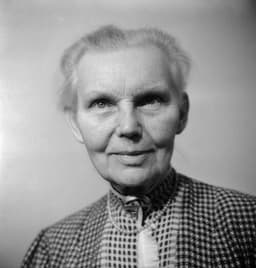
Werner von Blomberg
General · Modern
53.6Total
Basic Information
Born
1942
1878
Died
—
1946
Era
Modern
Modern
Nationality
Equatorial Guinea
Germany
Occupation
General
General
Civilization
Other
Western
Score Comparison
Military (10%)
67.2
30.0
Political (20%)
30.8
68.0
Influence (20%)
47.9
51.8
Legacy (20%)
46.7
45.0
Leadership (15%)
70.0
68.0
Strategy (15%)
56.6
60.0
TOTAL
51.1
53.6
Teodoro Obiang Nguema — Complete Timeline
1979 AD
Seized Power in a Coup d'ÉtatPolitical Action
Teodoro Obiang Nguema Mbasogo led a coup that overthrew his uncle, President Francisco Mac
CoupPower Seizure
Impact: nationaldestructive
Executed Political RivalsPolitical Action◆ Major
Obiang ordered the execution of his uncle and several former officials, consolidating his power. The executions were part of a broader purge of political opponents and marked the start of his repressive regime.
ExecutionRepression
Impact: nationaldestructive
1996 AD
Re-elected in Controversial ElectionsPolitical Action◆ Major
Obiang won a presidential election with 97.8% of the vote, but the election was widely criticized as fraudulent by international observers. He has since been re-elected multiple times in similarly disputed polls.
Election FraudAuthoritarianism
Impact: nationaldestructive
2004 AD
Survived a Coup AttemptPolitical Action◆ Major
Obiang survived a coup attempt allegedly involving foreign mercenaries, including Mark Thatcher. The plot was foiled, and the perpetrators were tried and imprisoned, further entrenching Obiang's rule.
Coup AttemptSurvival
Impact: national
2022 AD
Became Longest-Serving Current Head of StatePolitical Action◆ Major
Obiang became the longest-serving current head of state in the world, surpassing Paul Biya of Cameroon. His tenure has been marked by authoritarianism, corruption, and human rights abuses.
LongevityAuthoritarianism
Impact: global
Werner von Blomberg — Complete Timeline
1933 AD
Appointment as Minister of DefensePolitical Action◆ Major
Blomberg was appointed Reichswehrminister (Minister of Defense) in Hitler's cabinet. He was a key figure in the early Nazi rearmament, overseeing the expansion of the army and the creation of the Wehrmacht. He was promoted to Field Marshal in 1936.
Nazi GovernmentRearmamentWehrmacht
Impact: national
1938 AD
Blomberg-Fritsch AffairPolitical Action
Blomberg was forced to resign after his new wife was revealed to have a criminal record and a past as a prostitute. The scandal was exploited by G
Nazi PurgeScandalMilitary Leadership
Impact: nationaldestructive
1946 AD
Post-War Imprisonment and DeathOther
After World War II, Blomberg was captured by the Allies and held as a witness at the Nuremberg Trials. He died in captivity in 1946 before he could be tried. His legacy is that of a senior military figure who enabled Hitler's rise and rearmament.
Nuremberg TrialsPost-WarDeath
Impact: national
Expert Analysis
Origins
Teodoro Obiang Nguema Mbasogo was born in 1942 in Acoacán, Equatorial Guinea, then a Spanish colony. He attended the General Military Academy in Zaragoza, Spain, and returned to serve in the colonial guard. His uncle, Francisco Macías Nguema, became the country's first president after independence in 1968. Obiang rose quickly through the ranks, becoming a lieutenant colonel and governor of Bioko Island. Werner von Blomberg was born in 1878 in Stargard, Prussia, into a military family. He joined the Prussian Army in 1897 and served in World War I, earning the Iron Cross. After the war, he remained in the Reichswehr, rising to become a general and head of the Troop Office (secret general staff).
Rise to Power
Obiang seized power on August 3, 1979, in a coup d'état against his uncle, who had plunged the country into terror and economic ruin. Obiang executed Macías and several loyalists, then assumed the presidency. He quickly consolidated power by eliminating rivals and establishing a single-party state under the Democratic Party of Equatorial Guinea (PDGE). Blomberg rose to prominence in the Weimar Republic, becoming chief of the Reichswehr's personnel office in 1927 and later commander of the Wehrkreis I (Military District I) in East Prussia. In 1933, Adolf Hitler appointed him Reichswehrminister (Minister of Defense). Blomberg was instrumental in the early Nazi rearmament, overseeing the expansion of the military and the introduction of conscription in 1935. He was awarded the rank of field marshal in 1936, becoming the first of the Third Reich.
Leadership & Governance
Obiang's leadership is characterized by authoritarianism and corruption. He has ruled Equatorial Guinea with an iron fist, suppressing dissent and manipulating elections. He won 97.8% of the vote in the 2002 election, widely condemned as fraudulent. His governance has brought some economic development through oil revenues, but wealth is concentrated among his family and allies. Human rights abuses are rampant, with reports of torture, arbitrary detention, and lack of free press. Blomberg's leadership was more bureaucratic and institutional. As minister, he focused on building a professional army loyal to Hitler, but he also maintained some independence from the Nazi Party. He supported the Night of the Long Knives in 1934, which eliminated the SA's leadership and solidified Hitler's control. Blomberg's governance score of 68.0 reflects his effectiveness in managing the defense ministry, but his political naivety allowed Hitler to outmaneuver him.
Triumph & Tragedy
Obiang's greatest triumph is his longevity: he became the world's longest-serving current head of state in 2016, surpassing Paul Biya. He has survived multiple coup attempts, including a 2004 plot involving Mark Thatcher. His tragedy is the legacy of poverty and repression; Equatorial Guinea has one of the highest income inequalities globally despite its oil wealth. Obiang's military score of 67.2 reflects his survival through force, but his political score of 30.8 shows his failure to build democratic institutions. Blomberg's triumph was his role in rebuilding the German military, which scored 68.0 in leadership. He oversaw the reintroduction of conscription and the expansion of the Wehrmacht. His tragedy was the Blomberg-Fritsch Affair in 1938: his marriage to a woman with a criminal past gave Hermann Göring the opportunity to force his resignation. Blomberg's political score of 68.0 was undermined by this scandal, leading to his downfall and eventual imprisonment by the Allies.
Character & Destiny
Obiang is a ruthless survivor. He has eliminated all potential threats, including his own relatives. His character is marked by paranoia and a focus on personal power. This has kept him in office for over 40 years, but at the cost of international isolation and a stunted nation. His legacy score of 46.7 reflects his negative impact. Blomberg was a competent military professional but politically naive. He believed he could work with Hitler to preserve the army's autonomy, but he was ultimately a tool of the Nazi regime. His destiny was sealed by his personal scandal, which Hitler used to purge the military leadership and assume direct command. Blomberg's total score of 53.6 is slightly higher than Obiang's 51.1, but his influence was ephemeral.
Legacy
Obiang's legacy is one of autocratic rule in a small African nation. He has left Equatorial Guinea with a corrupt system and a population that lacks basic freedoms. His influence score of 47.9 reflects his limited global impact. Blomberg's legacy is more complex: he helped build the military that waged World War II, but his name is largely forgotten. He scored 45.0 in legacy, lower than Obiang, because his contributions were overshadowed by the Nazi regime's crimes and his own scandal. Neither figure is admired; both are cautionary tales.
Conclusion
Werner von Blomberg had a greater impact on world history than Teodoro Obiang Nguema. Blomberg's role in rearming Nazi Germany contributed to the outbreak of World War II, which shaped the 20th century. Obiang's rule, while long, has been confined to a small, peripheral country. Although Blomberg's total score (53.6) is only 2.5 points higher than Obiang's (51.1), his influence on global events is far more significant. The historical verdict is clear: Blomberg's actions had consequences that reshaped continents, while Obiang's legacy is one of stagnation.
Rankings
🥇
Werner von BlombergLeader
Mil: 30.0Pol: 68.0Inf: 51.8
53.6
🥈
Teodoro Obiang Nguema
Mil: 67.2Pol: 30.8Inf: 47.9
51.1
+2.5 behind
How This Comparison Works
Algorithm
Each figure is scored on 6 dimensions (0—100 scale) based on structured historical data: Military (10%), Political (20%), Influence (20%), Legacy (20%), Leadership (15%), Strategy (15%). The weighted total produces the final ranking.
Data Sources
Scores are computed from structured sub-indicators in the database. Scale factors adjust for era (Ancient ×0.85, Modern ×1.0) and civilization size (Eastern ×1.05, Other ×0.80) to account for differences in population and military scale.
Maximum 3 Figures
Comparisons are limited to 2—3 figures to ensure readability and statistical meaningfulness.
Error Margins
±5 points per dimension — Sub-scores are derived from historical records with inherent uncertainty. Two figures within 5 points on a dimension should be considered roughly equivalent in that area.
Total Score Accuracy
±3 points overall — The weighted combination of 6 dimensions produces a total score with approximately ±3 points of uncertainty. Differences of less than 3 points are not statistically significant— the figures are effectively tied.
Known Limitations
- Historical records are incomplete and uneven across civilizations
- Figures from oral-tradition societies may be underrepresented
- Occupation labels can misclassify multi-role figures
- Scores measure capability and impact, not moral character
- Quantitative scoring is a comparison tool, not absolute truth
Capability Radar
Military (10%) — Battles & Warfare
Battles
50
30
Win Rate
54
40
Expansion
60
50
Political (20%) — Governance & Reform
Reform
5
50
Diplomacy
30
45
Economy
10
30
Influence (20%) — Cultural & Global Reach
Cultural
5
15
Global
10
25
Legacy (20%) — Historical Impact
Historical
10
40
Longevity
70
20
Leadership (15%) — Power & Stability
Tenure
95
55
Stability
20
20
Strategy (15%) — Tactics & Innovation
Strategy
61
40
Tactics
67
35
Reform
65
65
Similar Comparisons
Comments & Discussion
No comments yet. Be the first to share your thoughts!