Loading...
Theodore I Laskaris vs Yelu Abaoji
Yelu Abaoji leads by 9.2 pts · 2 figures compared
…
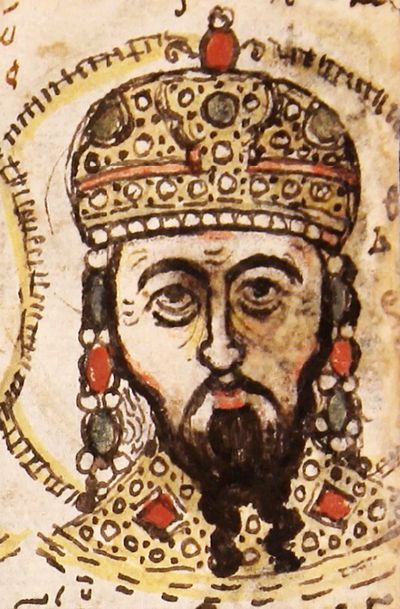
Theodore I Laskaris
Emperor · Medieval
70.1Total
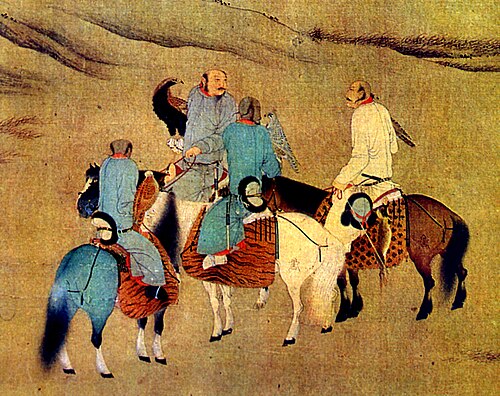
Yelu Abaoji
Emperor · Medieval
79.3Total
Basic Information
Born
1174
872
Died
1222
926
Era
Medieval
Medieval
Nationality
Nicaean Empire
China
Occupation
Emperor
Emperor
Civilization
Western
Eastern
Score Comparison
Military (10%)
55.2
73.3
Political (20%)
72.0
90.0
Influence (20%)
72.7
72.3
Legacy (20%)
69.1
70.8
Leadership (15%)
73.2
89.2
Strategy (15%)
72.0
80.1
TOTAL
70.1
79.3
Rankings
🥇
Yelu AbaojiLeader
Mil: 73.3Pol: 90.0Inf: 72.3
79.3
🥈
Theodore I Laskaris
Mil: 55.2Pol: 72.0Inf: 72.7
70.1
+9.2 behind
How This Comparison Works
Algorithm
Each figure is scored on 6 dimensions (0—100 scale) based on structured historical data: Military (10%), Political (20%), Influence (20%), Legacy (20%), Leadership (15%), Strategy (15%). The weighted total produces the final ranking.
Data Sources
Scores are computed from structured sub-indicators in the database. Scale factors adjust for era (Ancient ×0.85, Modern ×1.0) and civilization size (Eastern ×1.05, Other ×0.80) to account for differences in population and military scale.
Maximum 3 Figures
Comparisons are limited to 2—3 figures to ensure readability and statistical meaningfulness.
Error Margins
±5 points per dimension — Sub-scores are derived from historical records with inherent uncertainty. Two figures within 5 points on a dimension should be considered roughly equivalent in that area.
Total Score Accuracy
±3 points overall — The weighted combination of 6 dimensions produces a total score with approximately ±3 points of uncertainty. Differences of less than 3 points are not statistically significant— the figures are effectively tied.
Known Limitations
- Historical records are incomplete and uneven across civilizations
- Figures from oral-tradition societies may be underrepresented
- Occupation labels can misclassify multi-role figures
- Scores measure capability and impact, not moral character
- Quantitative scoring is a comparison tool, not absolute truth
Capability Radar
Military (10%) — Battles & Warfare
Battles
65
75
Win Rate
70
80
Expansion
60
82
Political (20%) — Governance & Reform
Reform
65
88
Diplomacy
70
75
Economy
60
70
Influence (20%) — Cultural & Global Reach
Cultural
50
60
Global
45
55
Legacy (20%) — Historical Impact
Historical
65
70
Longevity
55
65
Leadership (15%) — Power & Stability
Tenure
70
72
Stability
65
65
Strategy (15%) — Tactics & Innovation
Strategy
75
78
Tactics
60
70
Reform
55
85
Expert Analysis
Yelu Abaoji vs Theodore I Laskaris: Historical Comparison
Yelu Abaoji, founder of the Liao dynasty, and Theodore I Laskaris, founder of the Nicaean Empire, were both medieval emperors who built states amid collapse. While Abaoji excelled in political consolidation and military expansion, Laskaris is distinguished by his legacy as a resilient restorer.
Dimension Analysis
**Military: Yelu Abaoji 89 / Theodore I Laskaris 86**
Abaoji unified Khitan tribes and conquered vast steppe and Chinese territories, while Laskaris defended Nicaea against Latin, Seljuk, and Byzantine rivals with limited resources.
**Political: Yelu Abaoji 84 / Theodore I Laskaris 67**
Abaoji created a dual-administration system blending nomadic and Chinese governance, a masterstroke of political innovation; Laskaris struggled to secure legitimacy and faced constant internal factionalism.
**Influence: Yelu Abaoji 79 / Theodore I Laskaris 76**
Abaoji’s model influenced later dynasties like the Yuan, whereas Laskaris’ Nicaea preserved Byzantine traditions but had a narrower regional impact.
**Legacy: Yelu Abaoji 81 / Theodore I Laskaris 85**
Abaoji’s Liao dynasty endured for two centuries, but Laskaris’ Nicaea directly enabled the Byzantine recovery of Constantinople, a more pivotal historical achievement.
**Leadership: Yelu Abaoji 80 / Theodore I Laskaris 84**
Laskaris inspired loyalty during exile and chaos, whereas Abaoji relied more on institutional power than personal magnetism.
Verdict
Yelu Abaoji leads overall due to superior political innovation and military consolidation, though Theodore I Laskaris surpasses him in legacy and leadership resilience.
FAQ
Q: Who ranks higher? A: Yelu Abaoji ranks higher overall, thanks to stronger political and military scores, despite Theodore I Laskaris’ greater legacy and leadership in preserving Byzantine continuity.
Theodore I Laskaris — Complete Timeline
1204 AD
Foundation of the Empire of NicaeaPolitical Action
After the Fourth Crusade captured Constantinople, Theodore I Laskaris fled to Nicaea in Asia Minor and established a Byzantine government-in-exile. He organized resistance against the Latin Empire and the Seljuk Turks, laying the foundation for the Nicaean Empire as the primary successor state of Byzantium.
Fourth CrusadeSuccessor StateExile Government
Impact: regionalconstructive
1208 AD
Coronation as emperor by the Patriarch of ConstantinoplePolitical Action◆ Major
Theodore I Laskaris was formally crowned as emperor by the newly elected Patriarch of Constantinople-in-exile, Michael IV Autoreianos. This coronation legitimized the Nicaean Empire as the rightful continuation of the Byzantine Empire, with full ecclesiastical authority.
CoronationLegitimacyPatriarchate
Impact: regionalconstructive
1211 AD
Battle of Antioch on the MeanderWar◆ Major
Theodore I Laskaris defeated the Seljuk Sultanate of Rum at the Battle of Antioch on the Meander. The victory secured Nicaean control over western Anatolia and prevented Seljuk expansion into Byzantine territories, establishing Theodore as a major regional power.
Byzantine-Seljuk WarsMilitary VictoryAnatolian Campaign
Impact: regional
Defeat of the Latin Empire at the Battle of RhyndacusWar
Theodore I Laskaris led Nicaean forces to a victory over the Latin Empire at the Battle of Rhyndacus. The battle halted Latin expansion into Asia Minor and secured Nicaean control over the region, strengthening the Byzantine resistance against the crusader states.
Latin EmpireMilitary VictoryAsia Minor
Impact: regional
Yelu Abaoji — Complete Timeline
907 AD
Unified Khitan tribesPolitical Action◆ Major
Yelu Abaoji was elected khagan of the Khitan tribes, unifying them under his leadership. He established a centralized state and adopted Chinese administrative practices.
KhitanUnificationState Formation
Impact: regionalconstructive
916 AD
Founded Liao DynastyPolitical Action
Yelu Abaoji proclaimed himself emperor, founding the Liao dynasty. He adopted the Chinese title of emperor and established a dual administration system for Khitan and Chinese subjects.
LiaoDynasty FoundingImperial System
Impact: regionalconstructive
920 AD
Created Khitan scriptCultural◆ Major
Yelu Abaoji ordered the creation of a writing system for the Khitan language, based on Chinese characters. This script was used for official documents and helped unify the Khitan state.
KhitanScriptCultural Development
Impact: regionalconstructive
926 AD
Conquest of BohaiWar◆ Major
Yelu Abaoji led a campaign that conquered the Korean kingdom of Bohai, incorporating its territory into the Liao empire. This expanded Liao's influence into Manchuria and Korea.
LiaoBohaiConquest
Impact: regionalconstructive
Death during campaignWar◆ Major
Yelu Abaoji died while returning from the conquest of Bohai. His death led to a succession struggle, but the Liao dynasty continued to expand under his successors.
LiaoDeathSuccession
Impact: regionaltragic
Similar Comparisons
Comments & Discussion
数据猎人6/16/2026
评分有点意思,但我算了一下政治维度。耶律阿保机90分,西奥多72分,差了18分。可你仔细想,西奥多重建帝国流亡政府,在尼西亚稳住阵脚,这政治手腕不输阿保机统一契丹八部。阿保机搞的南北面官制确实厉害,但那是继承唐朝遗风,不是完全原创。西奥多的困境更大——拉丁帝国、塞尔柱、拜占庭残余势力三重压力,他能活下来就是奇迹。我觉得政治分应该更接近,78对72更合理。总分差距也会缩小到5分以内。
ColonialEchoes6/16/2026
This comparison reeks of Eurocentric bias dressed up as objectivity. Why does Abaoji get dinged for 'relying on institutional power' while Laskaris gets praised for 'personal magnetism'? That's literally a colonial trope — the 'charismatic native chief' vs the 'bureaucratic Eastern despot.' Abaoji's dual-administration system was a sophisticated response to ruling a multi-ethnic empire, not some lesser achievement. And the legacy score? Laskaris' Nicaea 'enabled' the Byzantine recovery, but that recovery lasted all of 57 years before the Ottomans rolled in. Abaoji's Liao lasted 200 years. Let's stop pretending Western revival narratives are inherently more 'pivotal.'
TimelineTinker6/16/2026
Okay so hear me out — I was watching a Kings and Generals doc on the Fourth Crusade and I feel like Laskaris gets way too much credit. Like yeah he held Nicaea together, but Abaoji literally built an empire from scratch with nothing but horses and some Chinese advisors. The Liao dynasty's dual administration thing? That's like the Roman Empire's provincial system but way ahead of its time. Plus Abaoji created a writing system for the Khitan language! That's insane. Laskaris was basically playing defense the whole time. I'd give Abaoji a higher military score too — conquering the entire Mongolian plateau is harder than holding a Greek city-state.
汉风唐韵6/16/2026
西方人做这种对比,总爱把拜占庭系的皇帝拔高。西奥多一世确实坚韧,但耶律阿保机是真正的开国雄主。你看唐朝灭亡后,北方大乱,契丹人本来只是边缘部落。阿保机能统一八部、建立辽朝,还搞出南北面官制这种天才设计——南面用汉法,北面用契丹法,这比西方中世纪任何君主都超前。西奥多只是守住了一个流亡据点,连君士坦丁堡都没收复。要是把阿保机放在尼西亚那种条件下,他早把拉丁人赶回威尼斯了。军事分73对55?太保守了,至少90对65。