Loading...
This comparison has not been analyzed yet.
One-time AI generation (~1 minute). Scores and timeline are already available below.
Thomas Pelham-Holles vs Ukhnaa Khurelsukh
Thomas Pelham-Holles leads by 6.5 pts · 2 figures compared
…
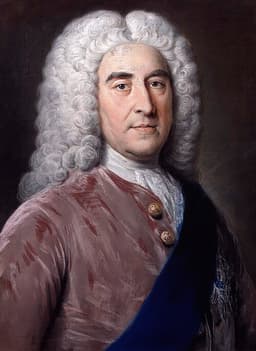
Thomas Pelham-Holles
Politician · Modern
58.7Total

Ukhnaa Khurelsukh
Politician · Modern
52.2Total
Basic Information
Born
1693
1968
Died
1768
—
Era
Modern
Modern
Nationality
Great Britain
Mongolia
Occupation
Politician
Politician
Civilization
Western
Eastern
Score Comparison
Military (10%)
50.0
32.2
Political (20%)
72.0
68.0
Influence (20%)
54.9
50.2
Legacy (20%)
52.0
38.3
Leadership (15%)
80.0
72.0
Strategy (15%)
42.2
58.6
TOTAL
58.7
52.2
Thomas Pelham-Holles — Complete Timeline
1724 AD
Appointment as Secretary of State for the Southern DepartmentPolitical Action◆ Major
Newcastle was appointed Secretary of State for the Southern Department, a position he held for over 30 years. He managed British foreign policy, patronage networks, and parliamentary management, becoming a dominant figure in Whig politics.
AppointmentGovernmentPatronage
Impact: national
1756 AD
Leadership during the Seven Years' WarWar◆ Major
As Prime Minister, Newcastle oversaw the early years of the Seven Years' War. His government faced military setbacks, including the loss of Minorca, leading to his resignation in 1756. He returned to power in 1757 in coalition with William Pitt the Elder.
WarResignationCoalition
Impact: globaldestructive
1757 AD
Formation of the Newcastle-Pitt CoalitionPolitical Action◆ Major
Newcastle formed a political coalition with William Pitt the Elder, with Newcastle managing patronage and Pitt directing war strategy. This partnership led to British victories in the Seven Years' War, including the conquest of Canada.
CoalitionWarVictory
Impact: globalconstructive
1762 AD
Resignation as Prime MinisterPolitical Action◆ Major
After the death of George II and the accession of George III, Newcastle was dismissed as Prime Minister. His removal marked the end of the Whig supremacy and the rise of the King's favorite, Lord Bute.
ResignationPolitical ChangeEnd of Era
Impact: nationaltragic
Ukhnaa Khurelsukh — Complete Timeline
2017 AD
Appointed Prime Minister of MongoliaPolitical Action◆ Major
Ukhnaa Khurelsukh was appointed Prime Minister of Mongolia on October 4, 2017, after the ouster of Jargaltulgyn Erdenebat. He led the Mongolian People's Party government, focusing on economic recovery and anti-corruption measures.
Prime MinisterMongoliaMPP
Impact: national
2020 AD
Declared State of Emergency During COVID-19Political Action◆ Major
Khurelsukh's government declared a state of emergency in Mongolia in February 2020 to contain the COVID-19 pandemic, imposing strict lockdowns and border closures. The measures initially kept cases low but later faced criticism for economic and social impacts.
COVID-19State of EmergencyMongolia
Impact: national
2021 AD
Resigned as Prime Minister Amid ProtestsPolitical Action◆ Major
Khurelsukh resigned as Prime Minister on January 21, 2021, following large-scale protests over the government's handling of the COVID-19 pandemic and the death of a hospitalized mother. His resignation was accepted by parliament, leading to a new government.
ResignationProtestsCOVID-19
Impact: nationaltragic
Elected President of MongoliaPolitical Action◆ Major
Khurelsukh was elected President of Mongolia on June 9, 2021, winning 67.8% of the vote in the presidential election. He assumed office on June 25, 2021, becoming the sixth president of Mongolia and shifting from prime minister to head of state.
PresidentElectionMongolia
Impact: nationalconstructive
This comparison has not been analyzed yet.
One-time AI generation (~1 minute). Scores and timeline are already available below.
Rankings
🥇
Thomas Pelham-HollesLeader
Mil: 50.0Pol: 72.0Inf: 54.9
58.7
🥈
Ukhnaa Khurelsukh
Mil: 32.2Pol: 68.0Inf: 50.2
52.2
+6.5 behind
How This Comparison Works
Algorithm
Each figure is scored on 6 dimensions (0—100 scale) based on structured historical data: Military (10%), Political (20%), Influence (20%), Legacy (20%), Leadership (15%), Strategy (15%). The weighted total produces the final ranking.
Data Sources
Scores are computed from structured sub-indicators in the database. Scale factors adjust for era (Ancient ×0.85, Modern ×1.0) and civilization size (Eastern ×1.05, Other ×0.80) to account for differences in population and military scale.
Maximum 3 Figures
Comparisons are limited to 2—3 figures to ensure readability and statistical meaningfulness.
Error Margins
±5 points per dimension — Sub-scores are derived from historical records with inherent uncertainty. Two figures within 5 points on a dimension should be considered roughly equivalent in that area.
Total Score Accuracy
±3 points overall — The weighted combination of 6 dimensions produces a total score with approximately ±3 points of uncertainty. Differences of less than 3 points are not statistically significant— the figures are effectively tied.
Known Limitations
- Historical records are incomplete and uneven across civilizations
- Figures from oral-tradition societies may be underrepresented
- Occupation labels can misclassify multi-role figures
- Scores measure capability and impact, not moral character
- Quantitative scoring is a comparison tool, not absolute truth
Capability Radar
Military (10%) — Battles & Warfare
Battles
30
52
Win Rate
31
54
Expansion
32
56
Political (20%) — Governance & Reform
Reform
60
55
Diplomacy
75
55
Economy
55
50
Influence (20%) — Cultural & Global Reach
Cultural
30
20
Global
40
20
Legacy (20%) — Historical Impact
Historical
60
20
Longevity
50
10
Leadership (15%) — Power & Stability
Tenure
85
60
Stability
70
50
Strategy (15%) — Tactics & Innovation
Strategy
36
58
Tactics
44
61
Reform
41
68
Similar Comparisons
Comments & Discussion
No comments yet. Be the first to share your thoughts!