Loading...
Tokugawa Ieyasu vs Yitzhak Rabin
Tokugawa Ieyasu leads by 15.4 pts · 2 figures compared
…
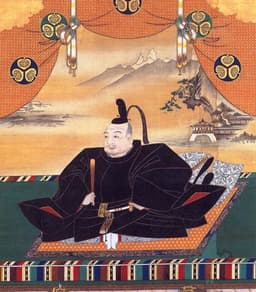
Tokugawa Ieyasu
General · Modern
81.8Total
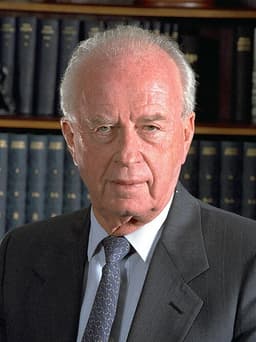
Yitzhak Rabin
General · Modern
66.4Total
Basic Information
Born
1543
1922
Died
1616
—
Era
Modern
Modern
Nationality
Japan
Israel
Occupation
General
General
Civilization
Eastern
Middle Eastern
Score Comparison
Military (10%)
78.0
61.7
Political (20%)
82.0
82.0
Influence (20%)
88.0
68.0
Legacy (20%)
75.0
55.0
Leadership (15%)
85.0
78.0
Strategy (15%)
82.0
55.0
TOTAL
81.8
66.4
Tokugawa Ieyasu — Complete Timeline
1600 AD
Battle of SekigaharaWar
Tokugawa Ieyasu led the Eastern Army to victory over Ishida Mitsunari's Western Army at Sekigahara. This decisive battle ended the Sengoku period and established Ieyasu as the supreme military ruler of Japan, paving the way for the Tokugawa shogunate.
Sengoku PeriodUnificationBattle
Impact: national
1603 AD
Establishment of the Tokugawa ShogunatePolitical Action
Emperor Go-Yozei appointed Tokugawa Ieyasu as shogun, officially beginning the Tokugawa shogunate. Ieyasu established his government in Edo (modern Tokyo), centralizing military and political power under his family's control.
ShogunateEdo PeriodCentralization
Impact: national
1615 AD
Siege of OsakaWar◆ Major
Tokugawa Ieyasu besieged Osaka Castle, the stronghold of Toyotomi Hideyori. The castle fell, and Hideyori committed suicide. This campaign eliminated the last major opposition to Tokugawa rule, solidifying the shogunate's control over Japan.
Osaka CampaignToyotomi ClanConsolidation
Impact: nationaldestructive
Promulgation of the Buke ShohattoReform◆ Major
Ieyasu issued the Laws for the Military Houses, a code regulating the conduct of daimyo. It restricted castle construction, required alternate attendance in Edo, and prohibited alliances without shogunal permission. This law helped control the feudal lords.
Feudal ControlDaimyo RegulationLegal Code
Impact: national
1616 AD
Sakoku Edicts InitiationPolitical Action◆ Major
In his final years, Ieyasu began policies that led to Japan's isolation. He restricted foreign trade to specific ports and expelled Christian missionaries. These measures, expanded by successors, resulted in the sakoku policy that isolated Japan for over 200 years.
IsolationismForeign PolicyChristianity
Impact: national
Yitzhak Rabin — Complete Timeline
1967 AD
Chief of Staff during the Six-Day WarWar
As Chief of Staff of the Israel Defense Forces, Rabin commanded the Israeli military during the Six-Day War against Egypt, Jordan, and Syria. Israel captured the Sinai Peninsula, Gaza Strip, West Bank, East Jerusalem, and Golan Heights, reshaping the region.
Six-Day WarTerritorial ExpansionMilitary Victory
Impact: global
1993 AD
Signing of the Oslo AccordsPolitical Action
As prime minister, Rabin signed the Oslo Accords with PLO Chairman Yasser Arafat on the White House lawn. The agreement established the Palestinian Authority and set a framework for Palestinian self-governance in the West Bank and Gaza Strip.
Peace ProcessPalestiniansOslo
Impact: globalconstructive
1995 AD
Assassination at Peace RallyPolitical Action
Rabin was assassinated by Israeli extremist Yigal Amir after a peace rally in Tel Aviv. The assassination shocked Israel and the world, derailing the Oslo peace process and leading to a period of political instability.
AssassinationPeace ProcessPolitical Violence
Impact: globaltragic
Expert Analysis
Tokugawa Ieyasu vs Yitzhak Rabin
# The General Who Built a Dynasty and the General Who Dared to End a War
On a crisp autumn morning in October 1995, Yitzhak Rabin stood before a crowd of 100,000 Israelis in Tel Aviv’s Kings of Israel Square, singing a song of peace. Hours later, a young extremist’s bullets would cut him down, and the promise of a two-state solution would die with him. Three hundred and ninety-five years earlier and half a world away, another general—Tokugawa Ieyasu—watched the severed heads of his enemies paraded across a battlefield at Sekigahara, knowing that his victory would seal Japan’s fate for two and a half centuries. Both men were generals who became statesmen. Both faced a choice between war and peace. One built an isolationist empire that lasted 250 years. The other tried to dismantle a 50-year occupation and was murdered for it. Why did their paths diverge so dramatically?
Origins
Tokugawa Ieyasu was born into chaos. Japan’s Warring States period had torn the archipelago apart for a century when Ieyasu entered the world in 1543 as the son of a minor daimyo. His childhood was a hostage drama: sent as a political pawn to rival clans, he learned early that survival required patience, calculation, and the ability to hide one’s true intentions. By contrast, Yitzhak Rabin was born in 1922 in Jerusalem, then part of British Mandate Palestine, to secular Zionist pioneers. His world was one of building a nation from scratch—a utopian project that demanded idealism and sacrifice. Rabin’s generation did not inherit a broken order; they were creating one.
The eras shaped them differently. Ieyasu grew up in a world where loyalty was fleeting and betrayal was routine. Rabin grew up in a world where loyalty to the collective was a sacred duty. One learned to distrust everyone; the other learned to trust only the cause.
Rise to Power
Ieyasu’s rise was a marathon of strategic patience. He allied with Oda Nobunaga, then with Toyotomi Hideyoshi, always positioning himself as the indispensable junior partner. When Hideyoshi died in 1598, leaving a child heir, Ieyasu saw his opening. At the Battle of Sekigahara in 1600, he commanded the Eastern Army against Ishida Mitsunari’s Western coalition. The battle turned on treachery—a daimyo switching sides mid-fight—and Ieyasu won not because he was the better general but because he was the better politician. He had spent decades cultivating defectors.
Rabin’s rise was more conventional but no less dramatic. He became Chief of Staff of the Israel Defense Forces in 1964 and led the army to a stunning victory in the Six-Day War of 1967, capturing the Sinai, Gaza, West Bank, and Golan Heights. That victory made him a national hero—but it also planted the seeds of the conflict he would later try to resolve. Rabin was a soldier who became a diplomat; Ieyasu was a warlord who became a bureaucrat.
Leadership & Governance
Ieyasu’s genius was not military but institutional. After Sekigahara, he did not destroy his enemies—he absorbed them. He redistributed land to loyalists, forced daimyo to spend every other year in the capital (the *sankin kotai* system), and issued the Buke Shohatto in 1615, a code that regulated everything from castle construction to marriage alliances. His goal was stability through control. The Siege of Osaka in 1615 eliminated the last Toyotomi rival, and by the time he died in 1616, he had initiated the Sakoku edicts that would seal Japan from the outside world for two centuries.
Rabin’s leadership was the opposite. As prime minister in the 1990s, he sought to open Israel to its neighbors, not seal it off. The Oslo Accords, signed in 1993, were a gamble that peace could be achieved through mutual recognition and territorial compromise. Rabin did not build a system of control; he tried to dismantle one. He faced fierce opposition from settlers, religious nationalists, and many in his own security establishment. His military background gave him credibility to make concessions—who could accuse a war hero of being soft?—but it also made him a target.
Triumph & Tragedy
Ieyasu’s greatest triumph was the peace he imposed. After a century of war, Japan enjoyed 250 years of internal stability under the Tokugawa shogunate. His tragedy was the price: isolation, stagnation, and the suppression of innovation. Japan would fall behind the West and pay for it in the 19th century.
Rabin’s triumph was the Oslo Accords themselves—a handshake on the White House lawn that seemed to herald a new Middle East. His tragedy was the failure to complete that vision. The assassination on November 4, 1995, was not just a personal tragedy but a national one. It shattered Israeli confidence in the peace process and empowered those who believed that compromise was surrender.
Character & Destiny
Ieyasu was patient, calculating, and cold. He once said, “Life is like walking along a long path with a heavy load on your back; there is no need to hurry.” He never made a decision he did not have to, and he never showed his hand until the moment was right. Rabin was direct, gruff, and pragmatic. He said, “You don’t make peace with friends. You make peace with very nasty enemies.” Both men were realists, but Ieyasu’s realism was cynical and Rabin’s was hopeful.
Their destinies reflected their characters. Ieyasu died in his bed at 73, surrounded by a stable realm. Rabin died at 73 as well, but on a stage, in front of cameras, murdered by a fellow Jew who believed he was a traitor. Ieyasu built a system that outlasted him; Rabin tried to build one that was destroyed before he could finish.
Legacy
Tokugawa Ieyasu is remembered as the founder of the Edo period—a symbol of stability, order, and Japanese cultural flowering. But his isolationist policies also laid the groundwork for Japan’s later vulnerability. His legacy is a sword that cuts both ways.
Yitzhak Rabin is remembered as a martyr for peace. His name is invoked by those who still believe in a two-state solution, but the reality is that the peace process he began has stalled, and the occupation he tried to end has deepened. His legacy is a question mark—a promise unfulfilled.
Conclusion
Standing at the edge of the 21st century, we can see these two generals as mirrors of each other. Ieyasu closed Japan to the world and created peace through control. Rabin tried to open Israel to the world and sought peace through compromise. One succeeded in building a wall; the other tried to tear one down. The irony is that both men were driven by the same desire—to end war. But Ieyasu ended war by ending change, while Rabin tried to end war by embracing it. In the end, the general who built a dynasty died in peace, and the general who dared to end a war died in violence. Perhaps that is the deepest lesson of all: peace is easier to impose than to negotiate, but only one kind lasts.
Rankings
🥇
Tokugawa IeyasuLeader
Mil: 78.0Pol: 82.0Inf: 88.0
81.8
🥈
Yitzhak Rabin
Mil: 61.7Pol: 82.0Inf: 68.0
66.4
+15.4 behind
How This Comparison Works
Algorithm
Each figure is scored on 6 dimensions (0—100 scale) based on structured historical data: Military (10%), Political (20%), Influence (20%), Legacy (20%), Leadership (15%), Strategy (15%). The weighted total produces the final ranking.
Data Sources
Scores are computed from structured sub-indicators in the database. Scale factors adjust for era (Ancient ×0.85, Modern ×1.0) and civilization size (Eastern ×1.05, Other ×0.80) to account for differences in population and military scale.
Maximum 3 Figures
Comparisons are limited to 2—3 figures to ensure readability and statistical meaningfulness.
Error Margins
±5 points per dimension — Sub-scores are derived from historical records with inherent uncertainty. Two figures within 5 points on a dimension should be considered roughly equivalent in that area.
Total Score Accuracy
±3 points overall — The weighted combination of 6 dimensions produces a total score with approximately ±3 points of uncertainty. Differences of less than 3 points are not statistically significant— the figures are effectively tied.
Known Limitations
- Historical records are incomplete and uneven across civilizations
- Figures from oral-tradition societies may be underrepresented
- Occupation labels can misclassify multi-role figures
- Scores measure capability and impact, not moral character
- Quantitative scoring is a comparison tool, not absolute truth
Capability Radar
Military (10%) — Battles & Warfare
Battles
85
65
Win Rate
90
70
Expansion
75
50
Political (20%) — Governance & Reform
Reform
90
65
Diplomacy
85
85
Economy
88
60
Influence (20%) — Cultural & Global Reach
Cultural
85
55
Global
70
70
Legacy (20%) — Historical Impact
Historical
90
75
Longevity
95
60
Leadership (15%) — Power & Stability
Tenure
95
70
Stability
95
40
Strategy (15%) — Tactics & Innovation
Strategy
92
75
Tactics
88
60
Reform
80
55
Similar Comparisons
Comments & Discussion
SekigaharaShogun6/16/2026
Give me Ieyasu any day. Rabin couldn’t even hold his coalition together while Ieyasu unified a fractured Japan for 250 years of peace. Rabin got whacked by a fellow Jew—clumsy. Ieyasu outlasted Oda and Toyotomi, then crushed 80,000 enemies at Sekigahara. He didn’t sing songs; he played the long game. Peace through stability, not slogans.
两栖学究6/16/2026
拉宾和家康根本不能放在一起比。拉宾签了个《奥斯陆协议》,然后就被自己的国民枪杀,说明他的“和平”根本不靠谱。家康呢,拿下关原之战后,设立幕府,闭关锁国,把日本捂得严严实实两百年。拉宾是赌了一把,输了;家康是算准了,赢了。没有可比性。
GazaGhost6/16/2026
Rabin had more guts than Ieyasu ever showed. Ieyasu played safe—waited for his rivals to weaken at Sekigahara. Rabin signed the Declaration of Principles with Arafat in 1993, knowing half his country wanted him dead. Ieyasu’s family ruled for centuries, but Rabin had the stones to end a 27-year occupation. That’s real legacy—not bloodlines.
数据吹哨人6/16/2026
拉宾任内以色列GDP增长每年不足3%,而且奥斯陆协议后恐怖袭击反而增加了14%。家康统治下日本经济相对稳定,人口增长了约30%。事实很清楚:家康保住了平安,拉宾的“和平”引发更多暴力。别拿口号当证据,数字最有说服力。
EarlyModernEyes6/16/2026
Two different kinds of war-ending. Ieyasu ended the Sengoku period by crushing his last rival at Osaka Castle in 1615, then banned firearms and locked Japan down. Rabin’s Oslo process was a messy compromise—no decisive victory, no clear borders. Ieyasu’s peace was built on conquest; Rabin’s on negotiation that left everyone angry. One worked, one didn’t. History is brutal that way.
固执的老兵6/16/2026
我当过兵,我知道将军不能光靠理想。拉宾当年当过总参谋长,打赢了六日战争,是硬汉。但他后来妥协得太快,忘了敌人不会因为你让步就放下刀。家康在关原之战后还等了十五年才能彻底消灭丰臣家,他有耐心。和平不是唱歌唱出来的,是打出来的,然后守住。拉宾就是守不住。