Loading...
Vajiralongkorn vs Vyner Brooke
Vyner Brooke leads by 2.9 pts · 2 figures compared
…

Vajiralongkorn
Emperor · Modern
40.8Total
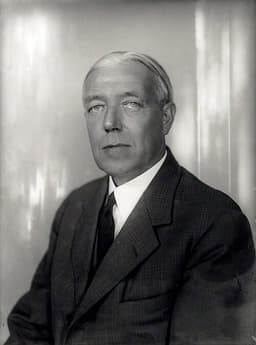
Vyner Brooke
Emperor · Modern
43.7Total
Basic Information
Born
1952
1874
Died
—
1963
Era
Modern
Modern
Nationality
Thailand
Great Britain
Occupation
Emperor
Emperor
Civilization
Eastern
Western
Score Comparison
Military (10%)
22.0
49.8
Political (20%)
25.0
35.1
Influence (20%)
49.4
47.1
Legacy (20%)
35.8
35.8
Leadership (15%)
51.9
58.8
Strategy (15%)
57.2
39.5
TOTAL
40.8
43.7
Vajiralongkorn — Complete Timeline
2016 AD
Accession as King Rama XPolitical Action◆ Major
Vajiralongkorn ascended to the throne following the death of his father, King Bhumibol Adulyadej. His accession marked the beginning of a new reign after a 70-year rule, with expectations of continuity and change in the Thai monarchy.
SuccessionMonarchyThailand
Impact: national
2017 AD
Constitutional amendments to increase royal powersPolitical Action◆ Major
Under Vajiralongkorn's reign, the 2017 constitution was promulgated, which included provisions that enhanced the king's authority, such as the ability to leave the country without a regent and direct control over crown property. This was seen as a consolidation of royal prerogatives.
ConstitutionMonarchyThailand
Impact: national
2019 AD
Assumed direct command of royal security forcesPolitical Action◆ Major
King Vajiralongkorn took personal control of the Royal Security Command and other key military units, consolidating royal authority over armed forces. This move increased the monarchy's direct influence in military affairs.
MilitaryRoyal PowerThailand
Impact: national
Vyner Brooke — Complete Timeline
1917 AD
Succeeded as Rajah of SarawakPolitical Action◆ Major
Vyner Brooke succeeded his father Charles Brooke as the third White Rajah of Sarawak on May 24, 1917. He inherited a stable kingdom but faced challenges from modernization and growing nationalist movements in Southeast Asia.
SuccessionBorneoDynasty
Impact: regional
1941 AD
Japanese Occupation of SarawakWar◆ Major
Vyner Brooke evacuated Sarawak in December 1941 as Japanese forces invaded. The Japanese occupied Sarawak from 1941 to 1945, ending Brooke rule temporarily. Vyner Brooke administered the colony from Australia during the war.
World War IIJapanese OccupationBorneo
Impact: regionaltragic
Promulgation of the 1941 ConstitutionReform◆ Major
Vyner Brooke promulgated a constitution for Sarawak on September 24, 1941, which limited his absolute powers and established a Supreme Council and State Council. The constitution was suspended during the Japanese occupation but influenced post-war governance.
ConstitutionReformBorneo
Impact: regionalprogressive
1946 AD
Cession of Sarawak to the British CrownPolitical Action◆ Major
Vyner Brooke ceded Sarawak to the British Crown on July 1, 1946, ending the White Rajah dynasty. The cession followed World War II and was opposed by many Sarawakians, leading to political unrest and the assassination of the British governor in 1949.
CessionColonialismBorneo
Impact: regionaltragic
Expert Analysis
Origins
King Vajiralongkorn (born 1952) is the only son of King Bhumibol Adulyadej and Queen Sirikit of Thailand. He was educated in the UK and Australia, attending military academies and receiving training in various armed forces branches. His upbringing was steeped in royal tradition but also marked by a more informal lifestyle than his father's.
Vyner Brooke (1874-1963) was the eldest son of Charles Brooke, the second White Rajah of Sarawak. Born in London, he was educated at Winchester College and Cambridge University. He spent his early years in Sarawak, learning local customs and languages, but was often in England for education. His father intended him to continue the Brooke dynasty's rule.
Rise to Power
Vajiralongkorn was designated crown prince in 1972 at age 20. His rise was gradual, as his father's long reign meant he remained heir for 44 years. He assumed some royal duties but was often overshadowed by Bhumibol's immense popularity. Upon Bhumibol's death in October 2016, Vajiralongkorn ascended the throne as Rama X. His coronation was held in 2019, consolidating his formal authority.
Vyner Brooke succeeded his father on May 24, 1917, after Charles's death. He inherited a stable kingdom that had been modernized by his predecessors. However, his rule faced challenges from the outset, including economic pressures and the rise of nationalism. Unlike Vajiralongkorn, Vyner's ascent was immediate and hereditary, without a long waiting period.
Leadership & Governance
Vajiralongkorn's leadership style is characterized by direct intervention in military and political affairs. He assumed command of key royal security forces and oversaw constitutional changes in 2017 that enhanced royal powers, including the ability to reside abroad without appointing a regent and control over crown property. His governance is centralized, with a focus on consolidating authority. He scored 51.9 in leadership and 57.2 in strategy, reflecting a pragmatic approach.
Vyner Brooke's governance was more liberal initially. He promulgated a constitution on September 24, 1941, which limited his absolute powers and established a Supreme Council and State Council. This move was partly to appease anti-cession sentiments and modernize administration. However, his leadership during the Japanese occupation (1941-1945) was marked by evacuation and exile. After the war, he decided to cede Sarawak to Britain in 1946, ending the dynasty. His leadership score is 58.8, but his political score is 35.1, indicating limited long-term political impact.
Triumph & Tragedy
Vajiralongkorn's greatest success is maintaining the monarchy's relevance in modern Thailand, despite controversies. He has secured constitutional powers and wealth, with the crown property office managing vast assets. However, his reign has been marred by protests against royal authority, particularly in 2020-2021, and his personal life has attracted criticism. His military score of 22.0 reflects limited direct military achievements.
Vyner Brooke's triumph was the peaceful cession of Sarawak to Britain, avoiding conflict with anti-cession factions, though it was controversial. His tragedy is the end of the Brooke dynasty's rule, which had lasted over a century. The cession led to opposition and assassination attempts. His legacy score of 35.8 matches Vajiralongkorn's, indicating mixed historical assessment.
Character & Destiny
Vajiralongkorn is perceived as more distant and less charismatic than his father. His decision-making is often opaque, with a focus on personal control. His character has shaped a destiny of continued royal power but also public dissent. He scored 49.4 in influence, reflecting his ability to maintain authority.
Vyner Brooke was seen as more progressive but also indecisive. His character led to the cession, which he viewed as pragmatic but which ended his dynasty. He scored 47.1 in influence, similar to Vajiralongkorn, but his choices were more consequential for Sarawak's future.
Legacy
Vajiralongkorn's legacy is still unfolding. He has strengthened the monarchy's legal and financial position but faces challenges from democratic movements. His long-term impact may be a more powerful but less beloved institution.
Vyner Brooke's legacy is the end of absolute monarchy in Sarawak and its integration into Malaysia (via British colony). His constitution laid groundwork for later governance. He scored 35.8 in legacy, tied with Vajiralongkorn, but his actions had a definitive end point.
Conclusion
Vyner Brooke had a greater immediate impact on Sarawak's political structure, ending a dynasty and transitioning to colonial rule. Vajiralongkorn's impact is more about continuity and consolidation. With an overall score of 43.7 vs 40.8, Vyner Brooke edges ahead, but Vajiralongkorn's long-term influence may yet surpass. However, based on historical outcomes, Vyner Brooke's decision to cede Sarawak was a pivotal moment that reshaped a nation, giving him a slight edge in historical impact.
Rankings
🥇
Vyner BrookeLeader
Mil: 49.8Pol: 35.1Inf: 47.1
43.7
🥈
Vajiralongkorn
Mil: 22.0Pol: 25.0Inf: 49.4
40.8
+2.9 behind
How This Comparison Works
Algorithm
Each figure is scored on 6 dimensions (0—100 scale) based on structured historical data: Military (10%), Political (20%), Influence (20%), Legacy (20%), Leadership (15%), Strategy (15%). The weighted total produces the final ranking.
Data Sources
Scores are computed from structured sub-indicators in the database. Scale factors adjust for era (Ancient ×0.85, Modern ×1.0) and civilization size (Eastern ×1.05, Other ×0.80) to account for differences in population and military scale.
Maximum 3 Figures
Comparisons are limited to 2—3 figures to ensure readability and statistical meaningfulness.
Error Margins
±5 points per dimension — Sub-scores are derived from historical records with inherent uncertainty. Two figures within 5 points on a dimension should be considered roughly equivalent in that area.
Total Score Accuracy
±3 points overall — The weighted combination of 6 dimensions produces a total score with approximately ±3 points of uncertainty. Differences of less than 3 points are not statistically significant— the figures are effectively tied.
Known Limitations
- Historical records are incomplete and uneven across civilizations
- Figures from oral-tradition societies may be underrepresented
- Occupation labels can misclassify multi-role figures
- Scores measure capability and impact, not moral character
- Quantitative scoring is a comparison tool, not absolute truth
Capability Radar
Military (10%) — Battles & Warfare
Battles
41
23
Win Rate
42
25
Expansion
43
28
Political (20%) — Governance & Reform
Reform
10
20
Diplomacy
20
30
Economy
10
25
Influence (20%) — Cultural & Global Reach
Cultural
20
10
Global
15
10
Legacy (20%) — Historical Impact
Historical
15
15
Longevity
10
10
Leadership (15%) — Power & Stability
Tenure
30
40
Stability
15
15
Strategy (15%) — Tactics & Innovation
Strategy
51
35
Tactics
55
38
Reform
55
42
Similar Comparisons
Comments & Discussion
No comments yet. Be the first to share your thoughts!