Loading...
This comparison has not been analyzed yet.
One-time AI generation (~1 minute). Scores and timeline are already available below.
Vigdis Finnbogadottir vs Vladko Macek
Vigdis Finnbogadottir leads by 4.0 pts · 2 figures compared
…
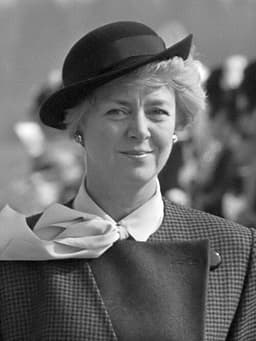
Vigdis Finnbogadottir
Politician · Modern
57.1Total

Vladko Macek
Politician · Modern
53.1Total
Basic Information
Born
1930
1879
Died
—
1964
Era
Modern
Modern
Nationality
Iceland
Croatia
Occupation
Politician
Politician
Civilization
Western
Western
Score Comparison
Military (10%)
48.5
50.0
Political (20%)
62.7
61.3
Influence (20%)
56.7
54.1
Legacy (20%)
50.0
45.0
Leadership (15%)
79.8
65.7
Strategy (15%)
42.5
43.2
TOTAL
57.1
53.1
Vigdis Finnbogadottir — Complete Timeline
1980 AD
Elected President of IcelandPolitical Action
Vigdis Finnbogadottir won the Icelandic presidential election, becoming the world's first democratically elected female head of state. She defeated three male candidates, securing 33.6% of the vote. Her election marked a milestone for gender equality in political leadership globally.
Gender EqualityDemocracyIceland
Impact: globalprogressive
Promoted Icelandic Culture and LanguageCultural
Throughout her presidency, Finnbogadottir actively promoted Icelandic culture, language, and environmental conservation. She used her ceremonial role to advocate for cultural preservation and national identity, strengthening Iceland's cultural diplomacy internationally.
Cultural DiplomacyEnvironment
Impact: nationalconstructive
1996 AD
Re-elected to Fourth TermPolitical Action◆ Major
Finnbogadottir was re-elected for a fourth term as President of Iceland, serving until 1996. Her repeated re-elections demonstrated public confidence in her leadership and the stability of Iceland's political system. She chose not to seek a fifth term.
Re-electionPolitical Stability
Impact: nationalconstructive
Vladko Macek — Complete Timeline
1928 AD
Leadership of the Croatian Peasant PartyPolitical Action
After the assassination of Stjepan Radi
Political LeadershipCroatian AutonomyHSS
Impact: regionalconstructive
1939 AD
Negotiation of the Cvetković-Maček AgreementPolitical Action
Maček negotiated the Cvetković-Maček Agreement with Yugoslav Prime Minister Dragiša Cvetković, creating the autonomous Banovina of Croatia within the Kingdom of Yugoslavia. This agreement granted Croats significant self-governance, including a separate parliament and administration.
Autonomy AgreementCroatian RightsYugoslavia
Impact: regionalconstructive
1941 AD
Refusal to Lead the Independent State of CroatiaPolitical Action◆ Major
After the Axis invasion of Yugoslavia, the Germans offered Ma
RefusalWorld War IIUstaše
Impact: regional
1945 AD
Exile and Return to YugoslaviaPolitical Action
After the war, Ma
ExileReturnCommunist Yugoslavia
Impact: national
This comparison has not been analyzed yet.
One-time AI generation (~1 minute). Scores and timeline are already available below.
Rankings
🥇
Vigdis FinnbogadottirLeader
Mil: 48.5Pol: 62.7Inf: 56.7
57.1
🥈
Vladko Macek
Mil: 50.0Pol: 61.3Inf: 54.1
53.1
+4.0 behind
How This Comparison Works
Algorithm
Each figure is scored on 6 dimensions (0—100 scale) based on structured historical data: Military (10%), Political (20%), Influence (20%), Legacy (20%), Leadership (15%), Strategy (15%). The weighted total produces the final ranking.
Data Sources
Scores are computed from structured sub-indicators in the database. Scale factors adjust for era (Ancient ×0.85, Modern ×1.0) and civilization size (Eastern ×1.05, Other ×0.80) to account for differences in population and military scale.
Maximum 3 Figures
Comparisons are limited to 2—3 figures to ensure readability and statistical meaningfulness.
Error Margins
±5 points per dimension — Sub-scores are derived from historical records with inherent uncertainty. Two figures within 5 points on a dimension should be considered roughly equivalent in that area.
Total Score Accuracy
±3 points overall — The weighted combination of 6 dimensions produces a total score with approximately ±3 points of uncertainty. Differences of less than 3 points are not statistically significant— the figures are effectively tied.
Known Limitations
- Historical records are incomplete and uneven across civilizations
- Figures from oral-tradition societies may be underrepresented
- Occupation labels can misclassify multi-role figures
- Scores measure capability and impact, not moral character
- Quantitative scoring is a comparison tool, not absolute truth
Capability Radar
Military (10%) — Battles & Warfare
Battles
30
31
Win Rate
32
29
Expansion
36
33
Political (20%) — Governance & Reform
Reform
55
45
Diplomacy
65
55
Economy
50
30
Influence (20%) — Cultural & Global Reach
Cultural
60
35
Global
55
20
Legacy (20%) — Historical Impact
Historical
55
40
Longevity
50
30
Leadership (15%) — Power & Stability
Tenure
60
40
Stability
70
25
Strategy (15%) — Tactics & Innovation
Strategy
38
40
Tactics
42
43
Reform
42
42
Similar Comparisons
Comments & Discussion
No comments yet. Be the first to share your thoughts!