Loading...
This comparison has not been analyzed yet.
One-time AI generation (~1 minute). Scores and timeline are already available below.
Viridomarus vs Zhang Xiu
Zhang Xiu leads by 0.1 pts · 2 figures compared
…
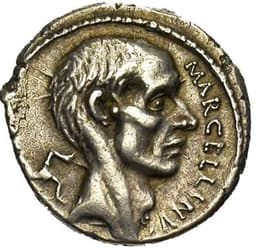
Viridomarus
General · Ancient
43.3Total

Zhang Xiu
General · Ancient
43.4Total
Basic Information
Born
-70
150
Died
-40
207
Era
Ancient
Ancient
Nationality
Gaul
China
Occupation
General
General
Civilization
Western
Eastern
Score Comparison
Military (10%)
47.5
52.5
Political (20%)
35.0
32.1
Influence (20%)
44.0
47.1
Legacy (20%)
34.2
40.8
Leadership (15%)
62.6
35.4
Strategy (15%)
43.7
60.0
TOTAL
43.3
43.4
Viridomarus — Complete Timeline
58 BC
Alliance with Julius CaesarPolitical Action◆ Major
Viridomarus, as a leading Aeduan noble, allied his tribe with Julius Caesar during the Gallic Wars. The Aedui became key Roman allies, providing cavalry and supplies for Caesar's campaigns against the Helvetii and other Gallic tribes.
AllianceGallic WarsRoman Ally
Impact: regionalconstructive
57 BC
Battle of the SabisWar
Viridomarus fought alongside Caesar at the Battle of the Sabis (Sambre) against the Nervii. The Aeduan cavalry played a crucial role in the Roman victory, helping to break the Nervian assault on the Roman camp.
BattleGallic WarsRoman Victory
Impact: regional
40 BC
Death in GaulWar
Viridomarus was killed during the later stages of the Gallic Wars, likely in a skirmish or battle. His death removed a key Aeduan leader loyal to Rome, though the exact circumstances are not recorded in detail.
DeathGallic WarsAedui
tragic
Zhang Xiu — Complete Timeline
197 AD
Defeated Cao Cao at the Battle of WanchengWar◆ Major
Zhang Xiu ambushed Cao Cao's forces at Wancheng after Cao Cao seduced Zhang Xiu's aunt. The surprise attack killed Cao Cao's son Cao Ang, his nephew Cao Anmin, and his general Dian Wei. Zhang Xiu then allied with Liu Biao.
BattleCao CaoDian Wei
Impact: regionaldestructive
199 AD
Submitted to Cao CaoPolitical Action◆ Major
Zhang Xiu surrendered to Cao Cao on the advice of his strategist Jia Xu. Cao Cao accepted his submission, married Zhang Xiu's daughter to his son, and granted him a marquisate. This ended their conflict and strengthened Cao Cao's forces.
SurrenderAllianceCao Cao
Impact: regionalconstructive
200 AD
Participated in the Battle of GuanduWar◆ Major
Zhang Xiu fought under Cao Cao at the Battle of Guandu against Yuan Shao. His contribution helped Cao Cao secure a decisive victory, which established Cao Cao's dominance over northern China.
BattleGuanduCao Cao
Impact: regional
207 AD
Died while campaigning against the WuhuanWar
Zhang Xiu died of illness during Cao Cao's campaign against the Wuhuan tribes in the north. His death removed a key general from Cao Cao's army, but the campaign succeeded in pacifying the northern frontier.
DeathCampaignWuhuan
Impact: regionaltragic
This comparison has not been analyzed yet.
One-time AI generation (~1 minute). Scores and timeline are already available below.
Rankings
🥇
Zhang XiuLeader
Mil: 52.5Pol: 32.1Inf: 47.1
43.4
🥈
Viridomarus
Mil: 47.5Pol: 35.0Inf: 44.0
43.3
+0.1 behind
How This Comparison Works
Algorithm
Each figure is scored on 6 dimensions (0—100 scale) based on structured historical data: Military (10%), Political (20%), Influence (20%), Legacy (20%), Leadership (15%), Strategy (15%). The weighted total produces the final ranking.
Data Sources
Scores are computed from structured sub-indicators in the database. Scale factors adjust for era (Ancient ×0.85, Modern ×1.0) and civilization size (Eastern ×1.05, Other ×0.80) to account for differences in population and military scale.
Maximum 3 Figures
Comparisons are limited to 2—3 figures to ensure readability and statistical meaningfulness.
Error Margins
±5 points per dimension — Sub-scores are derived from historical records with inherent uncertainty. Two figures within 5 points on a dimension should be considered roughly equivalent in that area.
Total Score Accuracy
±3 points overall — The weighted combination of 6 dimensions produces a total score with approximately ±3 points of uncertainty. Differences of less than 3 points are not statistically significant— the figures are effectively tied.
Known Limitations
- Historical records are incomplete and uneven across civilizations
- Figures from oral-tradition societies may be underrepresented
- Occupation labels can misclassify multi-role figures
- Scores measure capability and impact, not moral character
- Quantitative scoring is a comparison tool, not absolute truth
Capability Radar
Military (10%) — Battles & Warfare
Battles
10
45
Win Rate
5
40
Expansion
5
30
Political (20%) — Governance & Reform
Reform
5
10
Diplomacy
20
45
Economy
5
20
Influence (20%) — Cultural & Global Reach
Cultural
5
20
Global
5
10
Legacy (20%) — Historical Impact
Historical
10
35
Longevity
5
20
Leadership (15%) — Power & Stability
Tenure
15
30
Stability
5
25
Strategy (15%) — Tactics & Innovation
Strategy
10
40
Tactics
10
55
Reform
5
10
Similar Comparisons
Comments & Discussion
No comments yet. Be the first to share your thoughts!