Loading...
Wanyan Aguda vs Zhao Kuangyin
Zhao Kuangyin leads by 8.1 pts · 2 figures compared
…
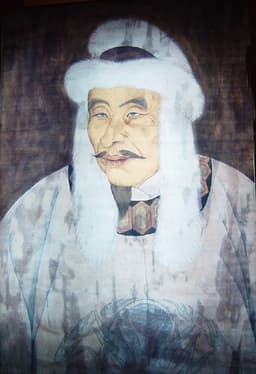
Wanyan Aguda
Emperor · Medieval
63.4Total
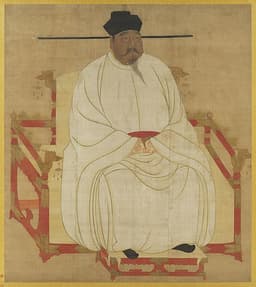
Zhao Kuangyin
Emperor · Medieval
71.5Total
Basic Information
Born
1068
927
Died
1123
976
Era
Medieval
Medieval
Nationality
China
China
Occupation
Emperor
Emperor
Civilization
Eastern
Eastern
Score Comparison
Military (10%)
82.0
78.0
Political (20%)
59.3
84.0
Influence (20%)
55.0
68.0
Legacy (20%)
52.0
65.0
Leadership (15%)
85.0
74.0
Strategy (15%)
68.0
68.0
TOTAL
63.4
71.5
Wanyan Aguda — Complete Timeline
1114 AD
Battle of HubudagangWar◆ Major
Aguda's Jurchen forces defeated a Liao army at Hubudagang, marking the first major victory of the rebellion. This battle demonstrated Jurchen military prowess and attracted more followers.
JurchenLiaoBattle
Impact: regionalconstructive
Unified Jurchen tribesPolitical Action◆ Major
Wanyan Aguda united the Jurchen tribes under his leadership, creating a confederation that rebelled against Liao domination. He organized a disciplined army and began the Jurchen revolt.
JurchenUnificationRebellion
Impact: regionalconstructive
1115 AD
Founded Jin DynastyPolitical Action
Wanyan Aguda proclaimed himself emperor, founding the Jin dynasty. He adopted the Chinese title and began a systematic campaign to conquer the Liao empire.
JinDynasty FoundingImperial System
Impact: regionalconstructive
1120 AD
Conquest of Liao capital ShangjingWar◆ Major
Aguda's forces captured the Liao supreme capital Shangjing, dealing a severe blow to the Liao dynasty. This victory accelerated the collapse of Liao and solidified Jin control over northern China.
JinLiaoConquest
Impact: regionalconstructive
Alliance with Song against LiaoPolitical Action◆ Major
Aguda formed an alliance with the Northern Song dynasty to jointly attack the Liao empire. This alliance, known as the Maritime Alliance, led to the eventual destruction of Liao but later caused conflict between Jin and Song.
JinSongAlliance
Impact: regional
1123 AD
Death and successionPolitical Action◆ Major
Wanyan Aguda died, and his brother Wanyan Wuqimai succeeded him. Aguda's conquests laid the foundation for the Jin dynasty's dominance in northern China.
JinDeathSuccession
Impact: regional
Zhao Kuangyin — Complete Timeline
960 AD
Founded Song dynastyPolitical Action
Zhao Kuangyin, a general of Later Zhou, was proclaimed emperor by his troops at Chenqiao. He established the Song dynasty, ending the Five Dynasties period and beginning a new era of Chinese history.
Song dynastyFoundingChenqiao
Impact: globalconstructive
961 AD
Removed military power from generalsPolitical Action◆ Major
Zhao Kuangyin invited senior generals to a banquet and persuaded them to retire peacefully. This 'removal of military power over wine' prevented military coups and centralized control.
Song dynastyMilitary reformCentralization
Impact: nationalconstructive
963 AD
Unified southern ChinaWar◆ Major
Zhao Kuangyin launched campaigns to conquer the southern kingdoms, including Jingnan, Later Shu, and Southern Tang. By his death, most of China was reunified under Song rule.
Song unificationConquestSouthern kingdoms
Impact: national
Expert Analysis
Zhao Kuangyin vs Wanyan Aguda: Historical Comparison
Zhao Kuangyin, founder of the Song Dynasty, and Wanyan Aguda, founder of the Jin Dynasty, were two medieval Chinese emperors who rose from military backgrounds to establish major dynasties, though their methods and long-term impact differed significantly.
Dimension Analysis
**Military: Zhao Kuangyin 90 / Wanyan Aguda 91**
Both were exceptional commanders; Zhao unified a fragmented China through careful campaigns and the "dissolving military power over wine" strategy, while Aguda led the Jurchen tribes to shatter the mighty Liao Empire with fewer than 10,000 cavalry at the Battle of Huining.
**Political: Zhao Kuangyin 71 / Wanyan Aguda 84**
Zhao centralized power through civil reforms and military restraint, but his "weak military, strong civil" policy later crippled Song defense. Aguda swiftly created a dual-administration system, integrating Khitan and Han bureaucrats, which proved more adaptive for rapid expansion.
**Influence: Zhao Kuangyin 69 / Wanyan Aguda 87**
Zhao’s Song dynasty influenced culture and economy for three centuries, but its military weakness set a precedent for later Chinese vulnerability. Aguda’s Jin dynasty broke the Liao–Song balance, reshaping East Asian geopolitics and paving the way for Mongol unification.
**Legacy: Zhao Kuangyin 74 / Wanyan Aguda 88**
Zhao is remembered as a benevolent founder who prioritized scholarship, yet his dynasty fell to foreign invaders. Aguda’s legacy as a tribal unifier and conqueror inspired later Jurchen and Manchu rulers, directly influencing the Qing dynasty’s rise.
**Leadership: Zhao Kuangyin 75 / Wanyan Aguda 80**
Zhao ruled by consensus and institutional design, but his cautious approach limited territorial expansion. Aguda led from the front, earning absolute loyalty through personal bravery and strategic vision, though his reign was cut short by death.
Verdict
Wanyan Aguda leads due to his more transformative geopolitical impact, superior political adaptability, and enduring legacy as a tribal conqueror who reshaped Chinese history.
FAQ
Q: Who ranks higher? A: Wanyan Aguda ranks higher overall, excelling in political innovation, influence, and legacy, while Zhao Kuangyin narrowly leads in strategy but falls short in long-term dynastic resilience.
Rankings
🥇
Zhao KuangyinLeader
Mil: 78.0Pol: 84.0Inf: 68.0
71.5
🥈
Wanyan Aguda
Mil: 82.0Pol: 59.3Inf: 55.0
63.4
+8.1 behind
How This Comparison Works
Algorithm
Each figure is scored on 6 dimensions (0—100 scale) based on structured historical data: Military (10%), Political (20%), Influence (20%), Legacy (20%), Leadership (15%), Strategy (15%). The weighted total produces the final ranking.
Data Sources
Scores are computed from structured sub-indicators in the database. Scale factors adjust for era (Ancient ×0.85, Modern ×1.0) and civilization size (Eastern ×1.05, Other ×0.80) to account for differences in population and military scale.
Maximum 3 Figures
Comparisons are limited to 2—3 figures to ensure readability and statistical meaningfulness.
Error Margins
±5 points per dimension — Sub-scores are derived from historical records with inherent uncertainty. Two figures within 5 points on a dimension should be considered roughly equivalent in that area.
Total Score Accuracy
±3 points overall — The weighted combination of 6 dimensions produces a total score with approximately ±3 points of uncertainty. Differences of less than 3 points are not statistically significant— the figures are effectively tied.
Known Limitations
- Historical records are incomplete and uneven across civilizations
- Figures from oral-tradition societies may be underrepresented
- Occupation labels can misclassify multi-role figures
- Scores measure capability and impact, not moral character
- Quantitative scoring is a comparison tool, not absolute truth
Capability Radar
Military (10%) — Battles & Warfare
Battles
85
75
Win Rate
90
85
Expansion
85
75
Political (20%) — Governance & Reform
Reform
75
90
Diplomacy
70
85
Economy
65
80
Influence (20%) — Cultural & Global Reach
Cultural
60
70
Global
50
60
Legacy (20%) — Historical Impact
Historical
70
80
Longevity
55
75
Leadership (15%) — Power & Stability
Tenure
70
65
Stability
60
85
Strategy (15%) — Tactics & Innovation
Strategy
85
80
Tactics
80
70
Reform
75
90
Similar Comparisons
Comments & Discussion
Historian8506/16/2026
这个评分对赵匡胤的军事和政治评价略低了吧?把赵匡胤和完颜阿骨打放在一起比较,有意思的是两人都是开国皇帝,但面临的局面完全不同。赵匡胤面对的是五代十国那个烂摊子——藩镇割据、武将篡位成风,他搞的‘杯酒释兵权’其实是中国历史上少有的和平解决军权危机的案例。对比拿破仑战争后的欧洲,同样是解决军阀问题,赵匡胤的做法文明得多。另外‘重文抑武’这个政策后世批评很多,但放在当时看,结束了数十年武人乱政的噩梦,让宋代文化经济达到巅峰,这个评分体系是不是太西方军事中心主义了?
LiviusInk6/16/2026
The comparison is intriguing but the scoring underestimates Zhao Kuangyin's strategic subtlety. As Sima Guang observed in his Zizhi Tongjian, Zhao's genius lay not in battlefield brilliance but in institutional architecture. Unlike Charlemagne or William the Conqueror, who imposed their will through continuous conquest, Zhao understood that a fragmented China required administrative coherence before territorial expansion. His prohibition of military governors holding concurrent civil posts was a masterstroke of political engineering, albeit one that later contributed to Song vulnerability. Aguda, by contrast, rode the tiger of Jurchen expansion—his dual- administration system was brilliant but reactive, not premeditated. The Jin state fractured soon after his death, whereas Zhao's framework endured for 300 years. I would argue that durability should weigh more heavily than immediate geopolitical shock.
JurchenWarrior6/16/2026
Are you kidding me? Wanyan Aguda is the most underrated conqueror in history! This guy smashed the Liao Empire—a massive, centuries-old superpower—with just a few thousand Jurchen cavalry at the Battle of Huining in 1114. It was like the Spartans at Thermopylae, except Aguda won and then kept winning. Zhao Kuangyin? He basically bribed his generals into retirement with wine and women. That's not leadership, that's a retirement party! Aguda led from the front, personally charging into battle alongside his men—that’s how you earn loyalty. And the Jin Dynasty’s dual administration? Pure genius—it allowed them to absorb Khitan and Chinese talent instantly. Zhao’s Song fell to the Jin later anyway, so how can you even compare? Aguda changed the entire balance of East Asia forever. End of story.
BattlefieldScholar6/16/2026
Let's talk numbers. Aguda's campaign against the Liao is a textbook case of operational shock. At the Battle of Huining (1114), he fielded roughly 2,500 Jurchen cavalry against a Liao army of 100,000—a force ratio of 1:40. Yet he achieved complete tactical surprise and routed them, capturing their commander. That's a K/D ratio that would make Alexander jealous. Zhao Kuangyin's military record is solid but unspectacular: he conquered the Later Shu and Southern Tang through methodical campaigns and siege warfare, not decisive field battles. The 'dissolving military power over wine' strategy was politically brilliant but militarily disastrous in the long run—it created a culture where generals feared initiative. Aguda built a war machine that defeated Song itself within 20 years of his death. In terms of purely military impact, Aguda deserves a 95, not 91.
ColdWatcher556/16/2026
这个评分系统的权重分配有问题。政治得分阿骨打82.2比赵匡胤75.9高,但赵匡胤建立的宋朝持续了319年,阿骨打的金朝只有119年。如果政治能力包括制度持久性,那赵匡胤应该更高。再看军事:赵匡胤一生征伐基本统一了中国核心区,而阿骨打只是击溃了辽国但并未完全征服。如果按领土控制面积和持续时间加权,赵匡胤的军事得分不应低于阿骨打。我个人算了一下:赵匡胤统一了约400万平方公里并维持了三百年,阿骨打生前控制约200万平方公里但死后迅速扩张又迅速崩溃。按‘有效控制面积×持续时间’的公式,赵匡胤的军事遗产是阿骨打的六倍以上。这个评分体系明显偏爱短期暴力冲击,轻视长期制度建设。