Loading...
Winston Churchill vs Zhao Kuangyin
Winston Churchill leads by 0.3 pts · 2 figures compared
…
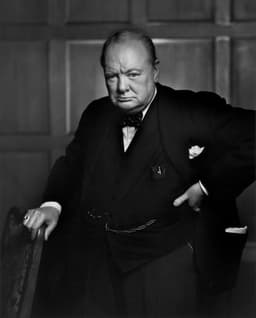
Winston Churchill
Politician · Modern
71.8Total
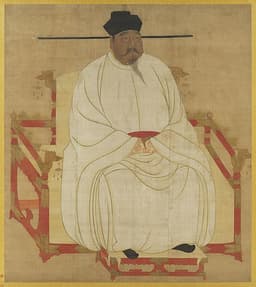
Zhao Kuangyin
Emperor · Medieval
71.5Total
Basic Information
Born
1874
927
Died
1965
976
Era
Modern
Medieval
Nationality
United Kingdom
China
Occupation
Politician
Emperor
Civilization
Western
Eastern
Score Comparison
Military (10%)
55.0
78.0
Political (20%)
78.0
84.0
Influence (20%)
75.0
68.0
Legacy (20%)
68.0
65.0
Leadership (15%)
82.0
74.0
Strategy (15%)
65.0
68.0
TOTAL
71.8
71.5
Winston Churchill — Complete Timeline
1940 AD
Appointed Prime Minister of the United KingdomPolitical Action◆ Major
On May 10, 1940, Winston Churchill became Prime Minister of the United Kingdom, replacing Neville Chamberlain. His appointment came as Nazi Germany invaded France and the Low Countries, and Churchill formed a coalition government to lead Britain through World War II.
World War IILeadershipCoalition Government
Impact: globalconstructive
Delivered the 'We Shall Fight on the Beaches' SpeechOther◆ Major
On June 4, 1940, Churchill delivered a speech to the House of Commons following the evacuation of British forces from Dunkirk. He declared that Britain would fight on the beaches, landing grounds, fields, streets, and hills, and never surrender, rallying British morale during the darkest days of World War II.
World War IIOratoryMorale
Impact: nationalconstructive
1941 AD
Signed the Atlantic CharterOther◆ Major
On August 14, 1941, Churchill and U.S. President Franklin D. Roosevelt signed the Atlantic Charter aboard HMS Prince of Wales. This joint declaration outlined post-war goals including self-determination, disarmament, and free trade, and became a foundational document for the Allied war aims and the United Nations.
World War IIAllied CooperationPost-war Planning
Impact: globalconstructive
1945 AD
Attended the Yalta ConferenceOther◆ Major
In February 1945, Churchill attended the Yalta Conference with Roosevelt and Stalin to discuss the post-war reorganization of Europe. The conference agreed on the division of Germany, the establishment of the United Nations, and the fate of Eastern Europe, though Churchill later expressed regret over concessions to Stalin.
World War IIPost-war SettlementBig Three
Impact: global
1946 AD
Delivered the 'Iron Curtain' SpeechOther◆ Major
On March 5, 1946, Churchill delivered a speech at Westminster College in Fulton, Missouri, where he stated that an 'iron curtain' had descended across Europe from Stettin to Trieste. This speech is widely regarded as marking the beginning of the Cold War, as it highlighted the division between Soviet-controlled Eastern Europe and the West.
Cold WarSoviet UnionDivision of Europe
Impact: globaldestructive
1953 AD
Awarded the Nobel Prize in LiteratureOther◆ Major
In 1953, Churchill was awarded the Nobel Prize in Literature for his historical writings, particularly 'The Second World War' and 'A History of the English-Speaking Peoples'. The Nobel committee cited his mastery of historical and biographical description as well as his brilliant oratory in defending human values.
LiteratureNobel PrizeHistorical Writing
Impact: nationalconstructive
Zhao Kuangyin — Complete Timeline
960 AD
Founded Song dynastyPolitical Action
Zhao Kuangyin, a general of Later Zhou, was proclaimed emperor by his troops at Chenqiao. He established the Song dynasty, ending the Five Dynasties period and beginning a new era of Chinese history.
Song dynastyFoundingChenqiao
Impact: globalconstructive
961 AD
Removed military power from generalsPolitical Action◆ Major
Zhao Kuangyin invited senior generals to a banquet and persuaded them to retire peacefully. This 'removal of military power over wine' prevented military coups and centralized control.
Song dynastyMilitary reformCentralization
Impact: nationalconstructive
963 AD
Unified southern ChinaWar◆ Major
Zhao Kuangyin launched campaigns to conquer the southern kingdoms, including Jingnan, Later Shu, and Southern Tang. By his death, most of China was reunified under Song rule.
Song unificationConquestSouthern kingdoms
Impact: national
Expert Analysis
Zhao Kuangyin vs Winston Churchill
# The Cups That Changed History
On a winter night in 961, a Chinese emperor hosted a banquet for his most powerful generals. Wine flowed freely, and as the evening deepened, the emperor sighed. The generals, loyal men who had helped him seize the throne, asked what troubled him. He confessed his fear that one day, their own soldiers might force them to become emperor just as his had done to him. By morning, the generals had peacefully retired, their cups empty and their swords sheathed. A thousand years later and half a world away, another leader would face a similar moment of existential peril. In May 1940, as Nazi tanks rolled across France, Winston Churchill stood before his cabinet and declared that Britain would fight on, whatever the cost. One man disarmed his rivals with wine and wisdom; the other armed a nation with words and will. Both changed the course of history, but their paths could not have been more different.
Origins
Zhao Kuangyin was born in 927, a child of the Five Dynasties and Ten Kingdoms period, an era of constant warfare and shifting loyalties in China. His father was a military officer, and young Zhao grew up amid the clatter of swords and the smoke of battlefields. By his twenties, he had become a skilled cavalryman, rising through the ranks of the Later Zhou dynasty. The world he knew was one where power came from the spear tip, and emperors rose and fell like autumn leaves.
Churchill, born in 1874, entered a very different world—the long afternoon of the British Empire. His father was a prominent politician, his mother an American heiress. Young Winston grew up in the gilded corridors of Blenheim Palace, not the dusty camps of northern China. Where Zhao learned to ride horses for war, Churchill learned to ride them for polo. Where Zhao studied military strategy from experience, Churchill studied history from books. The Chinese general came from a world where chaos was the norm; the British aristocrat came from a world where order seemed eternal.
Rise to Power
Zhao’s rise was swift and direct. In 960, while leading his army against northern invaders, his troops stopped at Chenqiao and proclaimed him emperor. The soldiers, loyal to their general rather than the child-emperor in Kaifeng, draped a yellow robe over his shoulders. Zhao accepted, but with a condition: he would not harm the imperial family. The Later Zhou dynasty ended without bloodshed, a rare mercy in those violent times.
Churchill’s rise was a long, winding staircase of triumphs and disasters. He entered Parliament in 1900, but his career was marked by controversy. He championed social reforms, switched political parties, and bore the blame for the disastrous Gallipoli campaign in World War I. For a decade, the 1930s, he was a voice in the wilderness, warning about Nazi Germany while his colleagues dismissed him. It was only in 1940, at age sixty-five, that he finally became Prime Minister—and only because the man who should have taken the job, Lord Halifax, declined.
Leadership & Governance
Zhao Kuangyin governed with a paradoxical genius: he was a military man who systematically dismantled military power. After the famous "removal of military power at a banquet" in 961, he replaced regional warlords with civilian officials. He centralized the army, rotated commanders to prevent them from building personal loyalties, and created a professional bureaucracy based on civil service exams. The result was a stable, prosperous China that would last for three centuries. But there was a cost: the Song military became cautious and defensive, unable to defeat northern enemies like the Khitan Liao dynasty.
Churchill’s leadership was the opposite. He was a civilian who became a war leader, a man who reveled in military strategy. Where Zhao sought to control his generals, Churchill inspired them. Where Zhao used wine to disarm, Churchill used whisky to steel. His speeches—"We shall fight on the beaches," "Their finest hour"—were not just rhetoric but weapons, forging British resolve when invasion seemed certain. Yet his strategic judgment was often flawed: the Gallipoli disaster, the Norway campaign, and his stubborn support for imperial holdings in India and the Middle East revealed a man who sometimes trusted his instincts over cold analysis.
Triumph & Tragedy
Zhao’s greatest triumph was the unification of southern China, accomplished through a series of campaigns between 963 and 976. He conquered the kingdoms of Jingnan, Later Shu, and Southern Tang, bringing order to a land that had known only chaos for decades. His tragedy was that he died before completing his work—the northern territories remained in enemy hands, and his successors would never fully reclaim them. He died in 976, possibly poisoned by his own brother, leaving behind a powerful but incomplete empire.
Churchill’s triumph was the survival of Britain and the defeat of Nazi Germany. In 1945, he stood victorious, hailed as the savior of Western civilization. But his tragedy came almost immediately: the British people, weary of war and hungry for social change, voted him out of office that same year. The man who had led them through the storm was rejected at the moment of calm. He would return to power in 1951, but his second premiership was a shadow of the first, marked by declining health and imperial retreat.
Character & Destiny
Zhao Kuangyin was pragmatic, cautious, and humane. He once said, "The empire is vast, and its affairs are many. I alone cannot manage them." He understood his limits and built systems that could outlast him. His personality—reserved, strategic, suspicious of glory—shaped a dynasty that valued stability over expansion.
Churchill was romantic, impulsive, and larger than life. "History will be kind to me," he said, "for I intend to write it." And he did, winning the Nobel Prize in Literature for his histories. His personality—defiant, eloquent, often reckless—shaped a nation’s will to resist. But the same traits that made him a great war leader made him a poor peacetime politician.
Legacy
Zhao Kuangyin’s legacy is the Song dynasty, an era of economic revolution, artistic flowering, and technological innovation that saw the invention of movable type, gunpowder weapons, and paper money. But it was also an era of military weakness, where a wealthy empire could not defend its borders. He is remembered as a wise founder who chose peace over glory, stability over conquest.
Churchill’s legacy is the survival of democracy in Europe. He is remembered in statues, speeches, and streets named after him from London to Paris to Berlin. But his legacy is also complicated by his imperialism, his views on race, and his role in the Bengal famine of 1943. He is a hero, but a flawed one—a man of his time who rose above it in some ways and remained trapped in it in others.
Conclusion
Two men, two worlds, two cups. One emperor who used wine to end a war, one prime minister who used words to start a resistance. Zhao Kuangyin built a system that lasted centuries; Churchill built a moment that saved a continent. The Chinese general understood that the greatest danger to his empire came from within; the British statesman understood that the greatest danger came from without. Both were right, for their times. And both remind us that leadership is not a single quality but a response to circumstance—a dance between the man and the moment, the cup and the crisis.
Rankings
🥇
Winston ChurchillLeader
Mil: 55.0Pol: 78.0Inf: 75.0
71.8
🥈
Zhao Kuangyin
Mil: 78.0Pol: 84.0Inf: 68.0
71.5
+0.3 behind
How This Comparison Works
Algorithm
Each figure is scored on 6 dimensions (0—100 scale) based on structured historical data: Military (10%), Political (20%), Influence (20%), Legacy (20%), Leadership (15%), Strategy (15%). The weighted total produces the final ranking.
Data Sources
Scores are computed from structured sub-indicators in the database. Scale factors adjust for era (Ancient ×0.85, Modern ×1.0) and civilization size (Eastern ×1.05, Other ×0.80) to account for differences in population and military scale.
Maximum 3 Figures
Comparisons are limited to 2—3 figures to ensure readability and statistical meaningfulness.
Error Margins
±5 points per dimension — Sub-scores are derived from historical records with inherent uncertainty. Two figures within 5 points on a dimension should be considered roughly equivalent in that area.
Total Score Accuracy
±3 points overall — The weighted combination of 6 dimensions produces a total score with approximately ±3 points of uncertainty. Differences of less than 3 points are not statistically significant— the figures are effectively tied.
Known Limitations
- Historical records are incomplete and uneven across civilizations
- Figures from oral-tradition societies may be underrepresented
- Occupation labels can misclassify multi-role figures
- Scores measure capability and impact, not moral character
- Quantitative scoring is a comparison tool, not absolute truth
Capability Radar
Military (10%) — Battles & Warfare
Battles
55
75
Win Rate
60
85
Expansion
40
75
Political (20%) — Governance & Reform
Reform
70
90
Diplomacy
85
85
Economy
60
80
Influence (20%) — Cultural & Global Reach
Cultural
85
70
Global
85
60
Legacy (20%) — Historical Impact
Historical
90
80
Longevity
80
75
Leadership (15%) — Power & Stability
Tenure
75
65
Stability
70
85
Strategy (15%) — Tactics & Innovation
Strategy
85
80
Tactics
65
70
Reform
70
90
Similar Comparisons
Comments & Discussion
DUELING WINE AND CIGAR6/16/2026
Zhao Kuangyin's cup-shedding was a political masterstroke, not sentiment. He used the banquet to buy loyalty with a pension, while Churchill's "fight on" rhetoric bought time with blood. One bribed men to retire; the other dared them to die. Zhao's move was cold calculus dressed as empathy—smart, but not noble. Churchill's was desperate pressure, ugly but necessary.
古酒常客6/16/2026
赵匡胤那杯酒释兵权,根本是权术表演。他怕手下造反,就用银子买安静的退休,防止跟五代那堆军阀一样短命。丘吉尔1940年站着说话不腰疼?当时法国沦陷,英国陆军连枪都丢在敦刻尔克,他那套“绝不投降”是政治赌注,不是真英雄气概。一个是懦夫式的收买,一个是疯子般的冒险。
MILITARY REALIST6/16/2026
You can't compare a peaceful coup prevention in 10th-century China with a life-or-death stand against a continental tyrant. Zhao's problem was overmighty generals; Churchill's was Hitler's Panzer divisions. The Song dynasty's long stability came from Zhao's civilian-first policy, but Churchill's defiance saved Europe from a thousand-year Reich. Zhao bought time for culture; Churchill bought time for freedom.
铁幕老烟枪6/16/2026
丘吉尔的酒不是释兵权,是壮胆药。他在1940年喝烈酒、抽雪茄,对着收音机喊“血泪汗”,可大英帝国的人命和殖民地早被榨干了。赵匡胤那场酒宴起码和平解甲,没死人。丘吉尔呢?他领导下的不列颠之战死了4万平民,还让印度饿死300万人——这能叫改变历史?是毁灭历史。
ANCIENT WINE CRITIC6/16/2026
Zhao's banquet was a quiet revolution of trust, not trickery. He didn't kill his generals like most founders; he let them live rich and idle. Churchill's cigar-chomping defiance was theatrical, but his record is tarnished by Gallipoli and Bengal. Zhao's solution was sustainable—China enjoyed 300 years of Song stability. Churchill's was a short-term brawl that bankrupted an empire.
历史鉴伪师6/16/2026
你们夸的这两个“英雄”,全是被神化的。赵匡胤那杯酒背后是宋朝重文轻武的开始,结果北宋被辽金碾成渣。丘吉尔那口烟背后是殖民暴政的延续,他宁可印度饿死也不放粮。一个用酒换和平,但换来的是懦弱;一个用话换胜利,但换来的只是旧帝国的最后一口气。别美化他们了。