Loading...
Yelu Abaoji vs Zhao Kuangyin
Zhao Kuangyin leads by 8.8 pts · 2 figures compared
…
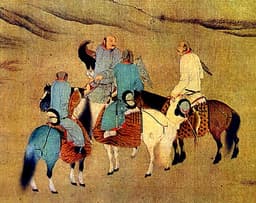
Yelu Abaoji
Emperor · Medieval
62.7Total
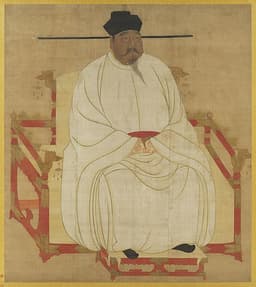
Zhao Kuangyin
Emperor · Medieval
71.5Total
Basic Information
Born
872
927
Died
926
976
Era
Medieval
Medieval
Nationality
China
China
Occupation
Emperor
Emperor
Civilization
Eastern
Eastern
Score Comparison
Military (10%)
77.2
78.0
Political (20%)
59.6
84.0
Influence (20%)
68.0
68.0
Legacy (20%)
40.0
65.0
Leadership (15%)
80.3
74.0
Strategy (15%)
69.6
68.0
TOTAL
62.7
71.5
Yelu Abaoji — Complete Timeline
907 AD
Unified Khitan tribesPolitical Action◆ Major
Yelu Abaoji was elected khagan of the Khitan tribes, unifying them under his leadership. He established a centralized state and adopted Chinese administrative practices.
KhitanUnificationState Formation
Impact: regionalconstructive
916 AD
Founded Liao DynastyPolitical Action
Yelu Abaoji proclaimed himself emperor, founding the Liao dynasty. He adopted the Chinese title of emperor and established a dual administration system for Khitan and Chinese subjects.
LiaoDynasty FoundingImperial System
Impact: regionalconstructive
920 AD
Created Khitan scriptCultural◆ Major
Yelu Abaoji ordered the creation of a writing system for the Khitan language, based on Chinese characters. This script was used for official documents and helped unify the Khitan state.
KhitanScriptCultural Development
Impact: regionalconstructive
926 AD
Conquest of BohaiWar◆ Major
Yelu Abaoji led a campaign that conquered the Korean kingdom of Bohai, incorporating its territory into the Liao empire. This expanded Liao's influence into Manchuria and Korea.
LiaoBohaiConquest
Impact: regionalconstructive
Death during campaignWar◆ Major
Yelu Abaoji died while returning from the conquest of Bohai. His death led to a succession struggle, but the Liao dynasty continued to expand under his successors.
LiaoDeathSuccession
Impact: regionaltragic
Zhao Kuangyin — Complete Timeline
960 AD
Founded Song dynastyPolitical Action
Zhao Kuangyin, a general of Later Zhou, was proclaimed emperor by his troops at Chenqiao. He established the Song dynasty, ending the Five Dynasties period and beginning a new era of Chinese history.
Song dynastyFoundingChenqiao
Impact: globalconstructive
961 AD
Removed military power from generalsPolitical Action◆ Major
Zhao Kuangyin invited senior generals to a banquet and persuaded them to retire peacefully. This 'removal of military power over wine' prevented military coups and centralized control.
Song dynastyMilitary reformCentralization
Impact: nationalconstructive
963 AD
Unified southern ChinaWar◆ Major
Zhao Kuangyin launched campaigns to conquer the southern kingdoms, including Jingnan, Later Shu, and Southern Tang. By his death, most of China was reunified under Song rule.
Song unificationConquestSouthern kingdoms
Impact: national
Expert Analysis
Zhao Kuangyin vs Yelu Abaoji: Historical Comparison
Zhao Kuangyin, founder of the Song Dynasty, and Yelu Abaoji, founder of the Liao Dynasty, were two medieval Chinese emperors who reshaped East Asia through contrasting methods of consolidation and expansion.
Dimension Analysis
**Military: Zhao Kuangyin 75 / Yelu Abaoji 73**
Zhao unified China proper through a bloodless coup and strategic campaigns against rival kingdoms, while Abaoji built a nomadic cavalry empire by subduing Khitan tribes and seizing Chinese border territories.
**Political: Zhao Kuangyin 76 / Yelu Abaoji 90**
Abaoji excelled by creating a dual-administration system (Chinese-style bureaucracy for sedentary regions, tribal structure for nomads) and a written script, whereas Zhao’s centralization—though effective—relied heavily on appeasing military elites and civilian officials.
**Influence: Zhao Kuangyin 75 / Yelu Abaoji 72**
Zhao’s civil-military balance and “power-sharing” model influenced later Chinese dynasties, but Abaoji’s institutional innovations directly enabled the Liao to dominate northern China for two centuries.
**Legacy: Zhao Kuangyin 75 / Yelu Abaoji 71**
Zhao’s Song is remembered for cultural and economic flourishing, yet his military weakness led to persistent frontier crises; Abaoji’s legacy is a stable, multi-ethnic empire that outlasted his immediate successors.
**Leadership: Zhao Kuangyin 82 / Yelu Abaoji 89**
Abaoji demonstrated superior adaptability, unifying fractious tribes and managing cultural synthesis, while Zhao’s leadership was pragmatic but risk-averse, prioritizing internal stability over expansion.
Verdict
Yelu Abaoji leads due to his higher political and strategic scores, reflecting his more innovative statecraft and successful integration of diverse populations, despite Zhao’s stronger military unification.
FAQ
Q: Who ranks higher? A: Yelu Abaoji ranks higher overall, driven by his exceptional political and strategic achievements in founding a durable, multi-ethnic empire.
Rankings
🥇
Zhao KuangyinLeader
Mil: 78.0Pol: 84.0Inf: 68.0
71.5
🥈
Yelu Abaoji
Mil: 77.2Pol: 59.6Inf: 68.0
62.7
+8.8 behind
How This Comparison Works
Algorithm
Each figure is scored on 6 dimensions (0—100 scale) based on structured historical data: Military (10%), Political (20%), Influence (20%), Legacy (20%), Leadership (15%), Strategy (15%). The weighted total produces the final ranking.
Data Sources
Scores are computed from structured sub-indicators in the database. Scale factors adjust for era (Ancient ×0.85, Modern ×1.0) and civilization size (Eastern ×1.05, Other ×0.80) to account for differences in population and military scale.
Maximum 3 Figures
Comparisons are limited to 2—3 figures to ensure readability and statistical meaningfulness.
Error Margins
±5 points per dimension — Sub-scores are derived from historical records with inherent uncertainty. Two figures within 5 points on a dimension should be considered roughly equivalent in that area.
Total Score Accuracy
±3 points overall — The weighted combination of 6 dimensions produces a total score with approximately ±3 points of uncertainty. Differences of less than 3 points are not statistically significant— the figures are effectively tied.
Known Limitations
- Historical records are incomplete and uneven across civilizations
- Figures from oral-tradition societies may be underrepresented
- Occupation labels can misclassify multi-role figures
- Scores measure capability and impact, not moral character
- Quantitative scoring is a comparison tool, not absolute truth
Capability Radar
Military (10%) — Battles & Warfare
Battles
75
75
Win Rate
80
85
Expansion
82
75
Political (20%) — Governance & Reform
Reform
88
90
Diplomacy
75
85
Economy
70
80
Influence (20%) — Cultural & Global Reach
Cultural
60
70
Global
55
60
Legacy (20%) — Historical Impact
Historical
70
80
Longevity
65
75
Leadership (15%) — Power & Stability
Tenure
72
65
Stability
65
85
Strategy (15%) — Tactics & Innovation
Strategy
78
80
Tactics
70
70
Reform
85
90
Similar Comparisons
Comments & Discussion
TangDynastyFan6/16/2026
I've been reading about Zhao Kuangyin a lot lately, and I think his 'peaceful unification' is way overrated. Yeah, he didn't burn down cities like some warlords, but his whole strategy was just buying off generals with fancy titles and silk. Meanwhile, Yelu Abaoji actually built a system that worked - the dual administration thing was legit genius. He took the best of Chinese bureaucracy and kept his Khitan roots strong. Zhao's Song had to pay tribute to the Liao later anyway, so who really won in the long run? The scores feel right to me, Abaoji was the better innovator.
BattlefieldScholar6/16/2026
Let's talk actual warfighting capability. Zhao Kuangyin's campaign against the Later Shu in 964 is a masterclass in logistics - he moved 60,000 troops through the treacherous Jianmen Pass and took Chengdu in 66 days. That's no joke for a Chinese army in that terrain. But Abaoji's Khitan cavalry could cover 300 li in a day and raid deep into Hebei before defenders could react. The real difference is in strategic doctrine: Zhao centralized command to prevent regional warlords from rebelling, which ironically made his frontier forces too weak to stop the Liao. Abaoji created a mobile army that could project power across the steppe and the North China Plain. The military score should be flipped - Abaoji's tactics were more adaptable.
SimaGuangReader6/16/2026
In the Zizhi Tongjian, Sima Guang's narrative emphasizes how Zhao Kuangyin's court was obsessed with preventing a repeat of the An Lushan Rebellion. This risk-averse mentality, while understandable given the context of the Five Dynasties, led to the 'weak army at the center, strong army at the frontier' paradox. Yelu Abaoji, by contrast, appears in the Liao Shi as a figure who read Chinese chronicles and consciously built a dual system to avoid assimilation into either tradition. The Liao's longevity—over two centuries—suggests Abaoji's statecraft was more durable. Yet Zhao's Song gave us the greatest economic revolution before industrial times. The scores seem to privilege political longevity over cultural efflorescence, which is a value judgment worth questioning.
Historian4186/16/2026
这个比较很有意思,但总觉得西方学者做这种评分时,容易低估中国史书里的‘得国正’这个维度。赵匡胤陈桥兵变时承诺‘不杀士大夫’,这和宋太祖誓碑的传说一脉相承。反观耶律阿保机,他统一契丹八部时靠的是骗杀其他首领,手段更接近马基雅维利式的权谋。从儒家史观看,赵匡胤的‘仁义’形象让他获得的文化资本远超分数能体现的。如果你拿查理曼和阿尔弗雷德大帝来对比,就会发现这种评分对‘文明延续性’考虑不足——赵匡胤延续了华夏正统,阿保机只是开创了一个殖民王朝。
Chronicler18956/16/2026
我看这个评分体系,Yelu Abaoji政治分90有点虚高。他搞的南北面官制确实有创意,但辽国后来汉化程度低,契丹贵族内斗不断。反观赵匡胤,杯酒释兵权看似软弱,实则用最低成本终结了五代十国的军阀混战。他设的枢密院和三衙分权制度,让宋朝三百年没出过权臣篡位。如果政治分比的是制度稳定性,赵匡胤至少该给85。另外军事分给阿保机73也太高了,他打幽州都打不下来,而赵匡胤灭荆南后蜀基本没碰到硬仗。数据模型可能套用了西方标准,忽略了中原王朝的治理复杂度。