Loading...
Analysis will be generated on first visit.
Scores and timeline are available below. The page will refresh automatically when ready.
Du Tao vs Napoleon Bonaparte
Napoleon Bonaparte leads by 30.9 pts · 2 figures compared
…

Du Tao
Revolutionary · Ancient
51.5Total
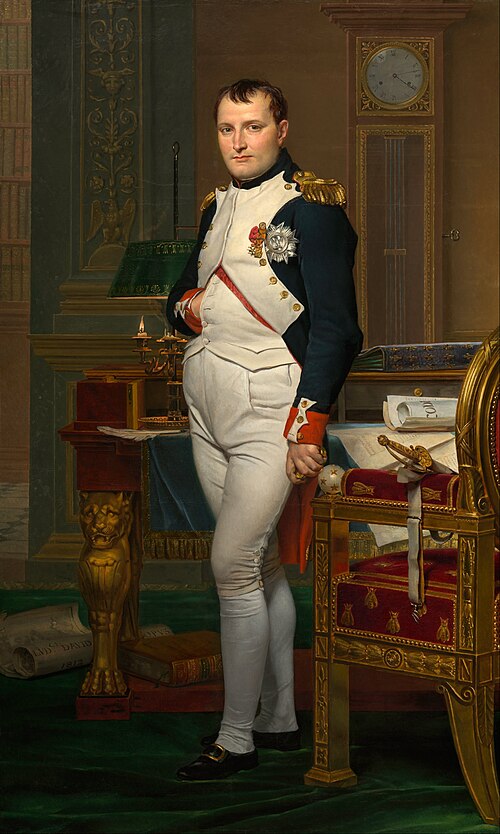
Napoleon Bonaparte
General · Modern
82.4Total
Basic Information
Born
250
1769
Died
315
1821
Era
Ancient
Modern
Nationality
China
France
Occupation
Revolutionary
General
Civilization
Eastern
Western
Score Comparison
Military (10%)
36.4
94.0
Political (20%)
43.6
75.0
Influence (20%)
69.0
82.0
Legacy (20%)
53.5
78.0
Leadership (15%)
40.0
80.0
Strategy (15%)
57.3
93.0
TOTAL
51.5
82.4
Rankings
🥇
Napoleon BonaparteLeader
Mil: 94.0Pol: 75.0Inf: 82.0
82.4
🥈
Du Tao
Mil: 36.4Pol: 43.6Inf: 69.0
51.5
+30.9 behind
How This Comparison Works
Algorithm
Each figure is scored on 6 dimensions (0—100 scale) based on structured historical data: Military (10%), Political (20%), Influence (20%), Legacy (20%), Leadership (15%), Strategy (15%). The weighted total produces the final ranking.
Data Sources
Scores are computed from structured sub-indicators in the database. Scale factors adjust for era (Ancient ×0.85, Modern ×1.0) and civilization size (Eastern ×1.05, Other ×0.80) to account for differences in population and military scale.
Maximum 3 Figures
Comparisons are limited to 2—3 figures to ensure readability and statistical meaningfulness.
Error Margins
±5 points per dimension — Sub-scores are derived from historical records with inherent uncertainty. Two figures within 5 points on a dimension should be considered roughly equivalent in that area.
Total Score Accuracy
±3 points overall — The weighted combination of 6 dimensions produces a total score with approximately ±3 points of uncertainty. Differences of less than 3 points are not statistically significant— the figures are effectively tied.
Known Limitations
- Historical records are incomplete and uneven across civilizations
- Figures from oral-tradition societies may be underrepresented
- Occupation labels can misclassify multi-role figures
- Scores measure capability and impact, not moral character
- Quantitative scoring is a comparison tool, not absolute truth
Capability Radar
Military (10%) — Battles & Warfare
Battles
30
95
Win Rate
35
90
Expansion
15
95
Political (20%) — Governance & Reform
Reform
10
95
Diplomacy
15
80
Economy
10
85
Influence (20%) — Cultural & Global Reach
Cultural
10
85
Global
5
90
Legacy (20%) — Historical Impact
Historical
15
95
Longevity
10
90
Leadership (15%) — Power & Stability
Tenure
20
85
Stability
10
70
Strategy (15%) — Tactics & Innovation
Strategy
20
95
Tactics
25
98
Reform
10
92
Analysis will be generated on first visit.
Scores and timeline are available below. The page will refresh automatically when ready.
Du Tao — Complete Timeline
310 AD
Leadership of the refugee rebellionWar◆ Major
Du Tao led a rebellion of refugees fleeing famine and war in the north, gathering tens of thousands of followers. He attacked Jin garrisons and established a base in the Xiangyang region, challenging the weakened Jin dynasty.
Refugee RebellionJin DynastyCivil War
Impact: regionaldestructive
315 AD
Defeat by Jin general Wang DunWar◆ Major
Du Tao's rebel army was defeated by the Jin general Wang Dun at the Battle of Xiangyang. Du Tao was killed in the fighting, ending his rebellion. His death removed a major threat to the Eastern Jin court.
Refugee RebellionBattleJin Dynasty
Impact: regional
Similar Comparisons
Comments & Discussion
CorsicanCalculator6/17/2026
Let’s be real: comparing Napoleon to a barely-documented rebel from 3rd-century China is like comparing a hydrogen bomb to a firecracker. Napoleon’s influence reshaped European law, military strategy, and national borders for two centuries. Du Tao? We’re lucky to have three sentences about him in obscure Jin dynasty records. This analysis projects modern “rise-from-the-margins” tropes onto a historical blank slate. Without concrete evidence, Du Tao is a historical ghost, not Napoleon’s equal.
刀锋饮血6/17/2026
把杜弢和拿破仑放一起比?这是跨时空碰瓷。拿破仑的法典至今是很多国家的法律基石,而杜弢起兵不到两年就被剿灭,连他具体怎么死的史书都记不清。从数据看,拿破仑指挥过六十多场战役,杜弢的所谓“大战”最多算地方暴动。历史只记得改变规则的人,不是那些在乱世里扑腾两下就沉底的浪花。
HopliteReader6/17/2026
As a classics scholar, I see this as apples and spaceships. Napoleon operated in a post-Enlightenment Europe with mass media, national armies, and a literate bureaucracy. Du Tao lived in a world where news traveled on horseback and most people couldn't read their own name. Their “similarities” are just storytelling devices - both faced chaos, both had followers. So did every tribal chieftain in history. Real comparison requires institutional context, not poetic symmetry.
挽歌传声6/17/2026
作为一个研究乱世起义的爱好者,我不同意把杜陶贬得一文不值。他在317年聚集数万流民,一度攻占长沙、武昌,逼得晋朝调集七路大军才镇压。那个年代的流民领袖多半活不过三个月,他却撑了两年多。拿破仑败在滑铁卢后永久退场,杜陶是在绝境中战死——两人都是被体制碾碎的悲剧英雄,只是舞台大小不同。
CorsicaActual6/17/2026
Waterloo buff here. Napoleon's brilliance was his ability to command large, multi-national armies across terrain he'd never seen. Du Tao likely never commanded more than a few thousand desperate farmers. One man built an empire from Lisbon to Warsaw; the other couldn't hold a single Chinese province. Scale matters. This comparison is a historian's fantasy, not serious analysis. Let's call it what it is: romantic bait for people who want their ancient history to feel as dramatic as a Netflix seri