Loading...
Analysis will be generated on first visit.
Scores and timeline are available below. The page will refresh automatically when ready.
Kgalema Motlanthe vs Napoleon Bonaparte
Napoleon Bonaparte leads by 25.9 pts · 2 figures compared
…

Kgalema Motlanthe
Politician · Modern
56.5Total
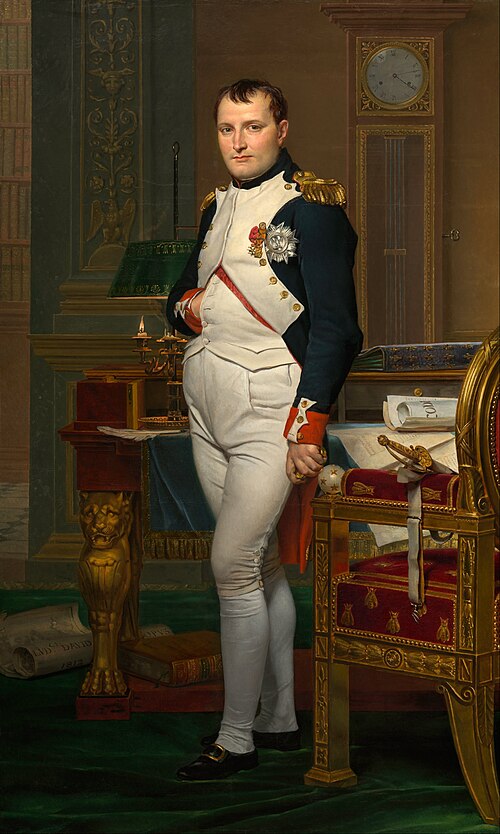
Napoleon Bonaparte
General · Modern
82.4Total
Basic Information
Born
1949
1769
Died
—
1821
Era
Modern
Modern
Nationality
South Africa
France
Occupation
Politician
General
Civilization
Other
Western
Score Comparison
Military (10%)
30.2
94.0
Political (20%)
50.0
75.0
Influence (20%)
65.0
82.0
Legacy (20%)
51.2
78.0
Leadership (15%)
78.7
80.0
Strategy (15%)
56.4
93.0
TOTAL
56.5
82.4
Rankings
🥇
Napoleon BonaparteLeader
Mil: 94.0Pol: 75.0Inf: 82.0
82.4
🥈
Kgalema Motlanthe
Mil: 30.2Pol: 50.0Inf: 65.0
56.5
+25.9 behind
How This Comparison Works
Algorithm
Each figure is scored on 6 dimensions (0—100 scale) based on structured historical data: Military (10%), Political (20%), Influence (20%), Legacy (20%), Leadership (15%), Strategy (15%). The weighted total produces the final ranking.
Data Sources
Scores are computed from structured sub-indicators in the database. Scale factors adjust for era (Ancient ×0.85, Modern ×1.0) and civilization size (Eastern ×1.05, Other ×0.80) to account for differences in population and military scale.
Maximum 3 Figures
Comparisons are limited to 2—3 figures to ensure readability and statistical meaningfulness.
Error Margins
±5 points per dimension — Sub-scores are derived from historical records with inherent uncertainty. Two figures within 5 points on a dimension should be considered roughly equivalent in that area.
Total Score Accuracy
±3 points overall — The weighted combination of 6 dimensions produces a total score with approximately ±3 points of uncertainty. Differences of less than 3 points are not statistically significant— the figures are effectively tied.
Known Limitations
- Historical records are incomplete and uneven across civilizations
- Figures from oral-tradition societies may be underrepresented
- Occupation labels can misclassify multi-role figures
- Scores measure capability and impact, not moral character
- Quantitative scoring is a comparison tool, not absolute truth
Capability Radar
Military (10%) — Battles & Warfare
Battles
24
95
Win Rate
24
90
Expansion
29
95
Political (20%) — Governance & Reform
Reform
20
95
Diplomacy
30
80
Economy
15
85
Influence (20%) — Cultural & Global Reach
Cultural
10
85
Global
15
90
Legacy (20%) — Historical Impact
Historical
15
95
Longevity
10
90
Leadership (15%) — Power & Stability
Tenure
15
85
Stability
35
70
Strategy (15%) — Tactics & Innovation
Strategy
28
95
Tactics
32
98
Reform
35
92
Analysis will be generated on first visit.
Scores and timeline are available below. The page will refresh automatically when ready.
Kgalema Motlanthe — Complete Timeline
1970 AD
Joined ANC and Anti-Apartheid ActivismPolitical Action◆ Major
Motlanthe joined the ANC and became active in the anti-apartheid struggle. He was arrested and spent 10 years on Robben Island, where he was a political prisoner alongside Nelson Mandela.
ANCImprisonmentAnti-Apartheid
Impact: nationalconstructive
1997 AD
Elected ANC Secretary GeneralPolitical Action◆ Major
Motlanthe was elected Secretary General of the ANC, a key administrative role. He was known for his low-key style and organizational skills, helping to manage the party's internal affairs.
ANCLeadershipOrganization
Impact: nationalconstructive
2005 AD
Became Deputy President of South AfricaPolitical Action◆ Major
Motlanthe was appointed Deputy President by President Thabo Mbeki after the dismissal of Jacob Zuma. He served in this role until 2008, handling day-to-day government operations.
Deputy PresidentGovernmentMbeki
Impact: nationalconstructive
2008 AD
Served as Interim President of South AfricaPolitical Action◆ Major
Motlanthe became President of South Africa after Thabo Mbeki's resignation, serving as an interim leader until the 2009 elections. He oversaw a stable transition and was praised for his calm leadership.
PresidentInterimTransition
Impact: nationalconstructive
Similar Comparisons
Comments & Discussion
Corsican Cannonball6/17/2026
Comparing a military genius who rewrote European borders to a nine-month caretaker? That's like comparing a thunderstorm to a sigh. Napoleon transformed France from revolutionary chaos into an empire, codified laws that still govern half of Europe, and only lost because he invaded Russia in winter. Motlanthe was a placeholder who kept the lights on. One reshaped history; the other held a seat warm. Come on.
平衡大师6/17/2026
拿破仑是改变历史走向的帝王,莫特兰蒂更像一个精致的人形棋子。拿破仑从科西嘉穷小子到法国皇帝,靠的是天才战术与无情野心。而莫特兰蒂在2008年南非政坛危机中接任总统,9个月后主动让位给祖马,堪称政治平衡术的教科书。但说到底,一个创造史诗,一个只是翻书页。
Napoleonic Codex6/17/2026
As a legal historian, this comparison is absurd. Napoleon gave us the Civil Code - 2,281 articles that modernized property law, contract rights, and family structure across continental Europe. It's still the basis of French and Italian law today. Motlanthe's main legislative achievement was... presiding over the transition from Mbeki to Zuma? That's not a legacy; that's a procedural footnote. Napoleon changed how justice works; Motlanthe changed who sits where.
思想猎人6/17/2026
从思想史视角看,拿破仑是启蒙运动的长子与叛徒。他带着《民法典》刺刀走向欧洲,却在加冕时从教皇手中夺过皇冠自己戴上——这动作就概括了现代独裁者的矛盾:用革命语言包装绝对权力。莫特兰蒂呢?他在2008年接手的南非已不是曼德拉的梦幻国度,而是腐败丛生的烂摊子。他选择当个干净的安全阀,而非改革者。比较两人,就像比较拿破仑的滑铁卢与莫特兰蒂的撤退——前者是悲剧,后者是算术。