Loading...
Analysis will be generated on first visit.
Scores and timeline are available below. The page will refresh automatically when ready.
Catherine the Great vs Julius Caesar
Julius Caesar leads by 10.2 pts · 2 figures compared
…
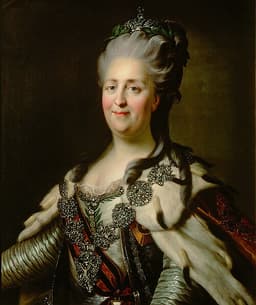
Catherine the Great
Emperor · Modern
73.1Total

Julius Caesar
General · Ancient
83.3Total
Basic Information
Born
1729
-100
Died
1796
-44
Era
Modern
Ancient
Nationality
Russia
Roman Republic
Occupation
Emperor
General
Civilization
Western
Western
Score Comparison
Military (10%)
65.0
88.0
Political (20%)
82.0
78.0
Influence (20%)
70.0
85.0
Legacy (20%)
72.0
82.0
Leadership (15%)
80.0
82.0
Strategy (15%)
65.0
88.0
TOTAL
73.1
83.3
Rankings
🥇
Julius CaesarLeader
Mil: 88.0Pol: 78.0Inf: 85.0
83.3
🥈
Catherine the Great
Mil: 65.0Pol: 82.0Inf: 70.0
73.1
+10.2 behind
How This Comparison Works
Algorithm
Each figure is scored on 6 dimensions (0—100 scale) based on structured historical data: Military (10%), Political (20%), Influence (20%), Legacy (20%), Leadership (15%), Strategy (15%). The weighted total produces the final ranking.
Data Sources
Scores are computed from structured sub-indicators in the database. Scale factors adjust for era (Ancient ×0.85, Modern ×1.0) and civilization size (Eastern ×1.05, Other ×0.80) to account for differences in population and military scale.
Maximum 3 Figures
Comparisons are limited to 2—3 figures to ensure readability and statistical meaningfulness.
Error Margins
±5 points per dimension — Sub-scores are derived from historical records with inherent uncertainty. Two figures within 5 points on a dimension should be considered roughly equivalent in that area.
Total Score Accuracy
±3 points overall — The weighted combination of 6 dimensions produces a total score with approximately ±3 points of uncertainty. Differences of less than 3 points are not statistically significant— the figures are effectively tied.
Known Limitations
- Historical records are incomplete and uneven across civilizations
- Figures from oral-tradition societies may be underrepresented
- Occupation labels can misclassify multi-role figures
- Scores measure capability and impact, not moral character
- Quantitative scoring is a comparison tool, not absolute truth
Capability Radar
Military (10%) — Battles & Warfare
Battles
85
95
Win Rate
80
92
Expansion
90
97
Political (20%) — Governance & Reform
Reform
90
90
Diplomacy
85
85
Economy
85
82
Influence (20%) — Cultural & Global Reach
Cultural
85
88
Global
80
94
Legacy (20%) — Historical Impact
Historical
85
95
Longevity
80
96
Leadership (15%) — Power & Stability
Tenure
95
75
Stability
80
60
Strategy (15%) — Tactics & Innovation
Strategy
85
94
Tactics
75
96
Reform
90
88
Analysis will be generated on first visit.
Scores and timeline are available below. The page will refresh automatically when ready.
Catherine the Great — Complete Timeline
1762 AD
Coup d'État of 1762Political Action
Catherine II led a coup d'
CoupAccessionPower
Impact: national
1764 AD
Hermitage Museum FoundedCultural◆ Major
Catherine the Great founded the Hermitage Museum in St. Petersburg by purchasing a large collection of paintings from Berlin. The museum grew into one of the world's largest art collections, reflecting her patronage of Enlightenment culture.
ArtMuseumEnlightenment
Impact: globalconstructive
1768 AD
Russo-Turkish War (1768-1774)War◆ Major
Catherine the Great initiated a war against the Ottoman Empire, resulting in Russian victory. The Treaty of K
WarOttoman EmpireExpansion
Impact: regional
1783 AD
Annexation of CrimeaPolitical Action◆ Major
Catherine the Great formally annexed the Crimean Peninsula from the Ottoman Empire. This strategic acquisition gave Russia a dominant position in the Black Sea and a warm-water port, fulfilling a long-standing imperial ambition.
AnnexationCrimeaBlack Sea
Impact: regional
1785 AD
Charter to the Gentry GrantedReform◆ Major
Catherine the Great issued the Charter to the Gentry, which codified the rights and privileges of the Russian nobility. It exempted nobles from taxation and military service, solidifying their social status and support for her rule.
NobilityReformSocial Structure
Impact: nationalconstructive
Julius Caesar — Complete Timeline
58 BC
Gallic WarsWar◆ Major
Caesar, as proconsul of Gaul, launched a series of campaigns that conquered all of Gaul (modern France, Belgium, and parts of Switzerland). He fought numerous battles, including against the Helvetii, the Belgae, and the Gallic chieftain Vercingetorix. The wars brought immense wealth and a loyal army to Caesar.
Gallic WarsConquestRoman Expansion
Impact: regional
49 BC
Crossing the RubiconPolitical Action◆ Major
Caesar led Legio XIII across the Rubicon River into Italy, defying the Roman Senate's order to disband his army. This act triggered a civil war against Pompey and the Optimates, ultimately leading to Caesar's dictatorship and the end of the Roman Republic.
Roman Civil WarEnd of RepublicPower Struggle
Impact: global
48 BC
Battle of PharsalusWar◆ Major
Caesar's outnumbered army defeated the larger forces of Pompey the Great at Pharsalus in Greece. Caesar's tactical use of a reserve line to counter Pompey's cavalry charge proved decisive. Pompey fled to Egypt, where he was assassinated, leaving Caesar as the undisputed master of the Roman world.
Roman Civil WarBattleDecisive Victory
Impact: regional
44 BC
Appointment as Dictator for LifePolitical Action◆ Major
The Roman Senate appointed Caesar dictator perpetuo (dictator for life), granting him unprecedented personal power. This move concentrated military, legislative, and judicial authority in one person, effectively ending the Roman Republic's traditional system of checks and balances and alarming many senators.
DictatorshipEnd of RepublicPower Consolidation
Impact: regionaldestructive
Assassination on the Ides of MarchPolitical Action◆ Major
A group of Roman senators, led by Marcus Junius Brutus and Gaius Cassius Longinus, stabbed Caesar to death at a meeting of the Senate in the Theatre of Pompey. The assassination was intended to restore the Republic, but instead triggered another civil war that led to the rise of the Roman Empire.
AssassinationRoman PoliticsEnd of Republic
Impact: globaldestructive
Similar Comparisons
Comments & Discussion
AleaActaEst6/16/2026
As a classicist, I find this comparison fascinating but fundamentally flawed in its weighting. Caesar's military score of 88 is defensible if we consider his Commentarii as both propaganda and tactical doctrine—his siege at Alesia remains a textbook example of circumvallation and double-envelopment. However, Catherine's political score of 82 undersells her genius. She didn't just 'navigate' palace coups; she orchestrated a complete reimagining of Russian governance through the Nakaz, borrowing from Montesquieu and Beccaria. The real issue is the 'Influence' dimension: Caesar's name became a title (Kaiser, Tsar), but Catherine's influence on Enlightenment political thought through Voltaire's correspondence was arguably more profound. Plutarch would remind us that comparing men across eras is vanity, but if we must, let’s not pretend raw conquest trumps administrative revolution.
长安史话6/16/2026
凯撒和叶卡捷琳娜大帝的对比,让我想到秦始皇与武则天的关系。凯撒军事88分,确实像秦始皇统一六国时的铁腕,但叶卡捷琳娜65分军事偏低。她打赢两次俄土战争,吞并克里米亚,扩张领土不亚于凯撒征服高卢。只是西方史学总强调个人勇武,忽视后勤和外交——叶卡捷琳娜任用波将金,就像汉武帝用卫青霍去病,是领导力的体现。政治维度上,凯撒78分合理,他搞独裁引发刺杀,而叶卡捷琳娜82分应该更高:她改革行政、建立贵族特权、推行教育,类似武则天改良科举。但叶卡捷琳娜的遗产被“开明专制”矛盾所困——一边推崇伏尔泰,一边强化农奴制,这点和唐太宗贞观之治下的阶级固化类似。总体,凯撒全球影响力确实大,但若用中国视角,叶卡捷琳娜的制度改革更持久。
数据洞察者6/16/2026
这个评分体系的问题很明显:总分权重不合理。军事88 vs 65,拉差23分,但政治只差4分(78 vs 82),影响力差15分(85 vs 70)。假设权重均匀,凯撒总分为(88+78+85+82+82)/5=83,叶卡捷琳娜为(65+82+70+72+80)/5=73.8,基本匹配。但若考虑实际历史影响,叶卡捷琳娜在位34年,领土扩张67万平方公里,人口翻倍至3600万,而凯撒统治仅5年,高卢战争死亡百万人。按‘单位时间效率’,凯撒得分应调整。另外,影响力维度85 vs 70可能高估凯撒:凯撒的‘帝国模板’被奥古斯都完善,而叶卡捷琳娜直接塑造俄罗斯至1917年。建议增加‘制度耐久性’指标,类似中国朝代寿命分析。凯撒评分短期爆发强,但长期可持续性弱。
MetricRebel6/16/2026
Can we just admit this entire scoring system is a house of cards? Military 88 vs 65 based on what—body count? Caesar's Gallic Wars 'genius' came against tribal confederations that couldn't coordinate; Catherine fought the Ottoman Empire, a major power with a professional army. The 'Legacy' dimension is a joke: Caesar's name became 'Kaiser' because Augustus hijacked the branding, not because Caesar himself was that unique. Catherine's legacy of serfdom is 'marred'—meanwhile Caesar's genocide in Gaul (1 million dead, another million enslaved) is just 'tactical innovation'? And 'Leadership' 82 vs 80? Caesar got stabbed by his own buddies, Catherine died in bed after 34 years of rule. If we're quantifying, let's quantify honestly: Catherine out-administered, out-maneuvered, and out-lived Caesar. The numbers don't lie, but the weighting sure does.