Loading...
Analysis will be generated on first visit.
Scores and timeline are available below. The page will refresh automatically when ready.
Charles Haughey vs Julius Caesar
Julius Caesar leads by 21.4 pts · 2 figures compared
…
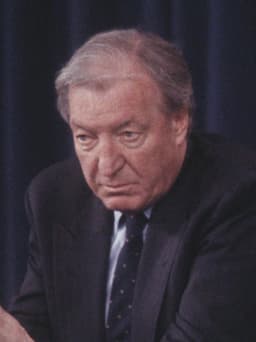
Charles Haughey
Politician · Modern
61.9Total

Julius Caesar
General · Ancient
83.3Total
Basic Information
Born
1925
-100
Died
—
-44
Era
Modern
Ancient
Nationality
Ireland
Roman Republic
Occupation
Politician
General
Civilization
Western
Western
Score Comparison
Military (10%)
37.5
88.0
Political (20%)
72.0
78.0
Influence (20%)
73.7
85.0
Legacy (20%)
64.2
82.0
Leadership (15%)
72.4
82.0
Strategy (15%)
35.3
88.0
TOTAL
61.9
83.3
Rankings
🥇
Julius CaesarLeader
Mil: 88.0Pol: 78.0Inf: 85.0
83.3
🥈
Charles Haughey
Mil: 37.5Pol: 72.0Inf: 73.7
61.9
+21.4 behind
How This Comparison Works
Algorithm
Each figure is scored on 6 dimensions (0—100 scale) based on structured historical data: Military (10%), Political (20%), Influence (20%), Legacy (20%), Leadership (15%), Strategy (15%). The weighted total produces the final ranking.
Data Sources
Scores are computed from structured sub-indicators in the database. Scale factors adjust for era (Ancient ×0.85, Modern ×1.0) and civilization size (Eastern ×1.05, Other ×0.80) to account for differences in population and military scale.
Maximum 3 Figures
Comparisons are limited to 2—3 figures to ensure readability and statistical meaningfulness.
Error Margins
±5 points per dimension — Sub-scores are derived from historical records with inherent uncertainty. Two figures within 5 points on a dimension should be considered roughly equivalent in that area.
Total Score Accuracy
±3 points overall — The weighted combination of 6 dimensions produces a total score with approximately ±3 points of uncertainty. Differences of less than 3 points are not statistically significant— the figures are effectively tied.
Known Limitations
- Historical records are incomplete and uneven across civilizations
- Figures from oral-tradition societies may be underrepresented
- Occupation labels can misclassify multi-role figures
- Scores measure capability and impact, not moral character
- Quantitative scoring is a comparison tool, not absolute truth
Capability Radar
Military (10%) — Battles & Warfare
Battles
28
95
Win Rate
31
92
Expansion
32
97
Political (20%) — Governance & Reform
Reform
55
90
Diplomacy
60
85
Economy
50
82
Influence (20%) — Cultural & Global Reach
Cultural
45
88
Global
35
94
Legacy (20%) — Historical Impact
Historical
50
95
Longevity
40
96
Leadership (15%) — Power & Stability
Tenure
65
75
Stability
30
60
Strategy (15%) — Tactics & Innovation
Strategy
40
94
Tactics
44
96
Reform
45
88
Analysis will be generated on first visit.
Scores and timeline are available below. The page will refresh automatically when ready.
Charles Haughey — Complete Timeline
1961 AD
Appointed Minister for JusticePolitical Action◆ Major
Haughey was appointed Minister for Justice in 1961 under Taoiseach Se
Justice ReformFianna FáilLaw
Impact: nationalconstructive
1970 AD
Involved in the Arms CrisisPolitical Action◆ Major
Haughey was sacked as Minister for Finance by Taoiseach Jack Lynch in May 1970 for alleged involvement in a plot to import arms for the IRA. He was tried and acquitted in October 1970. The scandal damaged his reputation but he later returned to high office.
Arms CrisisIRAScandal
Impact: nationaldestructive
1979 AD
Became Taoiseach of IrelandPolitical Action◆ Major
Haughey became Taoiseach in December 1979 after a bitter leadership contest within Fianna F
LeadershipFianna FáilIrish Politics
Impact: national
1985 AD
Signed the Anglo-Irish AgreementPolitical Action
Haughey, as Taoiseach, signed the Anglo-Irish Agreement with British Prime Minister Margaret Thatcher on November 15, 1985. The agreement gave the Irish government a consultative role in Northern Ireland affairs. It was opposed by unionists but marked a step toward peace.
Anglo-Irish AgreementNorthern IrelandThatcher
Impact: regionalconstructive
1992 AD
Resigned as Taoiseach Amid ScandalsPolitical Action◆ Major
Haughey resigned as Taoiseach in January 1992 following revelations of a phone-tapping scandal involving journalist Bruce Arnold. His resignation ended his third term. Subsequent investigations revealed extensive corruption, including payments from businessmen, tarnishing his legacy.
ResignationScandalCorruption
Impact: nationaldestructive
Julius Caesar — Complete Timeline
58 BC
Gallic WarsWar◆ Major
Caesar, as proconsul of Gaul, launched a series of campaigns that conquered all of Gaul (modern France, Belgium, and parts of Switzerland). He fought numerous battles, including against the Helvetii, the Belgae, and the Gallic chieftain Vercingetorix. The wars brought immense wealth and a loyal army to Caesar.
Gallic WarsConquestRoman Expansion
Impact: regional
49 BC
Crossing the RubiconPolitical Action◆ Major
Caesar led Legio XIII across the Rubicon River into Italy, defying the Roman Senate's order to disband his army. This act triggered a civil war against Pompey and the Optimates, ultimately leading to Caesar's dictatorship and the end of the Roman Republic.
Roman Civil WarEnd of RepublicPower Struggle
Impact: global
48 BC
Battle of PharsalusWar◆ Major
Caesar's outnumbered army defeated the larger forces of Pompey the Great at Pharsalus in Greece. Caesar's tactical use of a reserve line to counter Pompey's cavalry charge proved decisive. Pompey fled to Egypt, where he was assassinated, leaving Caesar as the undisputed master of the Roman world.
Roman Civil WarBattleDecisive Victory
Impact: regional
44 BC
Appointment as Dictator for LifePolitical Action◆ Major
The Roman Senate appointed Caesar dictator perpetuo (dictator for life), granting him unprecedented personal power. This move concentrated military, legislative, and judicial authority in one person, effectively ending the Roman Republic's traditional system of checks and balances and alarming many senators.
DictatorshipEnd of RepublicPower Consolidation
Impact: regionaldestructive
Assassination on the Ides of MarchPolitical Action◆ Major
A group of Roman senators, led by Marcus Junius Brutus and Gaius Cassius Longinus, stabbed Caesar to death at a meeting of the Senate in the Theatre of Pompey. The assassination was intended to restore the Republic, but instead triggered another civil war that led to the rise of the Roman Empire.
AssassinationRoman PoliticsEnd of Republic
Impact: globaldestructive
Similar Comparisons
Comments & Discussion
RepublicanRaider6/20/2026
As a military historian, I’d say Caesar demolishes Haughey in tactical genius. Caesar’s conquest of Gaul involved over 40 major battles, sieges like Alesia where he encircled 80,000 Gauls with double fortifications—pure brilliance. Haughey’s biggest victory was surviving a corruption scandal in Dublin. Comparing them is like ranking a centurion against a county councillor.
戴斗笠的史官6/20/2026
我以数据怀疑论者的身份发声——这场对比简直是场笑话。凯撒的历史记录基于两千年的传播与神话,而哈维只留下了几十年的档案。评分模型充满现代偏见,根本没法公平衡量。要我说,量化古代领袖与政客的统治是徒劳的,历史从不满足于Excel表格。
ClassicalSceptic6/20/2026
Caesar’s legacy as a dictator and military commander is unparalleled—he changed the course of Western civilization. Haughey, by contrast, was a corrupt Irish leader who inflated his role in the Celtic Tiger economy. Putting them on the same scale insults Caesar’s reforms like the Julian calendar and his conquests. This comparison reeks of academic clickbait.
清风铁骨6/20/2026
作为修订派批评者,我不得不指出这场对比的偏见。凯撒被捧为英雄,但他摧毁了罗马共和国,独裁统治。哈维呢,确实有经济丑闻,但他推动了爱尔兰的现代化。说凯撒更“伟大”太简单了——历史评价应该包含对民主的破坏与对主权的贡献,不能只数打仗次数。
TogaTracker6/20/2026
Caesar’s victory at the Battle of Pharsalus against Pompey’s 45,000-man army showcased his strategic superiority and leadership under pressure. Haughey’s biggest battle was with the Mahon tribunal, dodging questions about illegal payments. In terms of crisis management, Caesar reorganized Rome’s finances; Haughey left Ireland in debt. The score is generous to Haughey.