Loading...
Analysis will be generated on first visit.
Scores and timeline are available below. The page will refresh automatically when ready.
Emperor Pedro I of Brazil vs Fu Jian
Fu Jian leads by 8.1 pts · 2 figures compared
…
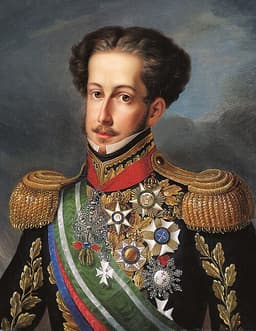
Emperor Pedro I of Brazil
Emperor · Modern
64.0Total
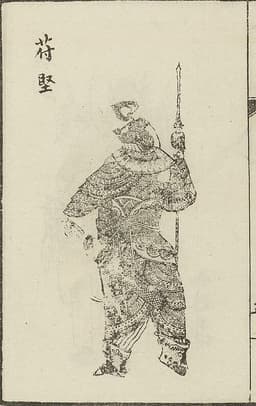
Fu Jian
Emperor · Ancient
72.1Total
Basic Information
Born
1798
338
Died
1834
385
Era
Modern
Ancient
Nationality
Brazil
China
Occupation
Emperor
Emperor
Civilization
Western
Eastern
Score Comparison
Military (10%)
32.8
66.2
Political (20%)
60.2
72.0
Influence (20%)
72.3
77.0
Legacy (20%)
70.0
67.9
Leadership (15%)
75.2
75.1
Strategy (15%)
59.3
72.0
TOTAL
64.0
72.1
Rankings
🥇
Fu JianLeader
Mil: 66.2Pol: 72.0Inf: 77.0
72.1
🥈
Emperor Pedro I of Brazil
Mil: 32.8Pol: 60.2Inf: 72.3
64.0
+8.1 behind
How This Comparison Works
Algorithm
Each figure is scored on 6 dimensions (0—100 scale) based on structured historical data: Military (10%), Political (20%), Influence (20%), Legacy (20%), Leadership (15%), Strategy (15%). The weighted total produces the final ranking.
Data Sources
Scores are computed from structured sub-indicators in the database. Scale factors adjust for era (Ancient ×0.85, Modern ×1.0) and civilization size (Eastern ×1.05, Other ×0.80) to account for differences in population and military scale.
Maximum 3 Figures
Comparisons are limited to 2—3 figures to ensure readability and statistical meaningfulness.
Error Margins
±5 points per dimension — Sub-scores are derived from historical records with inherent uncertainty. Two figures within 5 points on a dimension should be considered roughly equivalent in that area.
Total Score Accuracy
±3 points overall — The weighted combination of 6 dimensions produces a total score with approximately ±3 points of uncertainty. Differences of less than 3 points are not statistically significant— the figures are effectively tied.
Known Limitations
- Historical records are incomplete and uneven across civilizations
- Figures from oral-tradition societies may be underrepresented
- Occupation labels can misclassify multi-role figures
- Scores measure capability and impact, not moral character
- Quantitative scoring is a comparison tool, not absolute truth
Capability Radar
Military (10%) — Battles & Warfare
Battles
25
75
Win Rate
30
70
Expansion
35
80
Political (20%) — Governance & Reform
Reform
50
70
Diplomacy
45
60
Economy
30
65
Influence (20%) — Cultural & Global Reach
Cultural
45
50
Global
40
45
Legacy (20%) — Historical Impact
Historical
55
60
Longevity
50
40
Leadership (15%) — Power & Stability
Tenure
40
65
Stability
20
55
Strategy (15%) — Tactics & Innovation
Strategy
25
70
Tactics
20
65
Reform
15
60
Analysis will be generated on first visit.
Scores and timeline are available below. The page will refresh automatically when ready.
Emperor Pedro I of Brazil — Complete Timeline
1822 AD
Declaration of Brazilian IndependencePolitical Action
Dom Pedro declared Brazil's independence from Portugal on September 7, 1822, at the Ipiranga River. He was acclaimed Emperor Pedro I of Brazil, establishing a constitutional monarchy separate from Portugal.
IndependenceFounding
Impact: globalprogressive
Coronation as Emperor of BrazilPolitical Action◆ Major
Pedro I was crowned Emperor of Brazil on December 1, 1822, in Rio de Janeiro. The coronation formalized his rule over the newly independent nation, with a constitution promulgated in 1824.
CoronationMonarchy
Impact: national
1825 AD
Cisplatine WarWar◆ Major
Brazil went to war with the United Provinces of the R
WarTerritorial Loss
Impact: regionaldestructive
1831 AD
Abdication of the Brazilian ThronePolitical Action
Facing political crisis and military unrest, Pedro I abdicated the Brazilian throne on April 7, 1831, in favor of his five-year-old son Pedro II. He then returned to Portugal to claim the Portuguese throne.
AbdicationPolitical Crisis
Impact: nationaltragic
Fu Jian — Complete Timeline
370 AD
Conquest of Former YanWar◆ Major
Fu Jian's Former Qin forces conquered the Former Yan state, annexing its territory in northern China. This victory significantly expanded Former Qin's power and territory, bringing Fu Jian closer to unifying the north.
ConquestExpansion
Impact: regionalconstructive
376 AD
Conquest of Former LiangWar◆ Major
Fu Jian's forces conquered the Former Liang state in the northwest, incorporating its territory into Former Qin. This further consolidated his control over northern China.
ConquestExpansion
Impact: regionalconstructive
Conquest of DaiWar
Fu Jian's army conquered the Dai state, a Xianbei confederation in the north. This eliminated a rival and extended Former Qin's influence into the steppe region.
ConquestExpansion
Impact: regionalconstructive
379 AD
Capture of XiangyangWar
Fu Jian's forces captured the strategic city of Xiangyang from the Eastern Jin dynasty. This victory gave Former Qin a foothold south of the Huai River, setting the stage for the invasion that led to the Battle of Fei River.
ConquestCampaign
Impact: regionalconstructive
383 AD
Battle of Fei RiverWar
Fu Jian led a massive Former Qin army against the Eastern Jin dynasty at the Fei River. The Jin forces defeated the Qin army, causing a catastrophic rout. This defeat shattered Fu Jian's unification efforts and led to the collapse of Former Qin.
BattleUnificationDefeat
Impact: regionaltragic
Similar Comparisons
Comments & Discussion
IRON_SCIMITAR6/16/2026
Any serious military historian knows Fu Jian was doomed at Fei River not by bad luck but by sheer incompetence. Amassing 800,000 troops sounds impressive, but logistics? A nightmare. Ancient armies couldn't feed such numbers on the move. He should've used 100,000 elite cavalry to flank the Jin instead of parading raw conscripts. That's Strategy 101. Pedro I, by contrast, fought smart with smaller, motivated forces and seized the moment. Fu Jian's dream was always a mirage.
长江铁骑6/16/2026
我翻遍史书,发现氐人苻坚根本就是个被儒家史官捧上天的失败者。淝水之战前,他逼降了前燕慕容垂、羌人姚苌这些枭雄,却不斩草除根。慕容垂反叛时,苻坚竟还流泪说“卿何负我”——天真至此,怎能统一天下?反观佩德罗一世,他果断处决亲葡派大臣,毫不手软。帝王心术上,苻坚差得远。统一不是靠仁义,是靠铁血。