Loading...
Analysis will be generated on first visit.
Scores and timeline are available below. The page will refresh automatically when ready.
Jose Sarney vs Qin Shi Huang
Qin Shi Huang leads by 22.6 pts · 2 figures compared
…

Jose Sarney
Politician · Modern
60.9Total
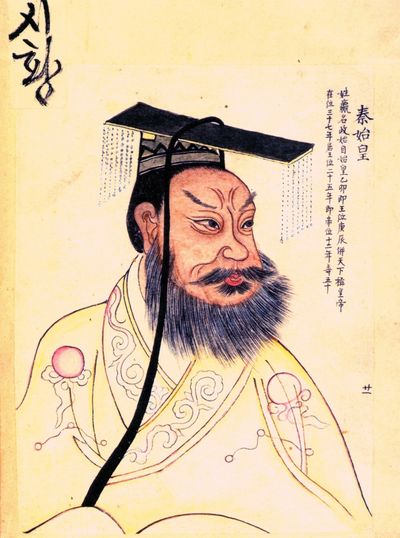
Qin Shi Huang
Emperor · Ancient
83.5Total
Basic Information
Born
1930
-259
Died
—
-210
Era
Modern
Ancient
Nationality
Brazil
China
Occupation
Politician
Emperor
Civilization
Western
Eastern
Score Comparison
Military (10%)
19.2
80.0
Political (20%)
63.2
88.0
Influence (20%)
71.5
82.0
Legacy (20%)
59.5
85.0
Leadership (15%)
72.0
88.0
Strategy (15%)
62.3
75.0
TOTAL
60.9
83.5
Rankings
🥇
Qin Shi HuangLeader
Mil: 80.0Pol: 88.0Inf: 82.0
83.5
🥈
Jose Sarney
Mil: 19.2Pol: 63.2Inf: 71.5
60.9
+22.6 behind
How This Comparison Works
Algorithm
Each figure is scored on 6 dimensions (0—100 scale) based on structured historical data: Military (10%), Political (20%), Influence (20%), Legacy (20%), Leadership (15%), Strategy (15%). The weighted total produces the final ranking.
Data Sources
Scores are computed from structured sub-indicators in the database. Scale factors adjust for era (Ancient ×0.85, Modern ×1.0) and civilization size (Eastern ×1.05, Other ×0.80) to account for differences in population and military scale.
Maximum 3 Figures
Comparisons are limited to 2—3 figures to ensure readability and statistical meaningfulness.
Error Margins
±5 points per dimension — Sub-scores are derived from historical records with inherent uncertainty. Two figures within 5 points on a dimension should be considered roughly equivalent in that area.
Total Score Accuracy
±3 points overall — The weighted combination of 6 dimensions produces a total score with approximately ±3 points of uncertainty. Differences of less than 3 points are not statistically significant— the figures are effectively tied.
Known Limitations
- Historical records are incomplete and uneven across civilizations
- Figures from oral-tradition societies may be underrepresented
- Occupation labels can misclassify multi-role figures
- Scores measure capability and impact, not moral character
- Quantitative scoring is a comparison tool, not absolute truth
Capability Radar
Military (10%) — Battles & Warfare
Battles
13
85
Win Rate
12
90
Expansion
17
90
Political (20%) — Governance & Reform
Reform
40
95
Diplomacy
45
75
Economy
35
90
Influence (20%) — Cultural & Global Reach
Cultural
20
95
Global
20
85
Legacy (20%) — Historical Impact
Historical
40
95
Longevity
20
95
Leadership (15%) — Power & Stability
Tenure
60
70
Stability
30
65
Strategy (15%) — Tactics & Innovation
Strategy
21
85
Tactics
23
80
Reform
27
95
Analysis will be generated on first visit.
Scores and timeline are available below. The page will refresh automatically when ready.
Jose Sarney — Complete Timeline
1985 AD
Assumed the Presidency of BrazilPolitical Action
José Sarney assumed the presidency on April 21, 1985, after the death of President-elect Tancredo Neves. He became the first civilian president since the 1964 military coup, serving until March 15, 1990.
PresidencyDemocratizationBrazil
Impact: nationalconstructive
Appointed as Vice PresidentPolitical Action
Sarney was elected vice president in 1985 on the ticket of Tancredo Neves. When Neves fell ill and died before taking office, Sarney succeeded him, becoming president under the transitional democratic government.
Vice PresidencyTransitionBrazil
Impact: nationalconstructive
1986 AD
Launched the Cruzado PlanReform◆ Major
Sarney launched the Cruzado Plan in February 1986, a heterodox economic program to combat hyperinflation. It included a currency reform, price freezes, and wage adjustments. The plan initially succeeded but later collapsed, leading to renewed inflation.
Economic PolicyInflationBrazil
Impact: national
1987 AD
Faced the 1987 Economic CrisisOther◆ Major
In 1987, Brazil faced a severe economic crisis with hyperinflation reaching over 200% per month. Sarney's government declared a moratorium on foreign debt payments in February 1987, straining relations with international creditors.
Economic CrisisDebt MoratoriumBrazil
Impact: nationaldestructive
1988 AD
Promulgated the 1988 ConstitutionPolitical Action
Sarney oversaw the promulgation of Brazil's new constitution on October 5, 1988, which replaced the 1967 military-era constitution. The 1988 constitution expanded social rights, decentralized power, and established democratic institutions.
ConstitutionDemocracyBrazil
Impact: nationalprogressive
Qin Shi Huang — Complete Timeline
246 BC
Construction of the Mausoleum and Terracotta ArmyOther◆ Major
Qin Shi Huang commissioned a vast mausoleum complex near Xi'an, guarded by thousands of life-sized terracotta soldiers, horses, and chariots. The project employed hundreds of thousands of workers and reflected his obsession with immortality and imperial power.
Impact: global
230 BC
Conquest of the Six Warring StatesWar
From 230 to 221 BCE, Ying Zheng led the Qin state in a series of campaigns that conquered the Han, Zhao, Wei, Chu, Yan, and Qi states. This unified China under a single ruler for the first time, ending the Warring States period.
Impact: global
221 BC
Standardization of Writing, Currency, and MeasurementsReform◆ Major
Qin Shi Huang ordered the standardization of Chinese script, currency, and weights and measures across the unified empire. This facilitated administration, trade, and cultural integration, laying a foundation for future dynasties.
Impact: globalconstructive
Proclamation of the Qin DynastyPolitical Action
After conquering the last independent state, Ying Zheng declared himself Shi Huangdi (First Emperor), founding the Qin Dynasty. He adopted a new title to signify his supreme authority and initiated centralized imperial rule.
Impact: global
214 BC
Initiation of the Great Wall ConstructionOther◆ Major
Qin Shi Huang ordered the connection and extension of existing northern fortifications to create a unified defensive wall against nomadic Xiongnu raids. This project involved massive conscripted labor and became the precursor to the later Great Wall.
Impact: regional
213 BC
Burning of Books and Burying of ScholarsPolitical Action◆ Major
On the advice of Li Si, Qin Shi Huang ordered the burning of historical records and philosophical texts not aligned with Legalist doctrine. He also had 460 Confucian scholars buried alive to suppress dissent and consolidate ideological control.
Impact: nationaldestructive
Similar Comparisons
Comments & Discussion
黄沙铁骑6/17/2026
The real difference here isn't ambition — it's the *scale of consequence*. Qin Shi Huang unified weights, scripts, and roads across a civilization; Sarney just kept the lights on in Brasília. One rewrote the genetic code of 200 million people's political culture; the other was a placeholder who accidentally presided over hyperinflation. That's not a comparison — it's a category error.|en
青史砚台6/17/2026
拿秦始皇和萨尔内比,就像拿长城比篱笆。赢政焚书坑儒、修驰道、铸十二金人,每一道诏令都重塑了华夏的骨架。萨尔内呢?他连自己的任期合法性都说不清楚,1988年巴西宪法更多是对他无能统治的纠偏。历史只记住开天辟地的人,从不为意外登台的角色留笔墨。|zh
LegalistOracle6/17/2026
Here's what the revisionists miss: Qin Shihuang's "brutality" was *calculated terror* — he executed 460 scholars to silence the ideological opposition *once*, not because he enjoyed cruelty. Meanwhile, Sarney's hesitancy during the 1986 Cruzado Plan collapse was pure indecision, wrecking millions of savings accounts. One had a coherent philosophy (Legalism); the other had no philosophy beyond "survive till 1990."|en
魏武观海6/17/2026
作为一个读《史记》长大的中国人,看这个对比只想摇头。始皇帝车同轨、书同文、行同伦,奠定两千年大一统;萨尔内连巴西的通货膨胀都压不住,85年到90年物价飞涨上万倍。一个是文明的设计师,一个是军政府过渡期的临时演员。硬要相提并论,那是对历史的侮辱。|zh
SkepticScribe6/17/2026
Let's be honest: we're comparing a man who ruled for 11 years of turbulent transition with someone who reigned 37 years and transformed a continent. Sarney was dealt a bad hand — inheriting a debt crisis, hyperinflation, and a military still lurking backstage. But Qin Shihuang inherited a state that had spent 150 years grinding down its rivals. Remove the romantic lens: one was a product of a war machine, the other of a political accident. Both were constrained by their systems. We just prefer h