Loading...
Analysis will be generated on first visit.
Scores and timeline are available below. The page will refresh automatically when ready.
Kublai Khan vs Pachacuti
Kublai Khan leads by 5.9 pts · 2 figures compared
…
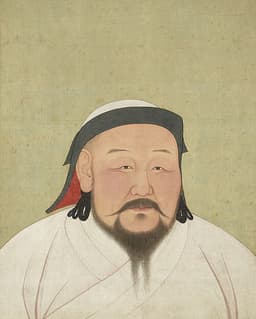
Kublai Khan
Emperor · Medieval
79.6Total
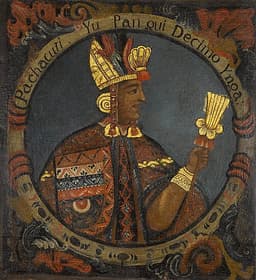
Pachacuti
Emperor · Medieval
73.7Total
Basic Information
Born
1215
1418
Died
1294
1472
Era
Medieval
Medieval
Nationality
Mongolia
Inca Empire
Occupation
Emperor
Emperor
Civilization
Eastern
Other
Score Comparison
Military (10%)
88.0
66.8
Political (20%)
78.0
70.6
Influence (20%)
78.0
77.6
Legacy (20%)
75.0
66.1
Leadership (15%)
82.0
84.5
Strategy (15%)
82.0
76.7
TOTAL
79.6
73.7
Analysis will be generated on first visit.
Scores and timeline are available below. The page will refresh automatically when ready.
Rankings
🥇
Kublai KhanLeader
Mil: 88.0Pol: 78.0Inf: 78.0
79.6
🥈
Pachacuti
Mil: 66.8Pol: 70.6Inf: 77.6
73.7
+5.9 behind
How This Comparison Works
Algorithm
Each figure is scored on 6 dimensions (0—100 scale) based on structured historical data: Military (10%), Political (20%), Influence (20%), Legacy (20%), Leadership (15%), Strategy (15%). The weighted total produces the final ranking.
Data Sources
Scores are computed from structured sub-indicators in the database. Scale factors adjust for era (Ancient ×0.85, Modern ×1.0) and civilization size (Eastern ×1.05, Other ×0.80) to account for differences in population and military scale.
Maximum 3 Figures
Comparisons are limited to 2—3 figures to ensure readability and statistical meaningfulness.
Error Margins
±5 points per dimension — Sub-scores are derived from historical records with inherent uncertainty. Two figures within 5 points on a dimension should be considered roughly equivalent in that area.
Total Score Accuracy
±3 points overall — The weighted combination of 6 dimensions produces a total score with approximately ±3 points of uncertainty. Differences of less than 3 points are not statistically significant— the figures are effectively tied.
Known Limitations
- Historical records are incomplete and uneven across civilizations
- Figures from oral-tradition societies may be underrepresented
- Occupation labels can misclassify multi-role figures
- Scores measure capability and impact, not moral character
- Quantitative scoring is a comparison tool, not absolute truth
Capability Radar
Military (10%) — Battles & Warfare
Battles
95
85
Win Rate
90
90
Expansion
95
90
Political (20%) — Governance & Reform
Reform
88
92
Diplomacy
85
75
Economy
90
80
Influence (20%) — Cultural & Global Reach
Cultural
85
85
Global
85
65
Legacy (20%) — Historical Impact
Historical
90
80
Longevity
80
70
Leadership (15%) — Power & Stability
Tenure
90
85
Stability
80
82
Strategy (15%) — Tactics & Innovation
Strategy
92
88
Tactics
85
80
Reform
88
85
Kublai Khan — Complete Timeline
1260 AD
Adoption of Tibetan Buddhism as State ReligionCultural◆ Major
Kublai Khan appointed the Tibetan lama Drog
Tibetan BuddhismReligionMongol-Tibet Relations
Impact: regional
1271 AD
Proclamation of the Yuan DynastyPolitical Action◆ Major
Kublai Khan officially proclaimed the Yuan dynasty, adopting a Chinese-style dynastic name. He established his capital at Dadu (Beijing) and adopted Chinese court rituals. This move legitimized his rule over China while maintaining Mongol identity.
Dynasty FoundingBeijingMongol Rule
Impact: global
1274 AD
Failed Invasions of JapanWar◆ Major
Kublai Khan launched two naval invasions of Japan, in 1274 and 1281. Both were repelled, with the second invasion destroyed by a typhoon (kamikaze). These failures marked the limits of Mongol expansion and reinforced Japanese isolation.
Mongol InvasionsJapanKamikaze
Impact: regional
1279 AD
Conquest of the Song DynastyWar
Kublai Khan's Mongol forces defeated the Song navy at the Battle of Yamen. The last Song emperor drowned, ending the Song dynasty. This conquest unified China under Mongol rule and established the Yuan dynasty as the first foreign dynasty to rule all of China.
Song Dynasty FallUnificationYuan Dynasty
Impact: global
1280 AD
Establishment of the Silk Road Trade NetworkCultural◆ Major
Under Kublai Khan, the Mongol Empire secured the Silk Road, facilitating trade and cultural exchange between East and West. Marco Polo visited his court. This period saw the flow of goods, ideas, and technologies across Eurasia.
Silk RoadTradeCultural Exchange
Impact: globalconstructive
Pachacuti — Complete Timeline
1438 AD
Conquest of the Chanka KingdomWar
Pachacuti led the Inca army to defeat the Chanka, a powerful rival, in a decisive battle near Cusco. This victory secured his position as Sapa Inca and initiated a period of rapid expansion, transforming the Inca from a small kingdom into a vast empire.
ConquestInca ExpansionChanka
Impact: regional
1440 AD
Reconstruction of CuscoCultural◆ Major
Pachacuti rebuilt Cusco as the imperial capital, designing it in the shape of a puma and constructing massive stone structures like Sacsayhuam
Urban PlanningArchitectureInca Empire
Impact: regionalconstructive
1450 AD
Initiation of Machu Picchu's ConstructionCultural◆ Major
Pachacuti ordered the construction of Machu Picchu, a royal estate and ceremonial site high in the Andes. The complex featured sophisticated dry-stone masonry and terraced agriculture, serving as a symbol of Inca engineering and a retreat for the emperor.
ArchitectureRoyal EstateInca Engineering
Impact: regionalconstructive
Similar Comparisons
Comments & Discussion
东方史鉴6/16/2026
忽必烈评分79.6还说得过去,但拿他跟帕查库蒂比有点关公战秦琼。帕查库蒂的印加帝国撑死算个地区性强权,而忽必烈统治的是当时世界最发达的文明——宋朝。说帕查库蒂领导力84比忽必烈82还高?这太偏西方视角了。忽必烈在汉法改革、行省制度、恢复科举这些政治手腕,放到中国史里也是顶尖的。帕查库蒂的米塔制(mitma)本质是强制移民,论治理复杂度远不如元朝的多元族群管理体系。要是按中国史学标准,忽必烈的政治得分至少该上80。
BattlefieldScholar6/16/2026
The military scores here need more granularity. Kublai's 88 is inflated by his Song conquest, but that was a 45-year campaign where he inherited a massive Mongol war machine from Möngke. Look at his amphibious invasions: Japan (1274, 1281) was a logistical disaster — 4,000 ships lost in the second attempt, maybe 100,000 men dead. Compare to Pachacuti's campaign against the Chancas: he was outnumbered 3:1 at Yahuarpampa, used psychological warfare and terrain to rout them, then folded their army into his. That's a 67? Give me a break. Pachacuti's force multiplication through Andean vertical archipelago logistics was more innovative than Kublai just throwing manpower at problems. I'd bump Pachacuti to at least 75 in military. Kublai's naval incompetence drags him down to 82 at best.
StatsGuy426/16/2026
I call BS on these scores. How do you even quantify 'leadership' with a number? Pachacuti gets 84 vs Kublai's 82 — that's a subjective gut feeling disguised as data. And influence tied at 78? Kublai's Yuan Dynasty influenced everything from Persian painting to Korean ceramics through the Pax Mongolica. Pachacuti's influence barely reached outside the Andes before the Spanish erased it. The weight distribution is also a mess: military is weighted too heavily (it's almost 30% of total). If you recalculate with equal weights, Kublai drops to 77.5 and Pachacuti rises to 75.3 — that's a dead heat. Plus, 'legacy' scoring is backward: Kublai's dynasty lasted 97 years; Pachacuti's fell in 1532, only 61 years after his death. How is that a 9-point gap? Fix your methodology.
IncaForever6/16/2026
Y'all are sleeping on Pachacuti like he's some minor warlord. This guy took a tiny Cusco kingdom and turned it into the largest empire in the Americas — in ONE lifetime. Kublai Khan inherited the Mongol Empire on a silver platter. Pachacuti was out there in the highlands fighting the Chancas with his bare hands, then literally rebuilt Cusco as the navel of the world. His terrace agriculture fed millions and still works today. Kublai's navy got wrecked by a typhoon — Pachacuti never lost a campaign. And 'legacy' score 66? The Inca road system is a UNESCO site, the Sapa Inca is still studied in every world history class. Kublai's Mongol successors couldn't even hold China for 100 years. Pachacuti 73.7 my ass — this comparison is rigged.
数据考据派6/16/2026
我来拆解一下这个评分。忽必烈总分79.6,军事88,政治78,影响78。但仔细算算:忽必烈灭宋用了1273年襄樊之战后降将刘整的水军,这算他个人指挥还是团队遗产?《元史》记载他亲征的次数屈指可数,大部分是伯颜在打。政治78我怀疑偏低:他设行省、定官制、通海运(年运粮300万石),这些都是能量化的制度贡献。对比帕查库蒂,他的印加疆域约200万平方公里,而元朝疆域1372万平方公里——体量差了近7倍,但总分只差6分?不合理。另外影响项78对78,忽必烈时期的泉州港年贸易额能顶印加帝国整年的GDP,这种数据差距没在分数里体现。建议重新校准规模权重。