Loading...
Abbas the Great vs Charles XI of Sweden
Abbas the Great leads by 15.5 pts · 2 figures compared
…
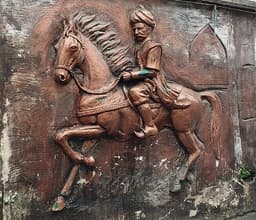
Abbas the Great
Emperor · Modern
74.5Total

Charles XI of Sweden
Emperor · Modern
59.0Total
Basic Information
Born
1571
1655
Died
1629
1697
Era
Modern
Modern
Nationality
Persia
Sweden
Occupation
Emperor
Emperor
Civilization
Middle Eastern
Western
Score Comparison
Military (10%)
72.0
55.0
Political (20%)
84.0
70.3
Influence (20%)
69.8
55.7
Legacy (20%)
72.0
49.2
Leadership (15%)
73.8
78.0
Strategy (15%)
82.0
50.0
TOTAL
74.5
59.0
Abbas the Great — Complete Timeline
1598 AD
Construction of Isfahan as CapitalCultural
Abbas the Great moved the Safavid capital from Qazvin to Isfahan. He initiated a massive building program, constructing the Naqsh-e Jahan Square, the Shah Mosque, and the Ali Qapu palace. Isfahan was transformed into a grand city with parks, bridges, and bazaars, becoming a center of Persian culture and commerce.
Urban PlanningArchitectureIsfahan
Impact: globalconstructive
1600 AD
Reform of the Army (Ghulam System)Reform◆ Major
Abbas the Great established a new military corps of ghulams (slave soldiers) recruited from Christian subjects in the Caucasus. These troops were trained in modern firearms and artillery, reducing the Safavid reliance on the Qizilbash tribal forces. This reform created a loyal, professional army that strengthened the central government.
Military ReformGhulamsCentralization
Impact: nationalconstructive
1605 AD
Battle of SufiyanWar◆ Major
Abbas the Great led the Safavid army to victory against the Ottoman Empire at Sufiyan near Tabriz. This battle was part of the Ottoman-Safavid War of 1603-1618. The victory allowed Abbas to recapture Tabriz and other territories lost to the Ottomans in earlier wars.
BattleOttoman WarTabriz
Impact: regional
1622 AD
Expulsion of the Portuguese from HormuzWar◆ Major
Abbas the Great allied with the English East India Company to expel the Portuguese from the island of Hormuz in the Persian Gulf. A joint Persian-English force captured the Portuguese fort after a siege. This victory ended Portuguese dominance in the Persian Gulf and opened trade routes for Persian and English merchants.
SiegePortuguesePersian Gulf
Impact: regional
1623 AD
Recapture of BaghdadWar◆ Major
Abbas the Great led a campaign to recapture Baghdad from the Ottoman Empire. The Safavid army besieged the city and forced the Ottoman garrison to surrender. This victory restored Safavid control over Mesopotamia, a region lost since the Battle of Chaldiran in 1514.
SiegeMesopotamiaOttoman War
Impact: regional
Charles XI of Sweden — Complete Timeline
1675 AD
Scanian WarWar◆ Major
Charles XI led Sweden in the Scanian War against Denmark-Norway and Brandenburg. The war included the Swedish victory at the Battle of Lund in 1676, the bloodiest battle in Scandinavian history. The war ended with the Treaty of Lund in 1679, which restored the status quo but confirmed Sweden's dominance in the Baltic.
SwedenDenmarkScanian WarBattle of Lund
Impact: regional
1680 AD
Reduction of the nobilityReform◆ Major
Charles XI implemented the Great Reduction, a policy of reclaiming crown lands and estates that had been granted to the nobility. This drastically reduced the economic and political power of the aristocracy, strengthened the royal treasury, and laid the foundation for absolute monarchy in Sweden.
SwedenAbsolutismNobilityLand Reform
Impact: nationalconstructive
1682 AD
Reorganization of the Swedish armyReform◆ Major
Charles XI introduced the allotment system (indelningsverket), a permanent military organization where each province was responsible for equipping and supporting a regiment. This created a well-trained, national standing army that was self-sustaining in peacetime and became the backbone of Sweden's military power in the Great Northern War.
SwedenMilitary ReformArmy
Impact: nationalconstructive
1693 AD
Declaration of absolute monarchyPolitical Action
The Riksdag of the Estates formally declared Charles XI an absolute monarch, stating that the king was responsible to God alone for his actions. This legalized the de facto absolute power he had already established, making Sweden one of the most centralized absolute monarchies in Europe.
SwedenAbsolutismConstitution
Impact: national
Expert Analysis
Origins
**Abbas the Great** (born 1571) was the fifth Safavid shah of Persia, ascending the throne in 1588 after the deposition of his father, Shah Mohammad Khodabanda. He grew up in a period of internal strife and external threats, with the Ottoman Empire and Uzbek tribes encroaching on Safavid territory. His early education included military training and governance, but his formative years were marked by court intrigues and the influence of the Qizilbash tribal leaders.
**Charles XI** (born 1655) became king of Sweden at age five after the death of his father, Charles X Gustav. His regency government was controlled by a high nobility council, leading to political instability and corruption. Charles received a strict Lutheran education and military training, but his youth was overshadowed by the power struggles of the aristocracy. He assumed personal rule in 1672 at age 17.
Rise to Power
Abbas the Great's rise began with a coup d'état in 1588, when he was placed on the throne by Qizilbash leaders after they forced his father to abdicate. He quickly consolidated power by eliminating rival factions and reducing the influence of the Qizilbash. His turning point came with the 1590 Treaty of Constantinople, which ceded territories to the Ottomans to buy time, allowing him to focus on internal reforms and military rebuilding.
Charles XI's rise was marked by his assertion of royal authority during the Scanian War (1675-1679). Despite initial setbacks, his leadership at the Battle of Lund (1676) boosted his prestige. After the war, he used the Riksdag of 1680 to declare himself an absolute monarch, stripping the nobility of political power. His key ally was the lower estates, who supported his reduction of noble privileges.
Leadership & Governance
Abbas the Great centralized the Safavid state by creating a new military corps (ghulams) from Christian captives, reducing reliance on the Qizilbash. He moved the capital to Isfahan and embarked on a massive building program, including the Naqsh-e Jahan Square, transforming the city into a world capital with a population of over 500,000. His economic policies promoted trade, notably with the English East India Company, leading to the expulsion of the Portuguese from Hormuz in 1622.
Charles XI implemented the Great Reduction (1680), reclaiming crown lands from the nobility and increasing royal revenues by over 50%. He introduced the allotment system (indelningsverket) for the army, where each province equipped and maintained a regiment, creating a standing army of 40,000 men. His governance reduced aristocratic power and established a bureaucratic absolute monarchy, with the king as the sole authority.
In leadership scores, Abbas the Great scored 73.8, while Charles XI scored 78.0, reflecting Charles's more direct control. However, Abbas's political score of 84.0 outshines Charles's 70.3, indicating his superior statecraft.
Triumph & Tragedy
Abbas's greatest success was the revitalization of the Safavid Empire. He recaptured Baghdad from the Ottomans in 1623, though it was lost again later. His expulsion of the Portuguese from Hormuz secured Persian Gulf trade. His tragic flaw was his harsh treatment of his own family: he blinded his sons and killed his heir, leading to a succession crisis after his death in 1629. His reign also saw the forced relocation of Armenians to Isfahan, which boosted the economy but caused suffering.
Charles XI's triumph was the establishment of absolute monarchy and a well-organized army that would later serve his son, Charles XII, in the Great Northern War. His reduction of the nobility restored crown finances and reduced corruption. However, his reign was marked by the Scanian War, which, despite victories, drained resources. His greatest tragedy was the lack of a strong successor: his son Charles XII was a brilliant military commander but ultimately led Sweden to ruin. Charles XI died in 1697 at age 41 from stomach cancer.
Character & Destiny
Abbas the Great was pragmatic and ruthless, often described as a shrewd diplomat and a patron of the arts. He personally led military campaigns and showed a keen interest in trade and architecture. His decision to move the capital and build Isfahan was a strategic masterstroke. However, his paranoia led to the elimination of capable heirs, weakening the dynasty.
Charles XI was diligent, frugal, and authoritarian. He worked tirelessly to restore royal authority and was known for his piety and simplicity. His character shaped Sweden into a centralized absolute monarchy, but his focus on military preparedness and fiscal stability came at the cost of diplomatic flexibility. His early death left Sweden with an aggressive expansionist policy under his son.
Legacy
Abbas the Great's legacy endures in the architecture of Isfahan, now a UNESCO World Heritage site. His reforms created a stable and prosperous Persia that lasted until the fall of the Safavids in 1736. His influence score of 69.8 reflects the lasting impact on Persian culture and identity.
Charles XI's legacy is more mixed: his absolute monarchy laid the foundation for Sweden's short-lived empire under Charles XII, but the system collapsed after the Great Northern War. His allotment system remained in place for over a century. His legacy score of 49.2 is lower due to the eventual decline of Swedish power.
Conclusion
Abbas the Great had a greater impact than Charles XI. With a total score of 74.5 against Charles's 59.0, Abbas transformed Persia into a regional power and left a cultural legacy that still defines Iran. Charles XI, while effective in consolidating royal power, operated on a smaller stage and his achievements were undone within a generation. Abbas's strategic vision, economic reforms, and architectural achievements outshine Charles's fiscal and military reorganization. The Safavid Empire under Abbas became a world power; Sweden under Charles remained a secondary European state. Thus, Abbas the Great is the more significant historical figure.
Rankings
🥇
Abbas the GreatLeader
Mil: 72.0Pol: 84.0Inf: 69.8
74.5
🥈
Charles XI of Sweden
Mil: 55.0Pol: 70.3Inf: 55.7
59.0
+15.5 behind
How This Comparison Works
Algorithm
Each figure is scored on 6 dimensions (0—100 scale) based on structured historical data: Military (10%), Political (20%), Influence (20%), Legacy (20%), Leadership (15%), Strategy (15%). The weighted total produces the final ranking.
Data Sources
Scores are computed from structured sub-indicators in the database. Scale factors adjust for era (Ancient ×0.85, Modern ×1.0) and civilization size (Eastern ×1.05, Other ×0.80) to account for differences in population and military scale.
Maximum 3 Figures
Comparisons are limited to 2—3 figures to ensure readability and statistical meaningfulness.
Error Margins
±5 points per dimension — Sub-scores are derived from historical records with inherent uncertainty. Two figures within 5 points on a dimension should be considered roughly equivalent in that area.
Total Score Accuracy
±3 points overall — The weighted combination of 6 dimensions produces a total score with approximately ±3 points of uncertainty. Differences of less than 3 points are not statistically significant— the figures are effectively tied.
Known Limitations
- Historical records are incomplete and uneven across civilizations
- Figures from oral-tradition societies may be underrepresented
- Occupation labels can misclassify multi-role figures
- Scores measure capability and impact, not moral character
- Quantitative scoring is a comparison tool, not absolute truth
Capability Radar
Military (10%) — Battles & Warfare
Battles
85
45
Win Rate
80
60
Expansion
85
40
Political (20%) — Governance & Reform
Reform
92
85
Diplomacy
88
60
Economy
90
80
Influence (20%) — Cultural & Global Reach
Cultural
88
40
Global
80
35
Legacy (20%) — Historical Impact
Historical
85
55
Longevity
75
50
Leadership (15%) — Power & Stability
Tenure
85
70
Stability
78
75
Strategy (15%) — Tactics & Innovation
Strategy
88
55
Tactics
82
50
Reform
90
75
Similar Comparisons
Comments & Discussion
No comments yet. Be the first to share your thoughts!