Loading...
Abbas the Great vs Napoleon Bonaparte
Abbas the Great leads by 3.6 pts · 2 figures compared
…
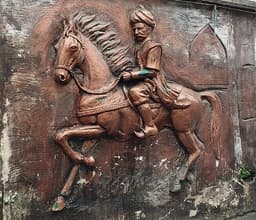
Abbas the Great
Emperor · Modern
74.5Total

Napoleon Bonaparte
General · Modern
70.9Total
Basic Information
Born
1571
1769
Died
1629
1821
Era
Modern
Modern
Nationality
Persia
France
Occupation
Emperor
General
Civilization
Middle Eastern
Western
Score Comparison
Military (10%)
72.0
94.0
Political (20%)
84.0
72.0
Influence (20%)
69.8
40.0
Legacy (20%)
72.0
80.0
Leadership (15%)
73.8
78.0
Strategy (15%)
82.0
90.0
TOTAL
74.5
70.9
Abbas the Great — Complete Timeline
1598 AD
Construction of Isfahan as CapitalCultural
Abbas the Great moved the Safavid capital from Qazvin to Isfahan. He initiated a massive building program, constructing the Naqsh-e Jahan Square, the Shah Mosque, and the Ali Qapu palace. Isfahan was transformed into a grand city with parks, bridges, and bazaars, becoming a center of Persian culture and commerce.
Urban PlanningArchitectureIsfahan
Impact: globalconstructive
1600 AD
Reform of the Army (Ghulam System)Reform◆ Major
Abbas the Great established a new military corps of ghulams (slave soldiers) recruited from Christian subjects in the Caucasus. These troops were trained in modern firearms and artillery, reducing the Safavid reliance on the Qizilbash tribal forces. This reform created a loyal, professional army that strengthened the central government.
Military ReformGhulamsCentralization
Impact: nationalconstructive
1605 AD
Battle of SufiyanWar◆ Major
Abbas the Great led the Safavid army to victory against the Ottoman Empire at Sufiyan near Tabriz. This battle was part of the Ottoman-Safavid War of 1603-1618. The victory allowed Abbas to recapture Tabriz and other territories lost to the Ottomans in earlier wars.
BattleOttoman WarTabriz
Impact: regional
1622 AD
Expulsion of the Portuguese from HormuzWar◆ Major
Abbas the Great allied with the English East India Company to expel the Portuguese from the island of Hormuz in the Persian Gulf. A joint Persian-English force captured the Portuguese fort after a siege. This victory ended Portuguese dominance in the Persian Gulf and opened trade routes for Persian and English merchants.
SiegePortuguesePersian Gulf
Impact: regional
1623 AD
Recapture of BaghdadWar◆ Major
Abbas the Great led a campaign to recapture Baghdad from the Ottoman Empire. The Safavid army besieged the city and forced the Ottoman garrison to surrender. This victory restored Safavid control over Mesopotamia, a region lost since the Battle of Chaldiran in 1514.
SiegeMesopotamiaOttoman War
Impact: regional
Napoleon Bonaparte — Complete Timeline
1799 AD
Coup of 18 BrumaireOther◆ Major
Napoleon Bonaparte, with support from his brother Lucien and key political figures, overthrew the Directory in a bloodless coup. He established the Consulate with himself as First Consul, effectively becoming the ruler of France. This event ended the French Revolution's most unstable period.
French RevolutionCoupRise to Power
Impact: regional
1804 AD
Promulgation of the Napoleonic CodeOther◆ Major
Napoleon enacted the Civil Code of the French, known as the Napoleonic Code, a comprehensive set of laws that replaced the fragmented feudal legal systems. The code established legal equality, protected property rights, and secularized law. It became the basis for legal systems in many European and world countries.
Legal ReformNapoleonic CodeCivil Law
Impact: globalconstructive
1805 AD
Battle of AusterlitzWar◆ Major
Napoleon's Grande Arm
Napoleonic WarsBattleDecisive Victory
Impact: global
1812 AD
Invasion of RussiaWar◆ Major
Napoleon led the Grande Arm
Napoleonic WarsInvasionDisaster
Impact: globaldestructive
1815 AD
Battle of WaterlooWar◆ Major
Napoleon's French army was defeated by the combined forces of the Duke of Wellington's Anglo-Allied army and Gebhard Leberecht von Bl
Napoleonic WarsBattleFinal Defeat
Impact: globaldestructive
Expert Analysis
abbas-the-great-vs-napoleon-bonaparte
# The Eagle and the Peacock: Napoleon and Abbas the Great
On a June morning in 1815, near a small Belgian village called Waterloo, Napoleon Bonaparte watched his imperial guard advance into the maw of British cannons. Two centuries earlier, on the plains of Sufiyan in northwestern Persia, another emperor—Abbas the Great—watched his new army of slave-soldiers shatter the Ottoman janissaries who had long terrorized his realm. Both men were builders of empires, masters of war and reform. Yet one died a prisoner on a remote Atlantic island, his empire scattered like dust; the other died in his splendid capital of Isfahan, his dynasty still secure. What made the difference?
Origins
Napoleon was born in 1769 on Corsica, an island that had just become French. His family was minor nobility, but poor—clinging to status in a society that despised outsiders. He spoke French with an Italian accent, and his schoolmates mocked him. That hunger for acceptance, for proving himself, never left him. He devoured military history, studied artillery, and emerged from the chaos of the French Revolution as a young officer who knew exactly how to seize opportunity.
Abbas the Great came from the opposite pole of power. Born in 1571, he was a prince of the Safavid dynasty, a royal house that ruled Persia by divine right. But his path was not easy. His father, Shah Mohammad Khodabanda, was nearly blind and weak. The Qizilbash tribal chieftains—the very men who had put the Safavids on the throne—ran the country as their private fief. When Abbas ascended the throne in 1588 at age 16, he was a puppet. His mother and the tribal lords made the decisions. He learned early that power was something you took, not something you inherited.
Rise to Power
Napoleon rose through talent and revolution. In 1793, at age 24, he drove the British out of Toulon with a brilliant artillery plan. By 1796 he commanded the Army of Italy, and in a series of lightning campaigns he crushed the Austrians, forcing peace on his own terms. He was not a politician yet—he was a general who made politics irrelevant. Every victory added to his legend, and by 1799, when he returned from Egypt, France was his for the taking. He overthrew the Directory in a coup and became First Consul.
Abbas took a different route. He could not win by war alone—his army was unreliable, his treasury empty. So he played a longer game. He pretended to be weak, let the Qizilbash fight among themselves, and slowly built a parallel power base. In 1598, he moved his capital from Qazvin to Isfahan, a city where he could start fresh, away from the tribal strongholds. He then created a new army—the ghulam system, recruiting Christian slaves from Georgia and Armenia, men who owed everything to him and nothing to the tribes. It was a masterstroke of political patience: he reformed first, then he conquered.
Leadership & Governance
Napoleon governed with the same furious energy he brought to battle. He rewrote French law with the Napoleonic Code, standardizing justice across a continent. He built roads, founded banks, reformed education. But his system depended on him alone. He centralized everything, trusted no one, and promoted men based on merit—but only as long as they obeyed. His military genius was undeniable: at Austerlitz in 1805, he destroyed a combined Russian and Austrian army with a trap so perfect it is still studied in war colleges. His strategy score of 93 reflects that brilliance.
Abbas governed with a lighter touch. He was a builder, not just a conqueror. In Isfahan, he constructed the Naqsh-e Jahan Square, the Shah Mosque, and the grand boulevards that made the city a wonder of the world. He reformed the economy, encouraged trade with the English and Dutch, and secured Persia's borders through diplomacy as much as war. His political score of 84 reflects his understanding that an empire is held together by more than fear. He did not try to destroy the Qizilbash—he simply made them irrelevant.
Triumph & Tragedy
Napoleon's greatest triumph was the Napoleonic Code and the spread of revolutionary ideals across Europe. His greatest tragedy was his inability to stop. He invaded Russia in 1812 with 600,000 men; fewer than 100,000 returned. He refused to compromise, refused to share power, refused to accept that even he could be beaten. At Waterloo, his old magic failed him—his attacks were late, his generals confused, his luck gone.
Abbas's greatest triumph was the recapture of Baghdad from the Ottomans in 1623, a city that had been lost for decades. He also expelled the Portuguese from Hormuz in 1622, opening Persian trade to the world. But his tragedy was quieter. He killed his own sons, blinded others, paranoid that they would betray him as he had betrayed his own family. He died in 1629 with no worthy heir, and within decades the Safavid dynasty began its long decline.
Character & Destiny
Napoleon was a man of infinite ambition and finite patience. He believed he could bend history to his will, and for a time, he did. But he could not bend his own nature. He needed enemies, needed victories, needed the world to recognize his greatness. That hunger consumed him.
Abbas was colder, more calculating. He had learned in childhood that trust was weakness. He could wait years for revenge, decades for a plan to bear fruit. He built his empire not in a single brilliant campaign but in a lifetime of patient construction. Where Napoleon was a storm, Abbas was a river—slow, deep, and unrelenting.
Legacy
Napoleon's legacy is everywhere. The Napoleonic Code still shapes laws in Europe and beyond. His military innovations—the corps system, the use of artillery, the emphasis on speed—defined warfare for a century. He is remembered as both a liberator and a tyrant, a genius and a warning.
Abbas's legacy is more contained but no less profound. He made Isfahan one of the great cities of the world, a jewel of Islamic architecture. He restored Persian power after decades of decline, and his ghulam system created a model of military reform that influenced the Ottoman Empire and beyond. He is remembered as the greatest Safavid, the man who saved Persia.
Conclusion
Two emperors, two paths. Napoleon tried to conquer the world and lost everything. Abbas conquered his own kingdom and kept it. The difference was not talent—both were supremely gifted. It was not opportunity—both seized their moment. It was, perhaps, something simpler: Napoleon wanted to be remembered as the greatest man who ever lived. Abbas wanted to be remembered as the man who made Persia great again. One chased glory; the other built a home. And in the end, homes last longer than thrones.
Rankings
🥇
Abbas the GreatLeader
Mil: 72.0Pol: 84.0Inf: 69.8
74.5
🥈
Napoleon Bonaparte
Mil: 94.0Pol: 72.0Inf: 40.0
70.9
+3.6 behind
How This Comparison Works
Algorithm
Each figure is scored on 6 dimensions (0—100 scale) based on structured historical data: Military (10%), Political (20%), Influence (20%), Legacy (20%), Leadership (15%), Strategy (15%). The weighted total produces the final ranking.
Data Sources
Scores are computed from structured sub-indicators in the database. Scale factors adjust for era (Ancient ×0.85, Modern ×1.0) and civilization size (Eastern ×1.05, Other ×0.80) to account for differences in population and military scale.
Maximum 3 Figures
Comparisons are limited to 2—3 figures to ensure readability and statistical meaningfulness.
Error Margins
±5 points per dimension — Sub-scores are derived from historical records with inherent uncertainty. Two figures within 5 points on a dimension should be considered roughly equivalent in that area.
Total Score Accuracy
±3 points overall — The weighted combination of 6 dimensions produces a total score with approximately ±3 points of uncertainty. Differences of less than 3 points are not statistically significant— the figures are effectively tied.
Known Limitations
- Historical records are incomplete and uneven across civilizations
- Figures from oral-tradition societies may be underrepresented
- Occupation labels can misclassify multi-role figures
- Scores measure capability and impact, not moral character
- Quantitative scoring is a comparison tool, not absolute truth
Capability Radar
Military (10%) — Battles & Warfare
Battles
85
95
Win Rate
80
90
Expansion
85
95
Political (20%) — Governance & Reform
Reform
92
95
Diplomacy
88
80
Economy
90
85
Influence (20%) — Cultural & Global Reach
Cultural
88
85
Global
80
90
Legacy (20%) — Historical Impact
Historical
85
95
Longevity
75
90
Leadership (15%) — Power & Stability
Tenure
85
85
Stability
78
70
Strategy (15%) — Tactics & Innovation
Strategy
88
95
Tactics
82
98
Reform
90
92
Similar Comparisons
Comments & Discussion
No comments yet. Be the first to share your thoughts!