Loading...
Abbas the Great vs George V
Abbas the Great leads by 19.4 pts · 2 figures compared
…
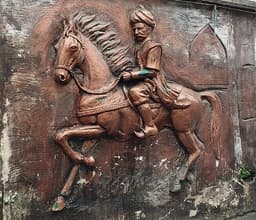
Abbas the Great
Emperor · Modern
74.5Total

George V
Emperor · Modern
55.1Total
Basic Information
Born
1571
1865
Died
1629
1936
Era
Modern
Modern
Nationality
Persia
United Kingdom
Occupation
Emperor
Emperor
Civilization
Middle Eastern
Western
Score Comparison
Military (10%)
72.0
11.2
Political (20%)
84.0
62.7
Influence (20%)
69.8
59.0
Legacy (20%)
72.0
47.5
Leadership (15%)
73.8
80.0
Strategy (15%)
82.0
60.0
TOTAL
74.5
55.1
Abbas the Great — Complete Timeline
1598 AD
Construction of Isfahan as CapitalCultural
Abbas the Great moved the Safavid capital from Qazvin to Isfahan. He initiated a massive building program, constructing the Naqsh-e Jahan Square, the Shah Mosque, and the Ali Qapu palace. Isfahan was transformed into a grand city with parks, bridges, and bazaars, becoming a center of Persian culture and commerce.
Urban PlanningArchitectureIsfahan
Impact: globalconstructive
1600 AD
Reform of the Army (Ghulam System)Reform◆ Major
Abbas the Great established a new military corps of ghulams (slave soldiers) recruited from Christian subjects in the Caucasus. These troops were trained in modern firearms and artillery, reducing the Safavid reliance on the Qizilbash tribal forces. This reform created a loyal, professional army that strengthened the central government.
Military ReformGhulamsCentralization
Impact: nationalconstructive
1605 AD
Battle of SufiyanWar◆ Major
Abbas the Great led the Safavid army to victory against the Ottoman Empire at Sufiyan near Tabriz. This battle was part of the Ottoman-Safavid War of 1603-1618. The victory allowed Abbas to recapture Tabriz and other territories lost to the Ottomans in earlier wars.
BattleOttoman WarTabriz
Impact: regional
1622 AD
Expulsion of the Portuguese from HormuzWar◆ Major
Abbas the Great allied with the English East India Company to expel the Portuguese from the island of Hormuz in the Persian Gulf. A joint Persian-English force captured the Portuguese fort after a siege. This victory ended Portuguese dominance in the Persian Gulf and opened trade routes for Persian and English merchants.
SiegePortuguesePersian Gulf
Impact: regional
1623 AD
Recapture of BaghdadWar◆ Major
Abbas the Great led a campaign to recapture Baghdad from the Ottoman Empire. The Safavid army besieged the city and forced the Ottoman garrison to surrender. This victory restored Safavid control over Mesopotamia, a region lost since the Battle of Chaldiran in 1514.
SiegeMesopotamiaOttoman War
Impact: regional
George V — Complete Timeline
1914 AD
World War IWar
George V reigned as king during World War I. He made numerous visits to troops and hospitals, and his family adopted a more public role. The war led to the fall of three European empires and reshaped global politics.
World War IMonarchyWar Effort
Impact: global
1917 AD
Change of Royal Name to WindsorPolitical Action◆ Major
George V changed the royal family's name from Saxe-Coburg and Gotha to Windsor due to anti-German sentiment during WWI. This decision distanced the monarchy from its German origins and reinforced British identity. The name Windsor remains the royal house today.
Name ChangeWindsorAnti-German Sentiment
Impact: nationalconstructive
1919 AD
Irish War of Independence and PartitionWar◆ Major
George V's reign saw the Irish War of Independence and the partition of Ireland. The Government of Ireland Act 1920 created Northern Ireland and Southern Ireland. The Anglo-Irish Treaty 1921 established the Irish Free State, ending British rule in most of Ireland.
IrelandPartitionIndependence
Impact: regionaldestructive
1931 AD
Statute of Westminster 1931Political Action◆ Major
George V gave royal assent to the Statute of Westminster, which granted legislative independence to the dominions of the British Empire. This act established the British Commonwealth of Nations and recognized the sovereignty of Canada, Australia, New Zealand, South Africa, and others.
Statute of WestminsterCommonwealthDecolonization
Impact: globalconstructive
1936 AD
Death from Lung DiseaseOther◆ Major
George V died of lung disease at Sandringham House at age 70. He was buried in St George's Chapel. His death passed the throne to his son Edward VIII, who abdicated later that year. His reign saw the rise of the Labour Party and the Great Depression.
DeathSuccessionMonarchy
Impact: nationaltragic
Expert Analysis
Origins
Abbas the Great was born on January 27, 1571, in Herat (now in Afghanistan), as the third son of Shah Mohammad Khodabanda. His early life was marked by the chaos of the Safavid court, where his father was a weak ruler dominated by Qizilbash tribal factions. Abbas received a traditional education in Persian culture and Shia Islam, but his formative years were spent witnessing political intrigue and violence, including the murder of his mother by rival factions. This environment forged a cautious and ruthless character.
George V was born on June 3, 1865, in Marlborough House, London, as the second son of Edward VII. He was not expected to inherit the throne, so he pursued a naval career, serving in the Royal Navy from 1877 to 1891. His education was less academic than his elder brother's, focusing on naval discipline. The death of his elder brother Albert Victor in 1892 placed him directly in line for the crown. His background as a naval officer gave him a sense of duty and a preference for order.
Rise to Power
Abbas the Great ascended the throne in October 1588 at age 17, after orchestrating a coup against his ineffective father. His early reign was precarious: the Safavid state was threatened by the Ottomans in the west and the Uzbeks in the east. He consolidated power by eliminating Qizilbash leaders and centralizing authority. A key turning point was his decision to create a new military corps of ghulams (slave soldiers) from the Caucasus, beginning in 1596. This allowed him to bypass tribal loyalties and build a professional army. By 1603, he felt strong enough to launch a campaign against the Ottomans, recapturing Tabriz and later Baghdad (1623).
George V became king on May 6, 1910, following the death of his father Edward VII. His accession came during a period of political tension, including the constitutional crisis over the People's Budget (1909-1911). He played a mediating role, persuading the House of Lords to back down. The outbreak of World War I in 1914 defined his reign. He made numerous visits to troops and hospitals, adopting a more public and symbolic role. His most significant act was changing the royal family's name from Saxe-Coburg and Gotha to Windsor in 1917, to distance the monarchy from anti-German sentiment.
Leadership & Governance
Abbas the Great governed as an absolute monarch, centralizing power through military and administrative reforms. He moved the capital from Qazvin to Isfahan in 1598, transforming it into a world-class city with the Naqsh-e Jahan Square and magnificent palaces. His governance was pragmatic: he allied with the English East India Company to expel the Portuguese from Hormuz in 1622, securing control of the Persian Gulf. He promoted trade and religious tolerance, allowing Christian and Jewish communities to thrive. However, his rule was also marked by paranoia; he blinded or killed his sons to prevent succession challenges.
George V reigned as a constitutional monarch, exercising influence through consultation and symbolic leadership. He gave royal assent to the Statute of Westminster in 1931, which granted legislative independence to the dominions, effectively transforming the British Empire into the Commonwealth. During the Irish War of Independence (1919-1921), he supported the partition of Ireland, leading to the creation of Northern Ireland. His leadership style was reserved and duty-bound; he saw his role as unifying the nation during crises like WWI. He scored 80.0 in leadership, reflecting his ability to maintain stability.
Triumph & Tragedy
Abbas the Great's greatest triumph was the revitalization of the Safavid Empire. He restored Persian prestige, defeated the Ottomans, and made Isfahan a cultural capital. His military reforms scored 72.0, and his strategic acumen scored 82.0. However, his tragedy was the decline after his death: his successors were weak, and the empire fell into dynastic strife. His brutal treatment of his sons left no capable heir. The Safavid state collapsed in 1722, just 93 years after his death.
George V's triumph was navigating the monarchy through World War I and the subsequent social changes. The Windsor name change preserved the dynasty. His tragedy was the failure to prevent the Irish War of Independence and the partition, which left a legacy of conflict. His score of 47.5 in legacy reflects the diminished power of the monarchy. He also faced personal tragedy: his son Edward VIII's later abdication was a blow to the institution.
Character & Destiny
Abbas the Great was shrewd, ruthless, and visionary. His paranoia led him to eliminate potential rivals, but this also ensured his control. His character shaped his destiny: he built a strong state, but his harsh methods sowed the seeds of its decline. Historians note his ability to adapt, as seen in his use of English allies against the Portuguese.
George V was dutiful, conservative, and unassuming. His naval background gave him a sense of order, but he lacked the charisma of his father. His character helped stabilize the monarchy during a period of democratization. He accepted limits on royal power, which allowed the institution to survive. His score of 80.0 in leadership reflects his steady hand.
Legacy
Abbas the Great's legacy is visible in the architecture of Isfahan, which remains a UNESCO World Heritage site. His military and administrative reforms influenced later Persian rulers. He scored 72.0 in legacy, reflecting his enduring impact on Iranian identity. However, his empire did not survive long after him.
George V's legacy is the modern British monarchy. The Windsor name, the Commonwealth, and the constitutional role of the crown were shaped during his reign. He scored 47.5 in legacy, as his influence was more institutional than personal. The monarchy's survival through the 20th century owes much to his steady leadership.
Conclusion
Abbas the Great had a greater impact on history than George V. His total score of 74.5 against George V's 55.1 reflects his transformative role in reshaping Persia and building a lasting cultural legacy. While George V successfully adapted the monarchy to modern times, his influence was limited by constitutional constraints. Abbas, despite his brutality, created a golden age that defined Persian history for centuries. The data supports Abbas as the more consequential figure.
Rankings
🥇
Abbas the GreatLeader
Mil: 72.0Pol: 84.0Inf: 69.8
74.5
🥈
George V
Mil: 11.2Pol: 62.7Inf: 59.0
55.1
+19.4 behind
How This Comparison Works
Algorithm
Each figure is scored on 6 dimensions (0—100 scale) based on structured historical data: Military (10%), Political (20%), Influence (20%), Legacy (20%), Leadership (15%), Strategy (15%). The weighted total produces the final ranking.
Data Sources
Scores are computed from structured sub-indicators in the database. Scale factors adjust for era (Ancient ×0.85, Modern ×1.0) and civilization size (Eastern ×1.05, Other ×0.80) to account for differences in population and military scale.
Maximum 3 Figures
Comparisons are limited to 2—3 figures to ensure readability and statistical meaningfulness.
Error Margins
±5 points per dimension — Sub-scores are derived from historical records with inherent uncertainty. Two figures within 5 points on a dimension should be considered roughly equivalent in that area.
Total Score Accuracy
±3 points overall — The weighted combination of 6 dimensions produces a total score with approximately ±3 points of uncertainty. Differences of less than 3 points are not statistically significant— the figures are effectively tied.
Known Limitations
- Historical records are incomplete and uneven across civilizations
- Figures from oral-tradition societies may be underrepresented
- Occupation labels can misclassify multi-role figures
- Scores measure capability and impact, not moral character
- Quantitative scoring is a comparison tool, not absolute truth
Capability Radar
Military (10%) — Battles & Warfare
Battles
85
35
Win Rate
80
39
Expansion
85
45
Political (20%) — Governance & Reform
Reform
92
55
Diplomacy
88
60
Economy
90
40
Influence (20%) — Cultural & Global Reach
Cultural
88
45
Global
80
50
Legacy (20%) — Historical Impact
Historical
85
55
Longevity
75
40
Leadership (15%) — Power & Stability
Tenure
85
70
Stability
78
65
Strategy (15%) — Tactics & Innovation
Strategy
88
47
Tactics
82
50
Reform
90
49
Similar Comparisons
Comments & Discussion
No comments yet. Be the first to share your thoughts!