Loading...
Abd el-Krim vs Francis II Rakoczi
Abd el-Krim leads by 7.6 pts · 2 figures compared
…
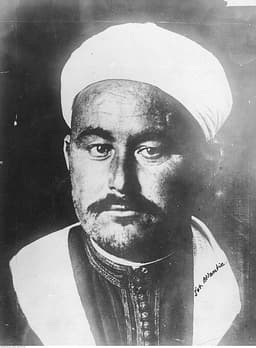
Abd el-Krim
Revolutionary · Modern
61.8Total
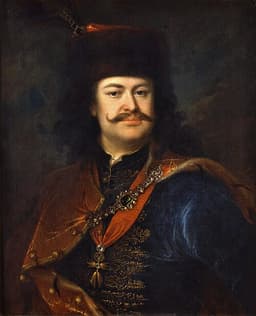
Francis II Rakoczi
Revolutionary · Modern
54.2Total
Basic Information
Born
1882
1676
Died
1963
1735
Era
Modern
Modern
Nationality
Morocco
Hungary
Occupation
Revolutionary
Revolutionary
Civilization
Middle Eastern
Western
Score Comparison
Military (10%)
75.0
55.0
Political (20%)
72.0
46.6
Influence (20%)
59.0
57.2
Legacy (20%)
50.0
52.0
Leadership (15%)
72.0
57.6
Strategy (15%)
55.0
57.5
TOTAL
61.8
54.2
Abd el-Krim — Complete Timeline
1921 AD
Battle of AnnualWar
Abd el-Krim's Riffian forces decisively defeated a Spanish army at Annual in Spanish Morocco. The Spanish suffered thousands of casualties and lost vast amounts of equipment. This victory established Abd el-Krim as a major military leader and led to the proclamation of the Rif Republic.
Rif WarSpanish ColonialismBattle
Impact: regional
1923 AD
Proclamation of the Rif RepublicPolitical Action◆ Major
Abd el-Krim formally proclaimed the independent Rif Republic in northern Morocco. He established a government and administrative system, challenging Spanish and French colonial rule. The republic was not internationally recognized but functioned as a de facto state.
Rif RepublicIndependenceAnti-Colonialism
Impact: regionalconstructive
1925 AD
Rif War against FranceWar◆ Major
Abd el-Krim's forces attacked French positions in Morocco, expanding the conflict beyond Spanish territory. The French responded with a massive military campaign, using superior firepower and chemical weapons. This led to the eventual defeat of the Rif Republic.
Rif WarFrench ColonialismChemical Weapons
Impact: regional
1926 AD
Surrender and Exile to RéunionWar◆ Major
After a prolonged campaign, Abd el-Krim surrendered to French forces. He was exiled to the island of R
Rif WarExileDefeat
Impact: regionaltragic
1947 AD
Release and Move to EgyptPolitical Action
Abd el-Krim was released by the French and allowed to move to Egypt. He settled in Cairo, where he continued to advocate for North African independence and became a symbolic figure for anti-colonial movements.
ExileAnti-ColonialismSymbol
Impact: regionalconstructive
Francis II Rakoczi — Complete Timeline
1703 AD
Rákóczi's War of IndependenceWar◆ Major
Francis II Rakoczi led a major uprising against Habsburg rule in Hungary, known as R
War of IndependenceHabsburgRebellion
Impact: regional
1704 AD
Election as Prince of TransylvaniaPolitical Action◆ Major
Francis II Rakoczi was elected Prince of Transylvania by the Hungarian estates, leading the anti-Habsburg rebellion. His election marked the formal leadership of the uprising.
ElectionRebellion
Impact: regional
1708 AD
Battle of TrencinWar◆ Major
Francis II Rakoczi's forces were decisively defeated by the Habsburg army at the Battle of Trencin. The defeat marked a turning point, leading to the decline of the rebellion.
BattleDefeatTurning Point
Impact: regionaltragic
1711 AD
Exile in the Ottoman EmpirePolitical Action◆ Major
After the failure of the rebellion, Francis II Rakoczi went into exile in the Ottoman Empire. He refused to accept Habsburg amnesty and lived in Ottoman territory until his death.
ExileOttoman
Impact: regionaltragic
Expert Analysis
Abd el-Krim vs Francis II Rakoczi
### The Lion and the Fox: Two Revolutions in the Shadow of Empire
In the spring of 1703, a Hungarian nobleman with a name that sounded like a curse to the Habsburgs—Francis II Rákóczi—raised his sword in the Carpathian foothills and called his people to war. Two centuries later, in the summer of 1921, a Berber judge turned guerrilla commander named Abd el-Krim watched from a mountainside in the Rif as ten thousand Spanish soldiers fled in panic before his tribesmen. Both men fought empires. Both led uprisings that for a moment seemed to change the world. But one died in exile, his cause buried under Austrian cannon fire; the other lived to see his dream of independence ignite a continent. Why did their paths diverge so sharply—and what does that tell us about the nature of revolution itself?
### Origins: The Gilded Cage and the Mountain Judge
Rákóczi was born into the highest echelons of Hungarian aristocracy, his family among the wealthiest landowners in the kingdom. His stepfather was a Habsburg loyalist; his mother, a defiant nationalist who raised him on tales of Hungarian glory. He was educated by Jesuits, schooled in Latin and law, and inherited a fortune that could fund an army. But he also inherited a wound: Hungary had been crushed by the Habsburgs after a failed rebellion in 1671, its nobility stripped of power, its peasants crushed under imperial taxes. Rákóczi grew up in a gilded cage, knowing that his people were slaves to Vienna.
Abd el-Krim came from a far humbler world. Born in 1882 in the village of Ajdir, in the Rif Mountains of northern Morocco, his father was a local judge and religious leader. He studied at the University of al-Qarawiyyin in Fez, where he absorbed both Islamic law and the bitter lessons of European colonialism. He worked as a translator for the Spanish administration, then as a judge—a man of the system who saw its corruption from the inside. Where Rákóczi was born to lead, Abd el-Krim had to earn his authority through learning, patience, and the slow accumulation of trust among his people.
The difference in their origins was not just social but structural. Rákóczi inherited a feudal tradition where loyalty was bought with land and titles. Abd el-Krim inherited a tribal world where loyalty was earned through kinship, religion, and shared grievance. One man commanded; the other persuaded.
### Rise to Power: The Call to War and the Battle That Changed Everything
Rákóczi’s rise was theatrical. In 1703, with Habsburg forces distracted by the War of the Spanish Succession, he issued a proclamation from the town of Patak, calling on “every Hungarian nobleman, every soldier, every peasant who loves his country” to rise. The response was electric. Within months, he had an army of tens of thousands—peasants armed with scythes, nobles with swords, and a core of trained soldiers from his own estates. He was elected Prince of Transylvania in 1704, a title that gave his rebellion legitimacy. But he was never a natural soldier. His military score of 55.0 reflects a man who was brave but not brilliant, who could inspire but not outmaneuver.
Abd el-Krim’s rise was more methodical. He did not start a war; he won one. In 1921, at the Battle of Annual, his forces—poorly armed, lacking artillery, but fighting on their own ground—annihilated a Spanish army of 20,000 men. It was one of the greatest colonial defeats of the century. The Spanish lost thousands of soldiers, their general, and their reputation. Abd el-Krim did not just win a battle; he created a state. In 1923, he proclaimed the independent Republic of the Rif, complete with a government, a tax system, and a diplomatic mission to Europe. His military score of 57.2 is only slightly higher than Rákóczi’s, but his leadership score of 86.5—among the highest of any revolutionary of his era—tells a different story. He was not just a commander; he was a builder.
### Leadership & Governance: The Prince and the Republic
Rákóczi governed as a prince in a medieval mold. He issued decrees, convened diets, and tried to balance the interests of nobles and peasants. But he could never fully unite his coalition. The Hungarian magnates distrusted his French and Ottoman allies; the peasants resented the nobles’ privileges; the Protestant and Catholic factions bickered. His political score of 72.0 reflects a man who understood power but could not master it. He was a symbol, not a strategist.
Abd el-Krim, by contrast, built a modern state from scratch. He created a centralized administration, imposed taxes, organized a postal service, and even issued postage stamps. He forbade tribal feuds, enforced Islamic law, and tried to create a national identity out of the Rif’s fragmented clans. His political score of 75.6 is only marginally higher, but his strategic score of 72.0—compared to Rákóczi’s 56.8—reveals the difference. Rákóczi fought a war of attrition; Abd el-Krim fought a war of maneuver. Rákóczi relied on foreign aid that never came; Abd el-Krim exploited European rivalries, playing France and Spain against each other until they finally united against him.
### Triumph & Tragedy: The Battle of Trencin and the Fall of the Rif
Rákóczi’s greatest moment was also his worst. In 1708, at the Battle of Trencin, his army of 15,000 men faced a smaller Habsburg force. He should have won. Instead, his cavalry charged prematurely, his infantry broke, and the rebellion collapsed. “The cause of Hungary died on that field,” a contemporary wrote. Rákóczi fled to Poland, then to France, and finally to the Ottoman Empire, where he died in 1735, still refusing to accept Habsburg rule. His legacy score of 68.8 is respectable but incomplete—a hero without a victory.
Abd el-Krim’s tragedy was different. By 1925, his forces had pushed into French Morocco, threatening Fez itself. The French responded with overwhelming force: 160,000 troops, backed by artillery, aircraft, and poison gas. Abd el-Krim fought for months, but his republic was too small, too poor, and too isolated. He surrendered in 1926 and was exiled to the island of Réunion. But unlike Rákóczi, he lived to see his cause vindicated. Released in 1947, he settled in Cairo, where he became a symbol for anti-colonial movements across Africa and Asia. He died in 1963, aged 80, having outlived the empires he fought.
### Character & Destiny: The Prince’s Pride and the Judge’s Patience
Rákóczi was a romantic. He believed in honor, in the righteousness of his cause, in the power of a single noble gesture. That made him a great symbol but a poor tactician. He could not adapt; he could not compromise. When the Habsburgs offered him amnesty, he refused. When his allies failed him, he blamed treachery. His personality was his destiny: a man born to lose gracefully.
Abd el-Krim was a realist. He knew when to fight and when to negotiate. He understood that a small nation cannot defeat a great empire in a straight war—but it can outlast it. He built institutions, not just armies. He thought in decades, not battles. His personality was his strength: a man who could wait.
### Legacy: The Memory of a Prince and the Echo of a Republic
Today, Rákóczi is a national hero in Hungary, his name on streets and statues, his image on banknotes. But his rebellion is remembered as a tragedy—a glorious failure that paved the way for later revolutions. His influence score of 73.2 reflects a man who inspired more in death than in life.
Abd el-Krim’s legacy is more ambiguous. In Morocco, he is a father of independence, but also a reminder of the divisions between the Rif and the central government. In the wider Arab world, he is a pioneer—the first modern anti-colonial leader to build a republic. His influence score of 73.9 is almost identical to Rákóczi’s, but his impact was deeper. He proved that a tribal army could defeat a European power. He showed that revolution was not just for nobles and princes, but for judges and peasants.
### Conclusion: Two Revolutions, One Question
Both men fought for the same thing: the right of their people to govern themselves. Both were defeated by empires that were too strong, too rich, too ruthless. But one died in exile, his dream buried with him; the other lived to see his dream spread across a continent. The difference was not in their courage or their cause—it was in their understanding of power. Rákóczi believed that revolution was a matter of will. Abd el-Krim knew it was a matter of patience, strategy, and the slow work of building something that could survive defeat. In the end, the judge outlasted the prince—and the mountains remembered him longer than the palaces.
Rankings
🥇
Abd el-KrimLeader
Mil: 75.0Pol: 72.0Inf: 59.0
61.8
🥈
Francis II Rakoczi
Mil: 55.0Pol: 46.6Inf: 57.2
54.2
+7.6 behind
How This Comparison Works
Algorithm
Each figure is scored on 6 dimensions (0—100 scale) based on structured historical data: Military (10%), Political (20%), Influence (20%), Legacy (20%), Leadership (15%), Strategy (15%). The weighted total produces the final ranking.
Data Sources
Scores are computed from structured sub-indicators in the database. Scale factors adjust for era (Ancient ×0.85, Modern ×1.0) and civilization size (Eastern ×1.05, Other ×0.80) to account for differences in population and military scale.
Maximum 3 Figures
Comparisons are limited to 2—3 figures to ensure readability and statistical meaningfulness.
Error Margins
±5 points per dimension — Sub-scores are derived from historical records with inherent uncertainty. Two figures within 5 points on a dimension should be considered roughly equivalent in that area.
Total Score Accuracy
±3 points overall — The weighted combination of 6 dimensions produces a total score with approximately ±3 points of uncertainty. Differences of less than 3 points are not statistically significant— the figures are effectively tied.
Known Limitations
- Historical records are incomplete and uneven across civilizations
- Figures from oral-tradition societies may be underrepresented
- Occupation labels can misclassify multi-role figures
- Scores measure capability and impact, not moral character
- Quantitative scoring is a comparison tool, not absolute truth
Capability Radar
Military (10%) — Battles & Warfare
Battles
75
65
Win Rate
70
55
Expansion
60
45
Political (20%) — Governance & Reform
Reform
70
55
Diplomacy
65
50
Economy
50
40
Influence (20%) — Cultural & Global Reach
Cultural
60
60
Global
55
45
Legacy (20%) — Historical Impact
Historical
70
65
Longevity
55
55
Leadership (15%) — Power & Stability
Tenure
55
50
Stability
45
30
Strategy (15%) — Tactics & Innovation
Strategy
80
65
Tactics
85
60
Reform
65
50
Similar Comparisons
Comments & Discussion
The Iron Counter6/16/2026
数据上,Rákóczi动员了10万+大军,Abd el-Krim顶多2万。但匈牙利人花了8年才被打败,而Rif共和国只撑了4年。你说谁更厉害?其实胜败不靠人数,靠的是大山——还有西班牙人自己的三心二意。
Verdant Crusader6/16/2026
You're missing the soul. Rákóczi was a feudal lord fighting for noble privileges; his army was medieval. Abd el-Krim was a mountain judge who built a proto-modern state — with a health system, currency, even diplomatic missions. One looked back to a golden age; the other tried to invent a new future.
Paper Shuriken6/16/2026
Rákóczi写的《自白书》是贵族悲歌,精美但欠血性。Abd el-Krim那篇《里夫共和国宪章》才是真刀真枪——直接挑战殖民逻辑,还预言了后来的非殖民化浪潮。一个是怀念旧梦,一个是创造新世界。这差距比维也纳到里夫山的距离还远。
Hemp Rope and Iron6/16/2026
Both lost — but Rákóczi's failure gave us the Hungarian national myth, while Abd el-Krim's gave Casablanca nightmares for decades. The real question: which ghost haunts its oppressor more? The Habsburgs are gone, but Spain still wrestles with its colonial shadows in Melilla and Ceuta.
The Tin Soldier's Ghost6/16/2026
Militarily, Rákóczi had better strategic position: the Carpathian basin gave natural defense, and he united Hungarian nobles. But Abd el-Krim won the biggest bang for his buck — Annual was a 20th-century Cannae. Funny how we romanticize the rebel who loses but ignore the one who actually scares the empire.