Loading...
Abdel Fattah al-Burhan vs Julius Caesar
Julius Caesar leads by 40.3 pts · 2 figures compared
…
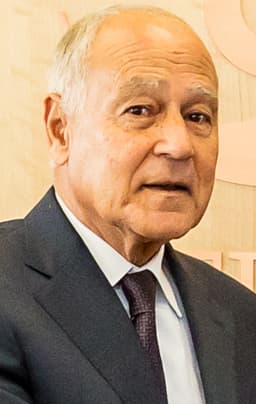
Abdel Fattah al-Burhan
General · Modern
42.5Total

Julius Caesar
General · Ancient
82.8Total
Basic Information
Born
1960
-100
Died
—
-44
Era
Modern
Ancient
Nationality
Sudan
Roman Republic
Occupation
General
General
Civilization
Other
Western
Score Comparison
Military (10%)
50.0
88.0
Political (20%)
32.2
78.0
Influence (20%)
49.4
85.0
Legacy (20%)
37.5
82.0
Leadership (15%)
43.8
80.0
Strategy (15%)
43.7
85.0
TOTAL
42.5
82.8
Abdel Fattah al-Burhan — Complete Timeline
2019 AD
Became Chairman of the Sovereignty CouncilPolitical Action◆ Major
Abdel Fattah al-Burhan became Chairman of the Sovereignty Council, Sudan's collective head of state, after the ouster of Omar al-Bashir. He led the transitional military council that shared power with civilian forces.
TransitionMilitary RuleSudan
Impact: national
2020 AD
Signed the Juba Peace AgreementPolitical Action◆ Major
Al-Burhan signed the Juba Peace Agreement with several armed rebel groups, aiming to end conflicts in Darfur, South Kordofan, and Blue Nile. The agreement was a key step in Sudan's transition but faced implementation challenges.
Peace AgreementCivil WarSudan
Impact: nationalconstructive
2021 AD
Led the 2021 CoupPolitical Action◆ Major
Al-Burhan led a military coup in October 2021, dissolving the civilian-led government and declaring a state of emergency. The coup derailed Sudan's democratic transition and sparked widespread protests.
CoupDemocracySudan
Impact: nationaldestructive
Julius Caesar — Complete Timeline
58 BC
Gallic WarsWar◆ Major
Caesar, as proconsul of Gaul, launched a series of campaigns that conquered all of Gaul (modern France, Belgium, and parts of Switzerland). He fought numerous battles, including against the Helvetii, the Belgae, and the Gallic chieftain Vercingetorix. The wars brought immense wealth and a loyal army to Caesar.
Gallic WarsConquestRoman Expansion
Impact: regional
49 BC
Crossing the RubiconPolitical Action◆ Major
Caesar led Legio XIII across the Rubicon River into Italy, defying the Roman Senate's order to disband his army. This act triggered a civil war against Pompey and the Optimates, ultimately leading to Caesar's dictatorship and the end of the Roman Republic.
Roman Civil WarEnd of RepublicPower Struggle
Impact: global
48 BC
Battle of PharsalusWar◆ Major
Caesar's outnumbered army defeated the larger forces of Pompey the Great at Pharsalus in Greece. Caesar's tactical use of a reserve line to counter Pompey's cavalry charge proved decisive. Pompey fled to Egypt, where he was assassinated, leaving Caesar as the undisputed master of the Roman world.
Roman Civil WarBattleDecisive Victory
Impact: regional
44 BC
Appointment as Dictator for LifePolitical Action◆ Major
The Roman Senate appointed Caesar dictator perpetuo (dictator for life), granting him unprecedented personal power. This move concentrated military, legislative, and judicial authority in one person, effectively ending the Roman Republic's traditional system of checks and balances and alarming many senators.
DictatorshipEnd of RepublicPower Consolidation
Impact: regionaldestructive
Assassination on the Ides of MarchPolitical Action◆ Major
A group of Roman senators, led by Marcus Junius Brutus and Gaius Cassius Longinus, stabbed Caesar to death at a meeting of the Senate in the Theatre of Pompey. The assassination was intended to restore the Republic, but instead triggered another civil war that led to the rise of the Roman Empire.
AssassinationRoman PoliticsEnd of Republic
Impact: globaldestructive
Expert Analysis
abdel-fattah-al-burhan-vs-julius-caesar
**The Crossing and the Coup**
On a winter day in 49 BCE, a Roman general paused at a shallow river in northern Italy. The Rubicon was a boundary—not just of geography, but of law. To cross it with an army was treason. Yet Julius Caesar, staring at the water, made his choice. "The die is cast," he reportedly said, and he led his legions into history.
Two thousand years later, in the summer of 2019, another general stood at a different kind of Rubicon. Abdel Fattah al-Burhan, a Sudanese officer in his late fifties, had just become chairman of a transitional council after the fall of Omar al-Bashir. The crowds in Khartoum were euphoric, believing the military would hand power to civilians. Al-Burhan smiled for the cameras. But the die, as it turned out, had not yet been cast.
Both men were generals who seized political power in moments of crisis. Both promised order, reform, and a new beginning. But their paths—and their endings—could not be more different. Why did Caesar become a legend, while al-Burhan remains a footnote? The answer lies not just in their choices, but in the worlds that shaped them.
**Origins**
Julius Caesar was born into the chaos of the late Roman Republic, a world of aristocratic rivalries, street violence, and crumbling institutions. His family, the Julii, was ancient but not wealthy. From childhood, he learned that in Rome, survival meant alliances, debts, and a relentless hunger for glory. He was a nephew by marriage to the populist general Marius, and an enemy of the conservative Sulla—a feud that nearly cost him his life. This crucible forged a man who understood that power was personal, and that the Republic's old rules were already dead.
Abdel Fattah al-Burhan was born in 1960 in Sudan, a vast, fractured country emerging from British-Egyptian colonialism. He grew up in a nation where the military was not just an institution but a family business—successive coups had made generals the default rulers. Al-Burhan joined the army young, rose through the ranks, and served in the brutal wars of South Sudan and Darfur. Unlike Caesar, he did not inherit a legacy of reform or ambition. He inherited a system where the gun was the only stable currency.
**Rise to Power**
Caesar's ascent was a masterpiece of calculated risk. He climbed the political ladder through military command in Spain, then formed the First Triumvirate with Pompey and Crassus. His conquest of Gaul (58–50 BCE) was not just a war—it was a personal empire. He wrote his own commentaries, controlled his own narrative, and built an army loyal to him, not Rome. When the Senate ordered him to disband, he crossed the Rubicon instead. In four years, he defeated his rivals, became dictator, and began remaking the state.
Al-Burhan's rise was quieter, more bureaucratic. He served under Bashir for decades, commanding forces in Darfur during the genocide. When mass protests erupted in 2018–2019, he did not lead the revolution—he surfed it. After Bashir's fall, al-Burhan was appointed chairman of the Sovereignty Council, a hybrid military-civilian body. His key event in 2019 was not a dramatic crossing, but a handshake. He promised elections. He promised peace. Then, in October 2021, he led a coup, dissolving the civilian government and arresting the prime minister.
**Leadership & Governance**
Caesar governed with audacity and speed. He reformed the calendar, granted citizenship to provincials, redistributed land to veterans, and centralized tax collection. His military genius was inseparable from his political vision—he knew that an empire needed roads, laws, and a common identity. But he also knew that reform required absolute control. He accepted the title "dictator for life," and began minting coins with his own image. He was not a democrat; he was a monarch in all but name.
Al-Burhan governed with caution and contradiction. He signed the Juba Peace Agreement in 2020, bringing some rebel groups into the fold. He allowed limited civilian participation. But he also crushed protests, detained journalists, and maintained the same security apparatus that had sustained Bashir. His military score of 33.5 reflects a general who never won a decisive war—only managed a failing state. His political score of 49.2 shows a leader who could not choose between reform and repression.
**Triumph & Tragedy**
Caesar's greatest moment was his triumph over Gaul—a conquest that brought Rome wealth, slaves, and a legend. His tragedy was the Ides of March, 44 BCE, when senators stabbed him to death in the Senate chamber. He died at 55, at the height of his power, leaving behind a civil war and an adopted heir, Octavian, who would become Augustus. Caesar's tragedy was that he could not stop the machine he had built.
Al-Burhan's greatest moment was perhaps the Juba Peace Agreement, a rare diplomatic success in a country ravaged by war. His tragedy is ongoing: Sudan slides deeper into civil conflict, with the Rapid Support Forces battling the army, and millions displaced. Al-Burhan, now in his sixties, remains in power but presides over a shattered nation. His legacy score of 48.9 suggests a man who will be remembered, if at all, as a caretaker who failed to care.
**Character & Destiny**
Caesar was driven by an insatiable ambition, but also by a cold clarity. He understood that the Republic was dying, and he chose to be the surgeon rather than the patient. His arrogance—his refusal to restore the old forms—cost him his life. Yet his character was also generous: he pardoned enemies, promoted talent, and built coalitions. He was a man who believed he could remake the world, and nearly did.
Al-Burhan is a product of a different kind of ambition—not to create, but to survive. He navigated Bashir's fall, the protests, the coup, and the war without a clear ideology. His strategy score of 66.0 suggests tactical skill, but his leadership score of 42.3 reveals a man who inspires no loyalty beyond the chain of command. He is a general of the system, not a revolutionary of the soul.
**Legacy**
Caesar's legacy is the Roman Empire itself. His name became a title—Kaiser, Tsar—and his reforms shaped Western law, language, and governance for two millennia. He is studied, debated, and dramatized. His total score of 83.3 places him among history's titans.
Al-Burhan's legacy is a question mark. He will likely be remembered as a transitional figure in a failed transition—a man who had a chance to steer Sudan toward democracy and chose instead to hold the wheel until the car crashed. His total score of 52.2 is a verdict: not evil, not great, just forgettable.
**Conclusion**
What separates Caesar from al-Burhan is not just time or place, but the scale of their imagination. Caesar saw a crumbling Republic and envisioned an empire that would outlast him. Al-Burhan saw a crumbling state and envisioned only his own survival. One crossed a river and changed the world. The other crossed a line and changed nothing. The die is always cast—but only some hands are bold enough to throw it.
Rankings
🥇
Julius CaesarLeader
Mil: 88.0Pol: 78.0Inf: 85.0
82.8
🥈
Abdel Fattah al-Burhan
Mil: 50.0Pol: 32.2Inf: 49.4
42.5
+40.3 behind
How This Comparison Works
Algorithm
Each figure is scored on 6 dimensions (0—100 scale) based on structured historical data: Military (10%), Political (20%), Influence (20%), Legacy (20%), Leadership (15%), Strategy (15%). The weighted total produces the final ranking.
Data Sources
Scores are computed from structured sub-indicators in the database. Scale factors adjust for era (Ancient ×0.85, Modern ×1.0) and civilization size (Eastern ×1.05, Other ×0.80) to account for differences in population and military scale.
Maximum 3 Figures
Comparisons are limited to 2—3 figures to ensure readability and statistical meaningfulness.
Error Margins
±5 points per dimension — Sub-scores are derived from historical records with inherent uncertainty. Two figures within 5 points on a dimension should be considered roughly equivalent in that area.
Total Score Accuracy
±3 points overall — The weighted combination of 6 dimensions produces a total score with approximately ±3 points of uncertainty. Differences of less than 3 points are not statistically significant— the figures are effectively tied.
Known Limitations
- Historical records are incomplete and uneven across civilizations
- Figures from oral-tradition societies may be underrepresented
- Occupation labels can misclassify multi-role figures
- Scores measure capability and impact, not moral character
- Quantitative scoring is a comparison tool, not absolute truth
Capability Radar
Military (10%) — Battles & Warfare
Battles
15
95
Win Rate
10
92
Expansion
10
97
Political (20%) — Governance & Reform
Reform
15
90
Diplomacy
25
85
Economy
10
82
Influence (20%) — Cultural & Global Reach
Cultural
10
88
Global
15
94
Legacy (20%) — Historical Impact
Historical
15
95
Longevity
10
96
Leadership (15%) — Power & Stability
Tenure
30
75
Stability
10
60
Strategy (15%) — Tactics & Innovation
Strategy
20
94
Tactics
20
96
Reform
15
88
Similar Comparisons
Comments & Discussion
RubiconReaper6/17/2026
Caesar's crossing was a calculated violation of Roman law, a masterstroke of political theater that erased the line between general and statesman. Al-Burhan's coup, by contrast, was a bureaucratic shuffle—same regime, new face. The Rubicon was a river; Sudan's crisis is an ocean, and he barely dipped a toe. Caesar forged an empire; al-Burhan just kept the lights on. History remembers those who burn bridges, not those who guard them.
数据铁骑6/17/2026
拿凯撒和布尔汉比?简直是拿战车跟手推车赛跑。凯撒跨过卢比孔河时,元老院还在吵官僚腐败,他直接掀了桌子重建秩序。布尔汉呢?2019年他接管过渡委员会,说的比唱的好听,结果两年后搞政变推翻了民选政府,现在苏丹还在内战里打滚。数据不会撒谎:凯撒的政变缩短了内战,布尔汉的政变延长了灾难——这叫历史倒退。
CohorsAntiCaesar6/17/2026
You're romanticizing a dictator. Caesar's "legend" was built on genocide in Gaul (1 million dead, according to Plutarch), debt forgiveness to buy popularity, and a cult of personality that destroyed the Republic. Al-Burhan, for all his flaws, didn't plunge Sudan into perpetual civil war like Caesar did to Rome. Let's not confuse propaganda with history. The die was cast, sure—but it hit a lot of innocent people on the way down.
史学暗流6/17/2026
有意思的对比,但忽略了一个关键细节:凯撒跨过卢比孔河时,罗马已经是个帝国骨架,元老院名存实亡。而他布尔汉呢?苏丹2019年的革命本来是要终结军政府传统,他却把军队牢牢焊在权力上。凯撒至少加速了一个旧世界的死亡;布尔汉只是给旧世界的棺材钉上新钉子——本质一样,但历史评价截然不同,因为凯撒的剧本比布尔汉的政变更会讲故事。