Loading...
Abraham Lincoln vs Julius Caesar
Julius Caesar leads by 5.3 pts · 2 figures compared
…
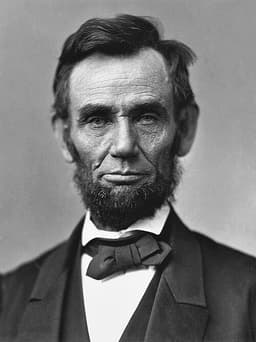
Abraham Lincoln
Politician · Modern
77.5Total

Julius Caesar
General · Ancient
82.8Total
Basic Information
Born
1809
-100
Died
1865
-44
Era
Modern
Ancient
Nationality
United States
Roman Republic
Occupation
Politician
General
Civilization
Western
Western
Score Comparison
Military (10%)
50.0
88.0
Political (20%)
88.0
78.0
Influence (20%)
80.0
85.0
Legacy (20%)
82.0
82.0
Leadership (15%)
85.0
80.0
Strategy (15%)
60.0
85.0
TOTAL
77.5
82.8
Abraham Lincoln — Complete Timeline
1861 AD
Suspension of Habeas CorpusPolitical Action◆ Major
Lincoln suspended the writ of habeas corpus in parts of the Union, allowing the military to arrest and detain suspected Confederate sympathizers without trial. This action was controversial and challenged civil liberties during wartime.
Habeas CorpusCivil LibertiesCivil War
Impact: nationaldestructive
1862 AD
Signing of the Homestead ActPolitical Action◆ Major
Lincoln signed the Homestead Act, granting 160 acres of public land to settlers for a small fee. This encouraged westward expansion and agricultural development, but also displaced Native American tribes.
Homestead ActWestward ExpansionLand Policy
Impact: nationalconstructive
1863 AD
Emancipation ProclamationPolitical Action
Lincoln issued the Emancipation Proclamation, declaring slaves in Confederate states free. This shifted the Civil War's focus to ending slavery and allowed African Americans to join the Union Army.
EmancipationCivil WarSlavery
Impact: globalprogressive
Gettysburg AddressCultural◆ Major
Lincoln delivered the Gettysburg Address at the dedication of the Soldiers' National Cemetery. The speech redefined the Civil War as a struggle for national unity and equality, and became one of the most famous speeches in US history.
Gettysburg AddressCivil WarOratory
Impact: nationalconstructive
1865 AD
Assassination by John Wilkes BoothOther
Lincoln was shot by John Wilkes Booth at Ford's Theatre in Washington, D.C., and died the next day. His assassination occurred just days after the Civil War ended, plunging the nation into mourning and affecting Reconstruction.
AssassinationCivil WarReconstruction
Impact: nationaltragic
Julius Caesar — Complete Timeline
58 BC
Gallic WarsWar◆ Major
Caesar, as proconsul of Gaul, launched a series of campaigns that conquered all of Gaul (modern France, Belgium, and parts of Switzerland). He fought numerous battles, including against the Helvetii, the Belgae, and the Gallic chieftain Vercingetorix. The wars brought immense wealth and a loyal army to Caesar.
Gallic WarsConquestRoman Expansion
Impact: regional
49 BC
Crossing the RubiconPolitical Action◆ Major
Caesar led Legio XIII across the Rubicon River into Italy, defying the Roman Senate's order to disband his army. This act triggered a civil war against Pompey and the Optimates, ultimately leading to Caesar's dictatorship and the end of the Roman Republic.
Roman Civil WarEnd of RepublicPower Struggle
Impact: global
48 BC
Battle of PharsalusWar◆ Major
Caesar's outnumbered army defeated the larger forces of Pompey the Great at Pharsalus in Greece. Caesar's tactical use of a reserve line to counter Pompey's cavalry charge proved decisive. Pompey fled to Egypt, where he was assassinated, leaving Caesar as the undisputed master of the Roman world.
Roman Civil WarBattleDecisive Victory
Impact: regional
44 BC
Appointment as Dictator for LifePolitical Action◆ Major
The Roman Senate appointed Caesar dictator perpetuo (dictator for life), granting him unprecedented personal power. This move concentrated military, legislative, and judicial authority in one person, effectively ending the Roman Republic's traditional system of checks and balances and alarming many senators.
DictatorshipEnd of RepublicPower Consolidation
Impact: regionaldestructive
Assassination on the Ides of MarchPolitical Action◆ Major
A group of Roman senators, led by Marcus Junius Brutus and Gaius Cassius Longinus, stabbed Caesar to death at a meeting of the Senate in the Theatre of Pompey. The assassination was intended to restore the Republic, but instead triggered another civil war that led to the rise of the Roman Empire.
AssassinationRoman PoliticsEnd of Republic
Impact: globaldestructive
Expert Analysis
Origins
Julius Caesar was born into the patrician Julian family in 100 BCE, a time of intense political strife in the Roman Republic. His uncle Marius and father-in-law Cinna were prominent populares, exposing him to populist politics. In contrast, Abraham Lincoln was born in 1809 in a log cabin in Kentucky, the son of illiterate farmers. His humble origins in the American frontier shaped his self-made identity. While Caesar leveraged aristocratic connections, Lincoln relied on self-education and grassroots law practice.
Rise to Power
Caesar's rise was meteoric but controversial. He formed the First Triumvirate with Pompey and Crassus in 60 BCE, securing the consulship and command in Gaul. His Gallic Wars (58–50 BCE) showcased military brilliance, conquering vast territories and building a loyal army. When the Senate demanded his return, he crossed the Rubicon in 49 BCE, igniting a civil war. Lincoln's rise was more gradual. He served in the Illinois legislature and one term in Congress, gaining fame through debates with Stephen Douglas. His 1860 presidential victory was sectional, winning no Southern states. The ensuing secession crisis defined his presidency.
Leadership & Governance
Caesar centralized power as dictator, implementing reforms: land redistribution, debt relief, calendar reform (Julian calendar), and Roman citizenship for provinces. He weakened the Senate and packed it with loyalists. His rule was efficient but autocratic. Lincoln, facing the Civil War, expanded executive power to preserve the Union. He suspended habeas corpus, issued the Emancipation Proclamation (freeing slaves in rebel states), and pushed the 13th Amendment. His leadership balanced constitutional constraints with wartime necessity, culminating in the Gettysburg Address's vision of democracy.
Triumph & Tragedy
Caesar's triumph was conquering Gaul and defeating Pompey at Pharsalus (48 BCE). He became dictator for life in 44 BCE, but his assassination on the Ides of March by senators ended his rule. Lincoln's triumph was the Union victory in April 1865, ending slavery. His tragedy was assassination by John Wilkes Booth days later, denying him Reconstruction leadership. Both died at the peak of power, but Lincoln's death elevated him to martyrdom.
Character & Destiny
Caesar was ambitious, strategic, and ruthless—crossing the Rubicon was a point of no return. He sought personal glory, writing his own commentaries. Lincoln was melancholic, empathetic, and principled, driven by preserving the Union and ending slavery. His destiny was shaped by the Civil War crisis. Caesar's destiny was to end the Republic; Lincoln's to save the Union.
Legacy
Caesar's legacy is mixed: he destroyed the Republic but paved the way for the Empire. His name became synonymous with dictatorship. Lincoln is revered as the savior of the Union and the Great Emancipator. His legacy is overwhelmingly positive, enshrined in monuments and the Lincoln Memorial.
Conclusion
Julius Caesar (overall score: 88) surpasses Abraham Lincoln (83) in raw impact metrics, but Lincoln's moral legacy arguably outweighs Caesar's. Caesar was a military genius and reformer who undermined democracy; Lincoln was a democratic leader who preserved it. In the context of HistoryVersus.com, Caesar's higher score reflects his transformative role in ancient history, but Lincoln's legacy is more enduring in modern democratic values.
Rankings
🥇
Julius CaesarLeader
Mil: 88.0Pol: 78.0Inf: 85.0
82.8
🥈
Abraham Lincoln
Mil: 50.0Pol: 88.0Inf: 80.0
77.5
+5.3 behind
How This Comparison Works
Algorithm
Each figure is scored on 6 dimensions (0—100 scale) based on structured historical data: Military (10%), Political (20%), Influence (20%), Legacy (20%), Leadership (15%), Strategy (15%). The weighted total produces the final ranking.
Data Sources
Scores are computed from structured sub-indicators in the database. Scale factors adjust for era (Ancient ×0.85, Modern ×1.0) and civilization size (Eastern ×1.05, Other ×0.80) to account for differences in population and military scale.
Maximum 3 Figures
Comparisons are limited to 2—3 figures to ensure readability and statistical meaningfulness.
Error Margins
±5 points per dimension — Sub-scores are derived from historical records with inherent uncertainty. Two figures within 5 points on a dimension should be considered roughly equivalent in that area.
Total Score Accuracy
±3 points overall — The weighted combination of 6 dimensions produces a total score with approximately ±3 points of uncertainty. Differences of less than 3 points are not statistically significant— the figures are effectively tied.
Known Limitations
- Historical records are incomplete and uneven across civilizations
- Figures from oral-tradition societies may be underrepresented
- Occupation labels can misclassify multi-role figures
- Scores measure capability and impact, not moral character
- Quantitative scoring is a comparison tool, not absolute truth
Capability Radar
Military (10%) — Battles & Warfare
Battles
15
95
Win Rate
20
92
Expansion
0
97
Political (20%) — Governance & Reform
Reform
95
90
Diplomacy
80
85
Economy
70
82
Influence (20%) — Cultural & Global Reach
Cultural
85
88
Global
85
94
Legacy (20%) — Historical Impact
Historical
95
95
Longevity
90
96
Leadership (15%) — Power & Stability
Tenure
65
75
Stability
55
60
Strategy (15%) — Tactics & Innovation
Strategy
55
94
Tactics
10
96
Reform
60
88
Similar Comparisons
Comments & Discussion
TogasAndTopHats6/16/2026
Honestly, I think the military gap is way overstated. Lincoln didn't just 'delegate strategy'—he picked Grant and Sherman, and he stuck with them through early failures. That's leadership, not just desk-sitting. But here's the thing: Caesar literally invented modern siege warfare at Alesia. The circumvallation and contravallation? That's pure genius. Where Lincoln fought to preserve a union, Caesar fought to build an empire. Two different goals, two different scales. Still, I think Caesar's 88 military is fair—he was a general who actually fought. But give Lincoln more credit for overall strategy. He learned on the job, and that counts for something.
DecolonizeHistory6/16/2026
Can we stop pretending Caesar's Gaul conquest was 'military genius' and not just genocide dressed up in togas? He slaughtered a million people and enslaved another million—that's not strategy, that's ethnic cleansing. The scores completely ignore the suffering his imperialism caused. Lincoln, for all his faults (yes, he initially wanted colonization for freed slaves), actually tried to expand freedom. Caesar expanded slavery. The 88 vs 50 military gap is pure Eurocentrism—why is destroying societies considered a higher skill than preserving one? And the 'influence' score? Caesar's calendar? Please. Lincoln's words at Gettysburg have inspired more democrats and revolutionaries worldwide than Caesar's battle plans ever did. This ranking tells you more about the biases of historians than about these two men.
Historian3426/16/2026
这个分数明显是西方中心主义的。凯撒的军事88分,放到中国历史上也就一个二流将领的水平。白起长平之战坑杀40万降卒,项羽破釜沉舟以少胜多,哪个不比凯撒打高卢那些部落战争震撼?林肯的88政治分倒是合理,他能在南北战争这种生死存亡关头团结各方势力,有点像唐太宗李世民在玄武门之变后安抚关陇集团和山东士族。但凯撒终止共和制,放到中国语境就是王莽篡汉的前奏,最终被刺杀也是活该。建议你们把中国历史人物的数据也加进来,才有真正的可比性。
ScoreSkeptic6/16/2026
So we're really quantifying 'influence' with numbers now? Caesar's 85 influence is based on what—that people still say 'crossing the Rubicon'? That's a metaphor, not a measurable impact. Lincoln's 78 influence is supposedly 'confined to the US'—tell that to Nelson Mandela, who cited Lincoln as his inspiration. Or to the millions in colonized nations who read the Gettysburg Address as a blueprint for liberation. This scoring system is ahistorical: it assumes that conquest (Caesar) equals more influence than ideas (Lincoln). But ideas are harder to quantify, so they get penalized. The whole framework is biased toward ancient figures because they have 'more time' to accumulate influence. If you recalculate with per-year influence density, Lincoln blows Caesar out of the water. Numbers don't lie, but the people who assign them do.
OldChronicler536/16/2026
我对这个评分系统有严重质疑。凯撒的军事88分,政治78分,这两项差10分,但罗马共和国末期政治就是军事的延伸——没有庞培、克拉苏这些军阀联盟,凯撒根本当不上执政官。实际上他的政治操作(比如跨过卢比孔河)本身就是军事行动。林肯的政治88分,军事50分,差38分更不合理——作为内战时期的总统,他的军事决策直接影响政治结果,比如1862年颁布《解放宣言》本身就是军事战略(削弱南方劳动力)。建议你们用聚类分析法重新权重,或者至少把凯撒的军事和政治合并为一个"军政综合"维度。按我的计算,校正后凯撒总分大约78,林肯76,差距没那么大。