Loading...
Abdelmalek Sellal vs Julius Caesar
Julius Caesar leads by 35.3 pts · 2 figures compared
…
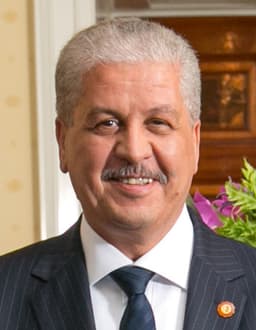
Abdelmalek Sellal
Politician · Modern
47.5Total

Julius Caesar
General · Ancient
82.8Total
Basic Information
Born
1948
-100
Died
—
-44
Era
Modern
Ancient
Nationality
Algeria
Roman Republic
Occupation
Politician
General
Civilization
Middle Eastern
Western
Score Comparison
Military (10%)
50.0
88.0
Political (20%)
68.0
78.0
Influence (20%)
49.4
85.0
Legacy (20%)
39.2
82.0
Leadership (15%)
40.0
80.0
Strategy (15%)
41.2
85.0
TOTAL
47.5
82.8
Abdelmalek Sellal — Complete Timeline
1999 AD
Appointed Minister of Interior and Local GovernmentPolitical Action◆ Major
Abdelmalek Sellal was appointed Minister of Interior and Local Government by President Abdelaziz Bouteflika in 1999, overseeing local administration and security. He played a key role in implementing Bouteflika's policies and managing the security situation during the civil war.
MinistryInteriorBouteflika
Impact: national
2012 AD
Appointed Prime Minister of Algeria (first term)Political Action◆ Major
Sellal was appointed Prime Minister of Algeria on September 3, 2012, by President Bouteflika, succeeding Ahmed Ouyahia. His first term focused on economic development, infrastructure projects, and maintaining political stability amid the Arab Spring protests in the region.
AppointmentGovernmentBouteflika
Impact: national
2014 AD
Reappointed Prime Minister (second term)Political Action◆ Major
Sellal was reappointed Prime Minister on April 29, 2014, after Bouteflika's re-election. His second term continued economic reforms and oversaw the 2014 constitutional amendment, which limited presidential terms and strengthened the role of the prime minister.
ReappointmentGovernmentConstitutional Reform
Impact: national
2017 AD
Resigned as Prime MinisterPolitical Action◆ Major
Sellal resigned as Prime Minister on May 24, 2017, after five years in office, following the 2017 legislative elections. His resignation was part of a routine government reshuffle, and he was succeeded by Abdelmadjid Tebboune, who later became president.
ResignationGovernment ChangeElection
Impact: national
2019 AD
Arrested and imprisoned on corruption chargesPolitical Action◆ Major
Sellal was arrested in May 2019 on corruption charges related to his time as prime minister and interior minister, as part of the post-Bouteflika anti-corruption campaign. He was sentenced to 15 years in prison in 2020 for abuse of office and embezzlement.
ArrestCorruptionPolitical Repression
Impact: nationaltragic
Julius Caesar — Complete Timeline
58 BC
Gallic WarsWar◆ Major
Caesar, as proconsul of Gaul, launched a series of campaigns that conquered all of Gaul (modern France, Belgium, and parts of Switzerland). He fought numerous battles, including against the Helvetii, the Belgae, and the Gallic chieftain Vercingetorix. The wars brought immense wealth and a loyal army to Caesar.
Gallic WarsConquestRoman Expansion
Impact: regional
49 BC
Crossing the RubiconPolitical Action◆ Major
Caesar led Legio XIII across the Rubicon River into Italy, defying the Roman Senate's order to disband his army. This act triggered a civil war against Pompey and the Optimates, ultimately leading to Caesar's dictatorship and the end of the Roman Republic.
Roman Civil WarEnd of RepublicPower Struggle
Impact: global
48 BC
Battle of PharsalusWar◆ Major
Caesar's outnumbered army defeated the larger forces of Pompey the Great at Pharsalus in Greece. Caesar's tactical use of a reserve line to counter Pompey's cavalry charge proved decisive. Pompey fled to Egypt, where he was assassinated, leaving Caesar as the undisputed master of the Roman world.
Roman Civil WarBattleDecisive Victory
Impact: regional
44 BC
Appointment as Dictator for LifePolitical Action◆ Major
The Roman Senate appointed Caesar dictator perpetuo (dictator for life), granting him unprecedented personal power. This move concentrated military, legislative, and judicial authority in one person, effectively ending the Roman Republic's traditional system of checks and balances and alarming many senators.
DictatorshipEnd of RepublicPower Consolidation
Impact: regionaldestructive
Assassination on the Ides of MarchPolitical Action◆ Major
A group of Roman senators, led by Marcus Junius Brutus and Gaius Cassius Longinus, stabbed Caesar to death at a meeting of the Senate in the Theatre of Pompey. The assassination was intended to restore the Republic, but instead triggered another civil war that led to the rise of the Roman Empire.
AssassinationRoman PoliticsEnd of Republic
Impact: globaldestructive
Expert Analysis
abdelmalek-sellal-vs-julius-caesar
# The Crossing and the Corridor: Two Paths of Power
On a winter day in 49 BCE, Julius Caesar stood at the banks of the Rubicon River in northern Italy, contemplating an act that would shatter centuries of republican tradition. To cross with his legions was to declare war on the Roman state itself. He crossed. Two thousand years later, on a spring morning in 2019, Abdelmalek Sellal, once the second most powerful man in Algeria, was led into a courtroom in Algiers. The man who had managed the machinery of state for decades was now its prisoner. Between these two moments lies a chasm not merely of time, but of the very nature of power—how it is seized, how it is held, and how it is lost.
Origins
Caesar was born into the twilight of the Roman Republic, a world of senatorial intrigue, civil wars, and an empire that had outgrown its governing institutions. His family, the Julii, claimed descent from the goddess Venus, but they were politically minor, and Caesar grew up in the shadow of his uncle Marius’s populist reforms and Sulla’s brutal reaction. The young patrician learned early that in Rome, survival meant playing a long game of alliances, debts, and military glory.
Sellal entered the world in 1948, in French Algeria, a colony on the verge of its war of independence. Born into a period of violent transformation, he came of age in a nation forged by revolution. Unlike Caesar, who inherited a tradition of aristocratic competition, Sellal inherited a single-party state born from the National Liberation Front (FLN), where loyalty to the party apparatus was the only currency that mattered.
Rise to Power
Caesar’s ascent was a masterclass in strategic patience. He climbed the *cursus honorum*—the ladder of Roman magistracies—through a combination of military command in Hispania, the formation of the First Triumvirate with Pompey and Crassus, and the conquest of Gaul, a nine-year campaign that made him the richest and most popular man in Rome. His crossing of the Rubicon in 49 BCE was not a gamble but a calculated escalation: he knew the Senate had declared him an enemy, and he knew his legions would follow.
Sellal’s path was quieter but no less calculated. Appointed Minister of Interior and Local Government in 1999, he became the man who managed Algeria’s most sensitive portfolio: elections, security, and the delicate balance between the military, the presidency, and the FLN. His power was bureaucratic, not charismatic. When President Bouteflika appointed him Prime Minister in 2012, it was not because Sellal had conquered a province or swayed a crowd, but because he had proven himself an indispensable manager of the state’s internal machinery.
Leadership & Governance
Caesar governed as a revolutionary pragmatist. As dictator, he reformed the calendar, initiated massive public works, extended citizenship to provincials, and centralized authority in his own person. His military genius was inseparable from his political vision: the legions he led were also instruments of policy, and his clemency toward former enemies was a calculated tool to build a new order. Yet his reforms were always personal—they depended on him.
Sellal governed as a technocrat of the shadows. His two terms as Prime Minister, from 2012 to 2017, were marked by economic reforms aimed at weaning Algeria off oil dependency, but his real role was to maintain stability in a system where real power lay with the military and the presidency. He was a consolidator, not a transformer. Where Caesar rewrote the rules, Sellal enforced them.
Triumph & Tragedy
Caesar’s greatest triumph was Gaul—a conquest that brought immense wealth and a loyal army into his orbit. His tragedy was the Ides of March, 44 BCE, when sixty senators, many of them men he had pardoned, stabbed him to death in the Senate chamber. His final act—falling at the foot of Pompey’s statue—was a cruel irony: he had destroyed his rival, but not the republic that rival had defended.
Sellal’s triumph was his longevity. He served five years as Prime Minister, a testament to his skill at navigating the opaque politics of Algeria’s ruling elite. His tragedy came in 2019, when the Hirak protests swept Algeria and Bouteflika fell. Sellal was arrested on corruption charges, accused of enriching himself during his years of service. The manager of the system became its scapegoat.
Character & Destiny
Caesar was audacious, charismatic, and possessed of a belief in his own destiny that bordered on the divine. He wrote his own story—literally, in his *Commentaries on the Gallic War*—and understood that power required performance. His assassination was not a failure of cunning but of mercy: he had trusted his enemies to be grateful.
Sellal was cautious, anonymous, and loyal to the institution rather than to any grand vision. He was the product of a system that punished individuality and rewarded obedience. His downfall was not personal betrayal but systemic collapse: when the protests demanded accountability, he was the most visible face of a regime that had no defense.
Legacy
Caesar’s legacy is the Roman Empire. His name became a title—*Kaiser*, *Tsar*—and his reforms laid the foundation for two millennia of European governance. He is remembered as both a tyrant and a visionary, a man whose ambition destroyed a republic but created a world.
Sellal’s legacy is more modest. His score of 57.9 on the historian’s ledger—compared to Caesar’s 83.3—reflects a life of administration rather than creation. He is remembered, if at all, as a footnote in Algeria’s long struggle between authoritarian stability and democratic aspiration. His arrest was not a tragedy but a symbol: the end of an era when men like him could govern without accountability.
Conclusion
What separates Caesar from Sellal is not merely the scale of their achievements but the nature of their ambition. Caesar sought to remake the world; Sellal sought to manage it. One crossed a river and changed history; the other walked a corridor of power and was consumed by it. In the end, both were destroyed by the systems they served—Caesar by the republic he overthrew, Sellal by the state he upheld. Their stories remind us that power, whether seized with a sword or inherited with a briefcase, always leaves its mark, but only rarely does it leave a legacy that outlasts the grave.
Rankings
🥇
Julius CaesarLeader
Mil: 88.0Pol: 78.0Inf: 85.0
82.8
🥈
Abdelmalek Sellal
Mil: 50.0Pol: 68.0Inf: 49.4
47.5
+35.3 behind
How This Comparison Works
Algorithm
Each figure is scored on 6 dimensions (0—100 scale) based on structured historical data: Military (10%), Political (20%), Influence (20%), Legacy (20%), Leadership (15%), Strategy (15%). The weighted total produces the final ranking.
Data Sources
Scores are computed from structured sub-indicators in the database. Scale factors adjust for era (Ancient ×0.85, Modern ×1.0) and civilization size (Eastern ×1.05, Other ×0.80) to account for differences in population and military scale.
Maximum 3 Figures
Comparisons are limited to 2—3 figures to ensure readability and statistical meaningfulness.
Error Margins
±5 points per dimension — Sub-scores are derived from historical records with inherent uncertainty. Two figures within 5 points on a dimension should be considered roughly equivalent in that area.
Total Score Accuracy
±3 points overall — The weighted combination of 6 dimensions produces a total score with approximately ±3 points of uncertainty. Differences of less than 3 points are not statistically significant— the figures are effectively tied.
Known Limitations
- Historical records are incomplete and uneven across civilizations
- Figures from oral-tradition societies may be underrepresented
- Occupation labels can misclassify multi-role figures
- Scores measure capability and impact, not moral character
- Quantitative scoring is a comparison tool, not absolute truth
Capability Radar
Military (10%) — Battles & Warfare
Battles
23
95
Win Rate
25
92
Expansion
30
97
Political (20%) — Governance & Reform
Reform
40
90
Diplomacy
50
85
Economy
45
82
Influence (20%) — Cultural & Global Reach
Cultural
20
88
Global
15
94
Legacy (20%) — Historical Impact
Historical
20
95
Longevity
15
96
Leadership (15%) — Power & Stability
Tenure
60
75
Stability
35
60
Strategy (15%) — Tactics & Innovation
Strategy
29
94
Tactics
35
96
Reform
39
88
Similar Comparisons
Comments & Discussion
RubiconRamble6/17/2026
This comparison conflates agency with fate. Sellal didn't cross a Rubicon—he was dragged across a courtroom floor by forces he helped create. Caesar acted with decisive agency, knowing the Senate would brand him enemy of the state. Sellal was a technocrat, not a revolutionary. He managed corruption for a decaying system; Caesar challenged one. Comparing them cheapens the personal stakes of 49 BCE. Trumpets vs. handcuffs—not even close.
VeniVidiWifi6/17/2026
拿撒勒将军和一个被抓的公务员比?凯撒渡过卢比孔河冒着人头落地的风险,而塞拉尔不过是在舒适办公室里签字画押。阿尔及利亚的体制不是共和国,是老迈的单党机器。他根本不会也不曾手握对等的决策权。这不是权力悲剧,是官僚滑铁卢。别把守门员说成队长。
DustAndDictators6/17/2026
One crossed a river to remake the world; the other built a bunker inside a failing state. Caesar's crossing was a gamble for absolute supremacy, risking everything on one legion crossing one stream. Sellal's trajectory reads like bureaucratic quicksand—slow, inevitable, forgettable. Caesar forced history; Sellal just got swept along. The only real similarity? Both ended up out of power. But one chose his fall; the other had it chosen for him.
档案管家6/17/2026
这两人唯一的共同点是“倒霉时的表情差不多”。凯撒告别的是罗马,塞拉尔告别的是办公室。史料清楚:凯撒跨过卢比孔河是有计划的造反;塞拉尔被拿下的早晨却在看文件——这说明他根本没意识到风暴。你说一个是悲剧英雄,一个是问责对象?对。但历史对乱世枭雄手下留情,对太平管家从不手软。真历史爱好者绝不接受这种强行对标。
AleaIactaNon6/17/2026
别拔高塞拉尔。他像凯撒?简直是对凯撒智识的侮辱。凯撒不只是渡过河,他撬动整个地中海政治结构;塞拉尔撑死是个系统里的常务副职,管的是俱乐部会费。他不是被历史拉下马,而是被人清算了旧账。这次对比暴露了一个毛病:见到下台就谈悲剧,见了东方权谋就比西方古典。扯淡。可查的事实是:凯撒改革税收、立法、日历;塞拉尔什么都没留下。