Loading...
Abdul Razak Hussein vs Kaja Kallas
Kaja Kallas leads by 2.2 pts · 2 figures compared
…
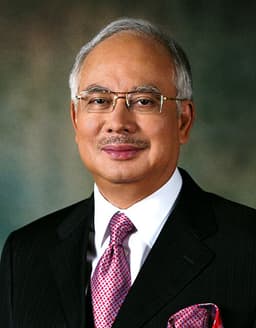
Abdul Razak Hussein
Politician · Modern
47.5Total

Kaja Kallas
Politician · Modern
49.7Total
Basic Information
Born
1922
1977
Died
—
—
Era
Modern
Modern
Nationality
Malaysia
Estonia
Occupation
Politician
Politician
Civilization
Eastern
Western
Score Comparison
Military (10%)
14.0
19.7
Political (20%)
68.0
60.0
Influence (20%)
51.8
56.4
Legacy (20%)
41.7
41.7
Leadership (15%)
65.7
72.0
Strategy (15%)
26.6
34.0
TOTAL
47.5
49.7
Abdul Razak Hussein — Complete Timeline
1969 AD
Handling of the May 13, 1969 RiotsPolitical Action◆ Major
As Deputy Prime Minister, Abdul Razak Hussein played a key role in restoring order after the May 13 racial riots. He declared a state of emergency and suspended Parliament, leading to the establishment of the National Operations Council that governed until 1971.
Emergency RuleRacial RiotsPolitical Crisis
Impact: nationaldestructive
1971 AD
Introduction of the New Economic Policy (1971)Reform◆ Major
As Prime Minister, Abdul Razak Hussein launched the New Economic Policy (NEP), a 20-year plan aimed at reducing poverty and restructuring society to eliminate the association of race with economic function. The NEP favored Bumiputera (Malay) economic advancement.
Economic PolicyAffirmative ActionBumiputera
Impact: nationalconstructive
1973 AD
Formation of the Barisan Nasional (1973)Political Action◆ Major
Abdul Razak Hussein expanded the Alliance Party into the Barisan Nasional (National Front), a broader coalition of multi-racial parties. This coalition dominated Malaysian politics for decades, ensuring political stability but also concentrating power.
Political CoalitionBarisan NasionalPower Consolidation
Impact: nationalconstructive
Kaja Kallas — Complete Timeline
2021 AD
Appointed Prime Minister of EstoniaPolitical Action◆ Major
Kallas became Estonia's first female prime minister, leading a coalition government. She was the leader of the Reform Party and previously served as a Member of the European Parliament.
Prime MinisterFirst FemaleCoalition
Impact: nationalconstructive
2022 AD
Strong Support for Ukraine During Russian InvasionPolitical Action◆ Major
Kallas became a leading European voice in supporting Ukraine after Russia's full-scale invasion. Estonia provided significant military and humanitarian aid, and Kallas advocated for EU sanctions against Russia.
UkraineSanctionsForeign Policy
Impact: globalconstructive
Resignation Over Coalition DisputePolitical Action
Kallas resigned as prime minister after a dispute with coalition partner the Center Party over family benefits. She was reappointed days later leading a new coalition with the Social Democrats and Isamaa.
ResignationCoalitionPolitical Crisis
Impact: national
2024 AD
Nominated as EU Foreign Policy ChiefPolitical Action◆ Major
Kallas was nominated by EU leaders to become the High Representative of the Union for Foreign Affairs and Security Policy, succeeding Josep Borrell. She was expected to take office later in 2024.
EUForeign PolicyAppointment
Impact: globalconstructive
Expert Analysis
Origins
Abdul Razak Hussein was born on March 11, 1922, in Pekan, Pahang, into the Malay aristocracy. His father, Dato' Hussein Mohd Taib, was a prominent civil servant. Razak studied law at Raffles College in Singapore and later at Lincoln's Inn in London, where he was called to the Bar in 1950. His early exposure to colonial administration and Malay nationalism shaped his commitment to Malay rights and national unity.
Kaja Kallas was born on June 18, 1977, in Tallinn, Estonia, into a political family. Her father, Siim Kallas, was a former Prime Minister and European Commissioner. She studied law at the University of Tartu and later at the Estonian Business School. Before entering politics, she worked as a lawyer and later as a member of the European Parliament. Her background in European affairs and liberal economics informed her pro-European and reformist stance.
Rise to Power
Razak entered politics in the 1950s, becoming a member of the United Malays National Organisation (UMNO). He served as Deputy Prime Minister under Tunku Abdul Rahman from 1957. The May 13, 1969 racial riots were a turning point: Razak took charge of the National Operations Council, effectively running the country under emergency rule. In 1970, he succeeded Tunku as Prime Minister, consolidating power and reorienting policy toward affirmative action for Malays.
Kallas was elected to the European Parliament in 2014 and became Vice President of the ALDE group. She returned to Estonia in 2018 to lead the Reform Party, winning the 2019 parliamentary election. She became Prime Minister on January 26, 2021, leading a coalition government. Her rise was marked by advocacy for digital innovation and fiscal conservatism, and she quickly became a prominent voice in EU affairs.
Leadership & Governance
Razak governed with a top-down, interventionist style. His signature policy was the New Economic Policy (NEP), launched in 1971, which set quotas for Malay ownership and employment to address ethnic economic imbalances. He expanded the ruling coalition into the Barisan Nasional (BN) in 1973, centralizing power under UMNO. Critics argue the NEP fostered corruption and racial polarization, while supporters credit it with reducing poverty and creating a Malay middle class.
Kallas led with a technocratic, reform-oriented approach. She prioritized digital governance, fiscal discipline, and rule of law. Domestically, she implemented tax reforms and pushed for same-sex marriage legalization. Internationally, she became a leading hawk on Russia, advocating for robust sanctions and military aid to Ukraine. Her leadership style is direct and confrontational, often clashing with coalition partners over policy.
Triumph & Tragedy
Razak's greatest triumph was the NEP, which reduced the national poverty rate from 49% in 1970 to 15% by 1990, and increased Malay corporate ownership from 2.4% to 20.3%. However, the NEP also deepened racial divisions and contributed to a culture of patronage. His handling of the May 13 riots restored order but involved suspension of parliament and authoritarian measures. He died in office in 1976 from leukemia, leaving a mixed legacy.
Kallas's triumph is her staunch support for Ukraine, which elevated Estonia's international profile. Under her leadership, Estonia provided over 1% of GDP in military aid to Ukraine, the highest per capita among EU nations. She was nominated as EU Foreign Policy Chief in 2024, a testament to her influence. However, her domestic coalition was unstable; she resigned in 2022 over a benefits dispute, though she returned days later. Critics note her limited impact on domestic inequality.
Character & Destiny
Razak was pragmatic and decisive, often described as a 'man of action.' His authoritarian streak emerged during the emergency, but he also sought to build consensus within the Malay community. His health declined prematurely, truncating his vision. Historians assess him as a nation-builder who prioritized stability over democracy.
Kallas is assertive and principled, unafraid to challenge allies. Her unwavering stance on Russia reflects her personal history as an Estonian who lived under Soviet occupation. Her destiny is tied to Europe's response to aggression; she has become a symbol of small-state resilience. However, her domestic tenure was brief, limiting her ability to enact lasting reforms.
Legacy
Razak's NEP fundamentally reshaped Malaysia's economy and society, creating a new Malay middle class but also entrenching race-based politics. The Barisan Nasional coalition he formed ruled Malaysia for 45 years until 2018. His son, Najib Razak, later became Prime Minister but was convicted in the 1MDB scandal, tarnishing the family name. Razak's legacy is thus complex: a founder of modern Malaysia's affirmative action framework, but also a contributor to its ethnic divisions.
Kallas's legacy is still forming, but she has already influenced EU foreign policy toward a more assertive stance on Russia. Her nomination as EU High Representative positions her to shape European security for years. Domestically, her digital governance reforms set benchmarks, but their long-term impact is uncertain. She scored 49.7 overall, slightly above Razak's 47.5, reflecting her growing influence.
Conclusion
Kaja Kallas has had a greater impact on the global stage due to her role in shaping EU policy during a critical geopolitical crisis. While Razak's NEP transformed Malaysia, its effects were limited to one country and marred by unintended consequences. Kallas's leadership on Ukraine and her appointment as EU foreign policy chief give her a broader, more enduring influence on international affairs. Her political score of 60.0 and leadership score of 72.0 exceed Razak's 68.0 and 65.7, respectively. Thus, Kallas edges ahead in overall impact.
Rankings
🥇
Kaja KallasLeader
Mil: 19.7Pol: 60.0Inf: 56.4
49.7
🥈
Abdul Razak Hussein
Mil: 14.0Pol: 68.0Inf: 51.8
47.5
+2.2 behind
How This Comparison Works
Algorithm
Each figure is scored on 6 dimensions (0—100 scale) based on structured historical data: Military (10%), Political (20%), Influence (20%), Legacy (20%), Leadership (15%), Strategy (15%). The weighted total produces the final ranking.
Data Sources
Scores are computed from structured sub-indicators in the database. Scale factors adjust for era (Ancient ×0.85, Modern ×1.0) and civilization size (Eastern ×1.05, Other ×0.80) to account for differences in population and military scale.
Maximum 3 Figures
Comparisons are limited to 2—3 figures to ensure readability and statistical meaningfulness.
Error Margins
±5 points per dimension — Sub-scores are derived from historical records with inherent uncertainty. Two figures within 5 points on a dimension should be considered roughly equivalent in that area.
Total Score Accuracy
±3 points overall — The weighted combination of 6 dimensions produces a total score with approximately ±3 points of uncertainty. Differences of less than 3 points are not statistically significant— the figures are effectively tied.
Known Limitations
- Historical records are incomplete and uneven across civilizations
- Figures from oral-tradition societies may be underrepresented
- Occupation labels can misclassify multi-role figures
- Scores measure capability and impact, not moral character
- Quantitative scoring is a comparison tool, not absolute truth
Capability Radar
Military (10%) — Battles & Warfare
Battles
14
23
Win Rate
16
28
Expansion
21
28
Political (20%) — Governance & Reform
Reform
40
60
Diplomacy
50
70
Economy
45
65
Influence (20%) — Cultural & Global Reach
Cultural
20
30
Global
20
50
Legacy (20%) — Historical Impact
Historical
25
40
Longevity
15
20
Leadership (15%) — Power & Stability
Tenure
35
55
Stability
30
55
Strategy (15%) — Tactics & Innovation
Strategy
26
31
Tactics
25
32
Reform
31
40
Similar Comparisons
Comments & Discussion
No comments yet. Be the first to share your thoughts!