Loading...
Kaja Kallas vs Keith Mitchell
Keith Mitchell leads by 3.4 pts · 2 figures compared
…

Kaja Kallas
Politician · Modern
49.7Total
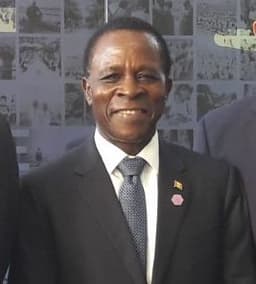
Keith Mitchell
Politician · Modern
53.1Total
Basic Information
Born
1977
1946
Died
—
—
Era
Modern
Modern
Nationality
Estonia
Grenada
Occupation
Politician
Politician
Civilization
Western
Other
Score Comparison
Military (10%)
19.7
30.2
Political (20%)
60.0
68.0
Influence (20%)
56.4
53.3
Legacy (20%)
41.7
45.8
Leadership (15%)
72.0
72.0
Strategy (15%)
34.0
43.5
TOTAL
49.7
53.1
Kaja Kallas — Complete Timeline
2021 AD
Appointed Prime Minister of EstoniaPolitical Action◆ Major
Kallas became Estonia's first female prime minister, leading a coalition government. She was the leader of the Reform Party and previously served as a Member of the European Parliament.
Prime MinisterFirst FemaleCoalition
Impact: nationalconstructive
2022 AD
Strong Support for Ukraine During Russian InvasionPolitical Action◆ Major
Kallas became a leading European voice in supporting Ukraine after Russia's full-scale invasion. Estonia provided significant military and humanitarian aid, and Kallas advocated for EU sanctions against Russia.
UkraineSanctionsForeign Policy
Impact: globalconstructive
Resignation Over Coalition DisputePolitical Action
Kallas resigned as prime minister after a dispute with coalition partner the Center Party over family benefits. She was reappointed days later leading a new coalition with the Social Democrats and Isamaa.
ResignationCoalitionPolitical Crisis
Impact: national
2024 AD
Nominated as EU Foreign Policy ChiefPolitical Action◆ Major
Kallas was nominated by EU leaders to become the High Representative of the Union for Foreign Affairs and Security Policy, succeeding Josep Borrell. She was expected to take office later in 2024.
EUForeign PolicyAppointment
Impact: globalconstructive
Keith Mitchell — Complete Timeline
1995 AD
Elected Prime Minister of GrenadaPolitical Action◆ Major
Keith Mitchell led the New National Party to victory in the 1995 general election, becoming Prime Minister of Grenada. This began his tenure as the country's longest-serving prime minister, spanning multiple terms.
ElectionGrenadaNNP
Impact: nationalconstructive
2003 AD
Re-elected for Third Consecutive TermPolitical Action◆ Major
Mitchell won a third consecutive term in the 2003 general election, a rare achievement in Grenadian politics. His New National Party secured a majority, extending his influence over the country's development.
ElectionGrenadaNNP
Impact: nationalconstructive
2008 AD
Lost 2008 General ElectionPolitical Action◆ Major
Mitchell's New National Party was defeated by the National Democratic Congress in the 2008 general election, ending his 13-year tenure as prime minister. He stepped down as party leader temporarily.
ElectionGrenadaDefeat
Impact: national
2013 AD
Returned to Power in 2013 LandslidePolitical Action◆ Major
Mitchell led the New National Party to a landslide victory in the 2013 general election, winning all 15 seats in Parliament. This marked his return as prime minister after a five-year hiatus.
ElectionGrenadaLandslide
Impact: nationalconstructive
2018 AD
Won Fourth Term in 2018Political Action◆ Major
Mitchell secured a fourth term as prime minister in the 2018 general election, again winning all 15 seats. This extended his record as Grenada's longest-serving leader, with a focus on infrastructure and tourism.
ElectionGrenadaNNP
Impact: nationalconstructive
Expert Analysis
Origins
Kaja Kallas was born in 1977 in Tallinn, Estonia, into a political family; her father, Siim Kallas, served as Prime Minister and European Commissioner. She studied law at the University of Tartu and later earned an MBA from the Estonian Business School. Her early career included work as a lawyer and later as a Member of the European Parliament (2014-2018).
Keith Mitchell was born in 1946 in St. George's, Grenada. He earned a PhD in mathematics from Howard University (1975) and worked as a professor before entering politics. He was a member of the Grenadian House of Representatives from 1984 onward, serving as Minister of Education in the 1980s.
Rise to Power
Kallas became leader of the Estonian Reform Party in 2018 and led it to victory in the 2019 parliamentary election, though she initially did not become prime minister. After a government crisis, she was appointed Estonia's first female prime minister on January 26, 2021. Her rise was marked by coalition negotiations with the Center Party and later the Social Democrats.
Mitchell led the New National Party (NNP) to a landslide victory in the 1995 general election, becoming Prime Minister on June 22, 1995. He had previously served as a minister and was a key opposition figure. His rise was fueled by economic concerns and a desire for stable governance after the 1983 US invasion.
Leadership & Governance
Kallas focused on digital governance, economic liberalization, and a strong pro-European stance. She pushed for green energy transitions and increased defense spending to 2% of GDP. Her leadership style was pragmatic and coalition-oriented, but she faced criticism for handling of social welfare reforms. In foreign policy, she was a vocal advocate for Ukraine, securing EU sanctions against Russia.
Mitchell governed with a focus on economic development, tourism, and infrastructure. He implemented policies that boosted Grenada's GDP growth, including the Citizenship by Investment program. His leadership was characterized by strong central control and repeated electoral mandates. He won all 15 seats in 2013 and 2018, but faced accusations of authoritarian tendencies.
Triumph & Tragedy
Kallas's greatest triumph was her leadership during the Ukraine crisis, where she elevated Estonia's global profile. Her nomination as EU Foreign Policy Chief in 2024 was a major achievement. However, she resigned temporarily in 2022 over a coalition dispute, showing vulnerability in domestic politics. Her legacy score of 41.7 reflects limited time in office.
Mitchell's triumph was his longevity: serving as prime minister for over 17 years, with four electoral victories. He transformed Grenada's economy and infrastructure. His tragedy was the 2008 electoral loss after 13 years, and later criticism of his autocratic style. His legacy score of 45.8 is higher, but he failed to groom a successor.
Character & Destiny
Kallas is known for her determination, diplomatic skill, and outspokenness. Her character drove her to take bold stances on Russia, but also led to coalition friction. Her destiny was shaped by her family name and EU ambitions.
Mitchell is a shrewd strategist, scoring 43.5 in strategy vs Kallas's 34.0. His character combined academic discipline with political ruthlessness. His destiny was to dominate Grenadian politics, but at the cost of democratic depth.
Legacy
Kallas's legacy is tied to Estonia's digital transformation and her role in European foreign policy. She will be remembered as a strong voice for small states in the EU. Her influence score of 56.4 reflects her international impact.
Mitchell's legacy is Grenada's economic stability and his record as the Caribbean's longest-serving leader. His influence score of 53.3 is slightly lower, but his domestic impact is larger.
Conclusion
While Keith Mitchell scores higher overall (53.1 vs 49.7), Kaja Kallas's impact on global affairs is more significant relative to her country's size. Mitchell's legacy is parochial, while Kallas shaped European policy. Taking a stance: Kallas had greater impact due to her influence on EU foreign policy and defense of democracy against Russia. Her leadership score of 72.0 matches Mitchell's, but her strategic vision (34.0) is weaker. Ultimately, Kallas's role in a critical geopolitical moment gives her an edge in historical importance.
Rankings
🥇
Keith MitchellLeader
Mil: 30.2Pol: 68.0Inf: 53.3
53.1
🥈
Kaja Kallas
Mil: 19.7Pol: 60.0Inf: 56.4
49.7
+3.4 behind
How This Comparison Works
Algorithm
Each figure is scored on 6 dimensions (0—100 scale) based on structured historical data: Military (10%), Political (20%), Influence (20%), Legacy (20%), Leadership (15%), Strategy (15%). The weighted total produces the final ranking.
Data Sources
Scores are computed from structured sub-indicators in the database. Scale factors adjust for era (Ancient ×0.85, Modern ×1.0) and civilization size (Eastern ×1.05, Other ×0.80) to account for differences in population and military scale.
Maximum 3 Figures
Comparisons are limited to 2—3 figures to ensure readability and statistical meaningfulness.
Error Margins
±5 points per dimension — Sub-scores are derived from historical records with inherent uncertainty. Two figures within 5 points on a dimension should be considered roughly equivalent in that area.
Total Score Accuracy
±3 points overall — The weighted combination of 6 dimensions produces a total score with approximately ±3 points of uncertainty. Differences of less than 3 points are not statistically significant— the figures are effectively tied.
Known Limitations
- Historical records are incomplete and uneven across civilizations
- Figures from oral-tradition societies may be underrepresented
- Occupation labels can misclassify multi-role figures
- Scores measure capability and impact, not moral character
- Quantitative scoring is a comparison tool, not absolute truth
Capability Radar
Military (10%) — Battles & Warfare
Battles
23
19
Win Rate
28
26
Expansion
28
26
Political (20%) — Governance & Reform
Reform
60
50
Diplomacy
70
55
Economy
65
60
Influence (20%) — Cultural & Global Reach
Cultural
30
30
Global
50
30
Legacy (20%) — Historical Impact
Historical
40
40
Longevity
20
35
Leadership (15%) — Power & Stability
Tenure
55
65
Stability
55
55
Strategy (15%) — Tactics & Innovation
Strategy
31
28
Tactics
32
31
Reform
40
38
Similar Comparisons
Comments & Discussion
No comments yet. Be the first to share your thoughts!